


Mergers and acquisitions are reshaping business strategies across the Netherlands, unlocking new ways for companies to expand and adapt. Think about this. Over 60 percent of Dutch M&A deals now involve advanced technology integration or digital transformation. Yet more technology is not always the headline. The real surprise lies in how legal frameworks and compliance rules in the Netherlands are evolving just as quickly, making regulatory mastery the make-or-break skill for 2025.
Table of Contents
Quick Summary
| Takeaway | Explanation |
| Understand M&A fundamentals for strategic growth | Mergers and acquisitions can help businesses expand capabilities and market presence, driving sustainable growth through strategic corporate transactions. |
| Navigate complex legal frameworks in the Netherlands | Compliance with Dutch regulations is crucial for M&A success, requiring awareness of competition laws and corporate governance standards. |
| Evaluate financial viability and strategic alignment | Rigorous financial and strategic assessments are essential to identify synergies and ensure long-term growth during M&A transactions. |
| Focus on technological integration for success | Technological compatibility and operational alignment are key factors that determine the success of mergers and acquisitions. |
| Stay informed about emerging M&A trends | Awareness of sectoral transformations and economic dynamics will help businesses identify new opportunities and navigate shifting market conditions. |
Understanding Mergers and Acquisitions Basics
Mergers and acquisitions represent strategic corporate transactions that fundamentally reshape business landscapes. These complex processes involve the consolidation of companies through various financial and legal mechanisms, enabling organisations to expand market presence, acquire new capabilities, and drive sustainable growth.
The Core Mechanics of Mergers and Acquisitions
At its essence, a merger occurs when two separate entities combine to form an entirely new organisation, while an acquisition involves one company purchasing another. In the Netherlands, these transactions are governed by sophisticated legal frameworks that ensure transparency, protect stakeholder interests, and maintain market integrity.
Companies pursue mergers and acquisitions for multiple strategic reasons. Financial synergies often drive these decisions, with organisations seeking to reduce operational costs, enhance market competitiveness, and create economies of scale. Technological advancements and rapid industry transformations have accelerated the frequency and complexity of these corporate transitions.
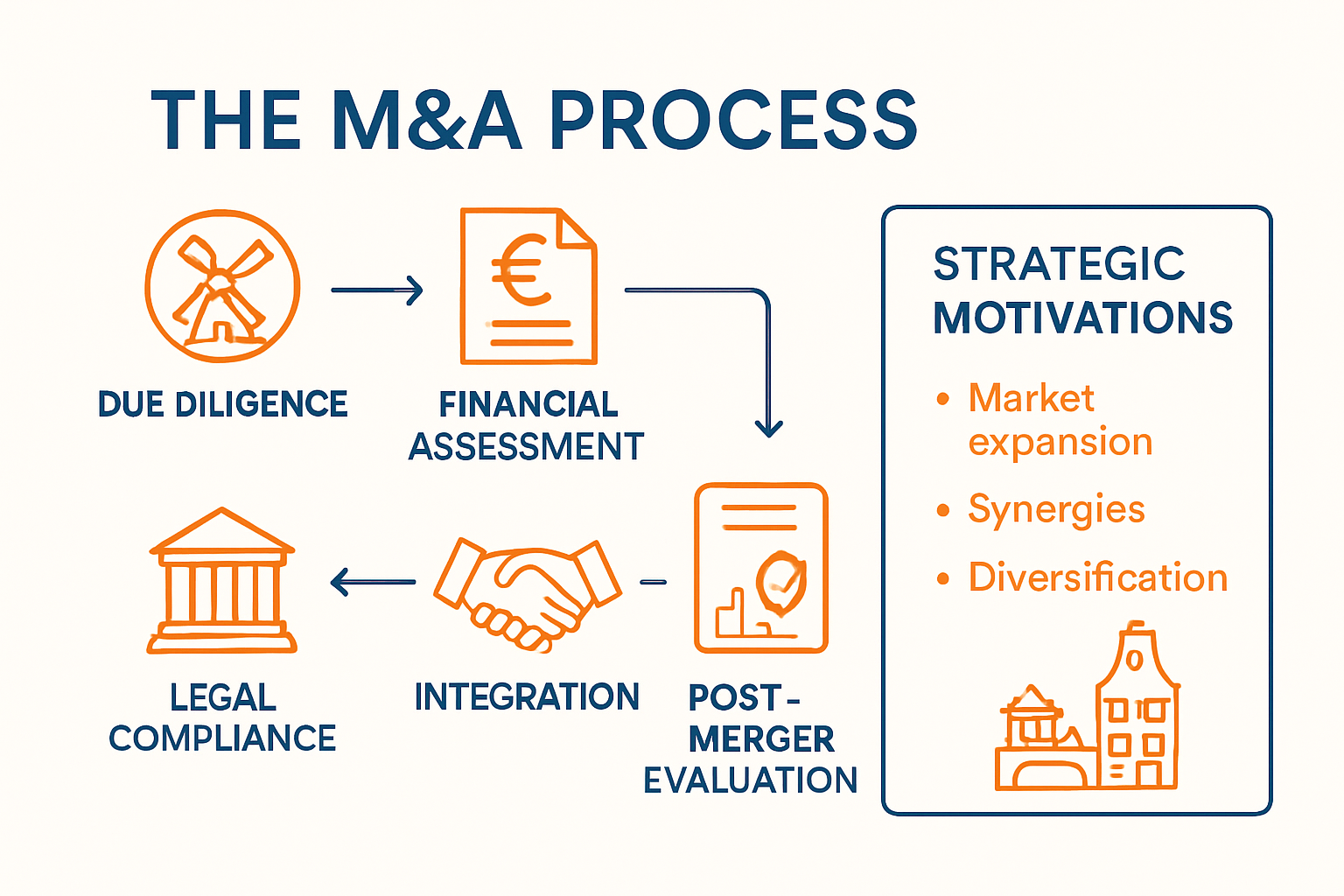
Strategic Motivations and Economic Implications
The motivational landscape for mergers and acquisitions is multifaceted. Some businesses aim to diversify their product portfolios, while others seek geographical expansion or technological innovation. In the Dutch business environment, these transactions frequently represent calculated responses to competitive pressures and emerging market opportunities.
Economic considerations play a crucial role in determining the viability and success of mergers and acquisitions. Organisations must conduct rigorous due diligence, evaluating financial performance, cultural compatibility, and potential integration challenges. Successful transactions require meticulous planning, comprehensive risk assessment, and strategic alignment between participating entities.
Legal and Regulatory Considerations
The Dutch legal framework provides robust guidelines for mergers and acquisitions, ensuring fair practices and protecting the interests of all stakeholders. Companies must navigate complex regulatory requirements, including competition laws, tax implications, and corporate governance standards.
Understanding the nuanced dynamics of mergers and acquisitions demands expertise across multiple disciplines. Financial analysts, legal professionals, and strategic consultants collaborate to design and execute these transformative corporate strategies. Each transaction represents a unique journey, influenced by industry-specific dynamics, market conditions, and organisational objectives.
While mergers and acquisitions offer significant potential for growth and innovation, they also present substantial challenges. Cultural integration, workforce management, and maintaining operational continuity are critical factors that can determine the ultimate success of these corporate transitions. Successful organisations approach these transactions with comprehensive strategies, prioritising clear communication, strategic alignment, and a forward-looking perspective.
As businesses continue to evolve in an increasingly interconnected global economy, mergers and acquisitions will remain pivotal mechanisms for corporate transformation. Understanding their fundamental principles, strategic implications, and potential opportunities is essential for business leaders and stakeholders navigating these complex corporate landscapes.
Legal Framework for M&A in the Netherlands
The legal framework governing mergers and acquisitions in the Netherlands represents a sophisticated and comprehensive system designed to ensure transparency, protect stakeholder interests, and maintain market integrity. Businesses engaging in corporate transactions must navigate a complex landscape of regulations, compliance requirements, and strategic considerations.
Regulatory Oversight and Compliance Mechanisms
The Dutch legal system provides robust mechanisms for overseeing corporate transactions. The Authority for Consumers and Markets (ACM) plays a pivotal role in monitoring and regulating mergers and acquisitions. Companies planning significant corporate transactions must adhere to strict notification protocols, particularly when transactions potentially impact market competition.
Specific turnover thresholds determine the necessity of regulatory reporting. Large corporations must submit comprehensive documentation detailing the proposed transaction, financial implications, and potential market impact. Failure to comply with these regulatory requirements can result in substantial financial penalties and potential legal complications.
Below is a summary of key Dutch regulatory bodies and compliance requirements involved in M&A, to help clarify oversight responsibilities and necessary actions for businesses.
| Regulatory Body/Requirement | Role/Description |
| Authority for Consumers and Markets (ACM) | Monitors and regulates M&A to ensure market competition. |
| Turnover Thresholds | Define when reporting/notification to ACM is required. |
| Notification Protocols | Companies must submit details on transaction and market impact. |
| Investment Safety Assessment Act | Extra reporting for sensitive technologies/critical processes. |
| Financial Penalties | Imposed for non-compliance with regulatory requirements. |
Comprehensive Legal Considerations
Netherlands corporate law mandates extensive due diligence processes for mergers and acquisitions. Legal professionals must carefully evaluate multiple dimensions of corporate transactions, including financial structures, intellectual property rights, employment contracts, and potential liability considerations. intricate legal landscape.
The Investment Safety Assessment Act introduces an additional layer of scrutiny for transactions involving sensitive technologies or essential business processes. Companies must report potential changes in corporate control, ensuring national security interests are comprehensively protected. This legislative approach reflects the Netherlands commitment to maintaining a transparent and secure business environment.
Strategic Compliance and Risk Management
Successful mergers and acquisitions require more than mere legal compliance. Organisations must develop comprehensive strategies that address potential regulatory challenges, cultural integration, and long-term business objectives. The Dutch legal framework emphasises substantive evaluation beyond procedural requirements, focusing on the broader economic and strategic implications of corporate transactions.
Key considerations include assessing potential market concentration, evaluating competitive dynamics, and ensuring fair treatment of stakeholders. Legal professionals collaborate closely with financial analysts and corporate strategists to design transaction structures that meet regulatory standards while supporting business growth objectives.
The Netherlands maintains a sophisticated approach to corporate transactions, balancing regulatory oversight with business innovation. Companies must demonstrate not only technical compliance but also a commitment to ethical business practices and transparent corporate governance.
Navigating the legal framework for mergers and acquisitions demands exceptional expertise, strategic thinking, and a comprehensive understanding of complex regulatory mechanisms. Businesses must remain adaptable, proactively addressing emerging legal challenges and maintaining a forward-looking perspective in an increasingly dynamic global business environment.
Key Considerations for Businesses and Individuals
Mergers and acquisitions in the Netherlands represent complex strategic decisions that demand comprehensive evaluation and meticulous planning. Businesses and individuals must navigate a multifaceted landscape of financial, legal, and operational considerations to ensure successful corporate transactions.
Financial and Strategic Assessment
Primary considerations revolve around financial viability and strategic alignment. Companies must conduct rigorous financial due diligence, examining potential synergies, assessing market value, and evaluating long-term growth potential. This process involves detailed financial modeling, comprehensive risk analysis, and strategic alignment of organisational objectives.
Financial considerations extend beyond immediate transaction costs. Organisations must assess potential tax implications, financing structures, and potential economic impacts. Interest rates, market volatility, and broader economic trends significantly influence transaction feasibility and potential success. Investors and corporate leaders must develop nuanced strategies that account for both short-term financial requirements and long-term strategic aspirations.
Regulatory and Compliance Dynamics
Navigating the complex regulatory environment represents a critical aspect of mergers and acquisitions. Companies must demonstrate comprehensive understanding of legal frameworks, compliance requirements, and potential regulatory challenges.
Regulatory considerations encompass multiple dimensions. Businesses must assess potential market concentration implications, evaluate competitive dynamics, and ensure transparent corporate governance. The increasing emphasis on environmental, social, and governance (ESG) factors adds additional complexity to corporate transactions. Companies must demonstrate commitment to sustainable practices and ethical business standards.
Technological and Operational Integration
Successful mergers and acquisitions extend far beyond financial and legal considerations. Technological compatibility, operational integration, and cultural alignment represent crucial factors determining long-term success. Companies must develop comprehensive integration strategies that address technological infrastructure, workforce management, and organisational culture.
Technological innovation plays an increasingly significant role in corporate transactions. Businesses seek opportunities to acquire technological capabilities, enhance digital infrastructure, and leverage emerging technological trends. Artificial intelligence, digital transformation, and sector-specific technological innovations drive strategic decision-making in mergers and acquisitions.
The energy transition and sustainability represent critical considerations for businesses pursuing corporate transactions. Companies increasingly prioritise investments in renewable energy, cleantech solutions, and environmentally sustainable technologies. These strategic decisions reflect broader market trends and regulatory requirements.
Individuals involved in corporate transactions must develop a holistic understanding of potential risks and opportunities. This requires a combination of financial acumen, legal expertise, and strategic thinking. Successful navigation of mergers and acquisitions demands adaptability, comprehensive research, and a forward-looking perspective.
As the business landscape continues to evolve, mergers and acquisitions will remain pivotal mechanisms for corporate growth and transformation. Businesses and individuals must remain agile, continuously updating their understanding of market dynamics, technological trends, and regulatory frameworks to make informed strategic decisions.
M&A Trends and Opportunities in 2025
The mergers and acquisitions landscape in the Netherlands is poised for significant transformation in 2025, reflecting complex economic dynamics, technological advancements, and strategic realignments across multiple sectors. Businesses and investors must prepare for a nuanced and increasingly sophisticated corporate environment.
Sectoral Transformation and Strategic Opportunities
Multiple industries are experiencing profound shifts that are creating unique M&A opportunities. The healthcare sector is witnessing unprecedented digital transformation, with providers seeking strategic acquisitions to enhance telehealth capabilities and technological infrastructure. Digital health solutions, artificial intelligence integration, and innovative patient management platforms are becoming critical drivers of corporate transactions.
The financial services sector continues to evolve rapidly, driven by technological innovation and changing regulatory landscapes. Traditional banking institutions are increasingly pursuing strategic mergers with fintech companies, seeking to modernise their digital offerings and remain competitive in an increasingly technology-driven market. These transactions represent sophisticated strategies to acquire technological capabilities and enhance customer experience.

Below is a table highlighting M&A trends and focal sectors in the Netherlands for 2025, helping to identify where strategic opportunities are most prevalent.
| Sector | Key M&A Drivers | Notable Trends/Focus |
| Healthcare | Digital transformation, telehealth, AI | Telehealth & digital health |
| Financial Services | Fintech integration, regulatory change | Traditional-Fintech mergers |
| Renewable Energy | Cleantech investment, sustainability | Energy transition deals |
| Semiconductor/IT | Technological innovation, global competitiveness | Advanced tech acquisitions |
| Software & Cybersecurity | AI, digital transformation | Portfolio strengthening |
Emerging Technology and Innovation Landscape
Technological innovation emerges as a primary catalyst for mergers and acquisitions in 2025. Companies across various sectors are actively seeking opportunities to acquire cutting-edge technological capabilities, particularly in artificial intelligence, cybersecurity, and digital transformation. e technological acquisitions.
The renewable energy and cleantech sectors present particularly compelling opportunities. Companies are increasingly prioritising sustainable technologies, driving strategic investments and corporate transactions that support the broader energy transition. Semiconductor industries, software development, and advanced technological domains are experiencing heightened M&A activity as organisations seek to strengthen their technological portfolios.
Economic Dynamics and Strategic Considerations
The economic environment in 2025 presents a nuanced landscape for mergers and acquisitions. Stabilising interest rates, coupled with significant private equity dry powder, are creating favorable conditions for strategic corporate transactions. Investors are adopting more sophisticated approaches, emphasising comprehensive due diligence, technological compatibility, and long-term strategic alignment.
Geopolitical uncertainties and regulatory complexities continue to shape M&A strategies. Companies must navigate increasingly intricate legal frameworks, particularly in cross-border transactions. Environmental, social, and governance (ESG) considerations are becoming central to corporate decision-making, influencing transaction structures and strategic priorities.
The semiconductor and IT sectors are experiencing remarkable transformation, with companies seeking strategic acquisitions to enhance technological capabilities and global competitiveness. These transactions often involve complex technological integrations, requiring sophisticated strategic planning and comprehensive risk assessment.
As businesses continue to adapt to rapidly changing market conditions, mergers and acquisitions will remain crucial mechanisms for growth, innovation, and strategic repositioning. Success in this dynamic environment demands exceptional strategic thinking, technological insight, and a forward-looking approach to corporate development.
The Netherlands continues to position itself as a sophisticated and attractive market for strategic corporate transactions, offering a robust legal framework, innovative business ecosystem, and progressive approach to technological integration. Businesses and investors must remain agile, continuously monitoring emerging trends and opportunities in this dynamic corporate landscape.
Frequently Asked Questions
What are mergers and acquisitions?
Mergers and acquisitions (M&A) involve the consolidation of companies through financial and legal transactions, allowing firms to expand their market presence and capabilities.
How does the legal framework for M&A operate in the Netherlands?
The Netherlands has a robust legal framework for M&A, governed by regulations that ensure transparency, protect stakeholders, and maintain fair competition, overseen by the Authority for Consumers and Markets (ACM).
What are the primary motivations for businesses pursuing M&A in the Netherlands?
Businesses pursue M&A for various strategic reasons, including diversifying product portfolios, geographical expansion, and acquiring new technologies to enhance competitiveness.
What trends should investors be aware of in the M&A landscape in 2025?
In 2025, key M&A trends include significant activity in sectors such as healthcare, financial services, and renewable energy, driven by digital transformation, technological innovation, and a focus on sustainability.
Facing the Complexities of M&A in the Netherlands? Secure Legal Confidence Today
Navigating mergers and acquisitions in the Netherlands can feel overwhelming. You may be tackling evolving regulations, strict compliance rules, and high-stakes financial assessments. The 2025 business landscape described above makes one thing clear. Legal expertise and careful regulatory navigation are vital for your success. Uncertainty around Dutch competition law, the Investment Safety Assessment Act, due diligence, and cross-border compliance can stall your growth and put your deal at risk.
Let Law & More guide you through every regulatory and strategic hurdle. Our experienced team is based in the heart of the Netherlands with offices in Eindhoven and Amsterdam. We offer tailored support for M&A, protecting your interests and helping you seize opportunities with confidence. We combine international expertise with client-focused service to keep your transactions on track. Discover how our legal advice on key topics like business transactions in the Netherlands and corporate mergers can deliver real results for your business. Act now and connect with a dedicated legal expert at Law & More to take the next step toward a seamless and secure M&A process.