



Divorce often means tough decisions and heightened emotions, especially when pets are part of the family. Courts in the Netherlands see pets not as family members but strictly as property under the law, treated alongside furniture and cars in settlements. That sounds cold and clinical, yet the way emotional bonds and daily care routines shape the final outcome might surprise you.
Table of Contents
- The Legal Framework For Pet Custody In Divorce
- Emotional Bonds And Their Impact On Custody Outcomes
- Alternatives To Traditional Pet Custody Arrangements
- The Role Of Mediation And Legal Support In Pet Custody
Quick Summary
| Takeaway | Explanation |
|---|---|
| Pets are considered property under Dutch law | In divorce, pets are treated like assets, affecting custody decisions differently than with children. |
| Primary caregiver influences ownership determinations | Courts consider who primarily cared for the pet, including evidence of daily needs and responsibilities. |
| Mediation can facilitate pet custody negotiations | Couples can negotiate pet arrangements outside of court for more compassionate outcomes, focusing on shared well-being. |
| Emotional attachments impact custody outcomes | Courts now recognise the emotional bonds between pets and owners, influencing custody decisions in complex ways. |
| Explore shared custody arrangements | Couples may implement structured agreements detailing visitation and responsibilities, prioritising the pet’s stability. |
The Legal Framework for Pet Custody in Divorce
Divorce proceedings can be emotionally challenging, especially when deciding the fate of beloved pets. In the Netherlands, pets are legally considered property, which significantly impacts how courts approach pet custody during separation. Unlike child custody, where the child’s best interests are paramount, pet custody follows different legal principles.
Understanding Pet Status in Legal Proceedings
Under Dutch law, pets are classified as movable property, which means they are treated similarly to other assets like furniture or vehicles during divorce settlements. This legal categorization fundamentally affects how courts evaluate and resolve pet ownership disputes. Unlike children, pets do not have inherent legal rights that mandate consideration of their emotional welfare or preferred living arrangements.
Factors Influencing Pet Ownership Decisions
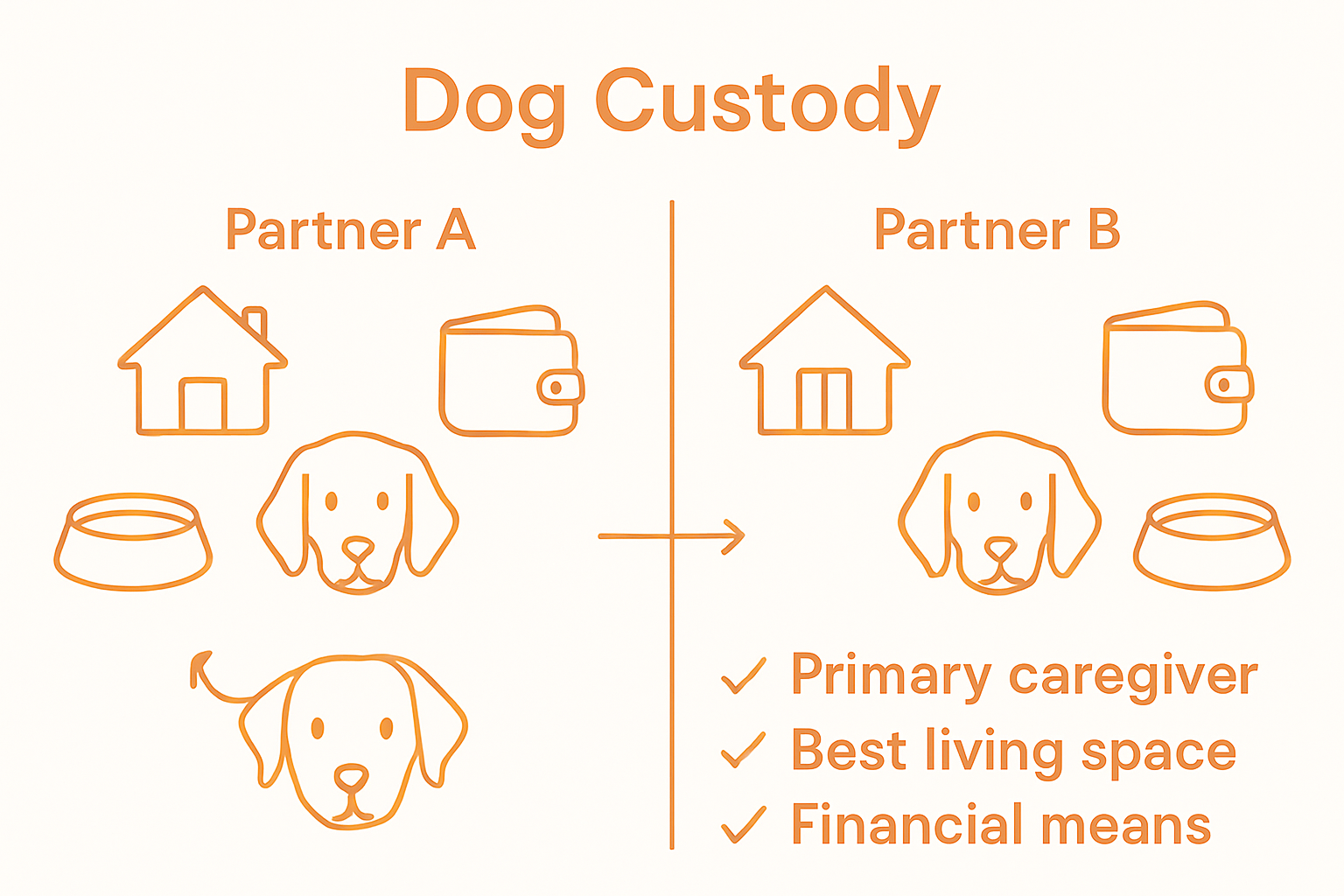
When determining who retains pet ownership after divorce, Dutch courts typically consider several key factors:
- Primary caregiver: The spouse who primarily cared for the pet during the marriage
- Financial responsibility: Who has the economic means to support the pet’s ongoing care
- Living arrangements: Which partner has suitable accommodation for the animal
- Emotional attachment: Evidence of significant emotional connection with the pet
Courts may also evaluate additional contextual elements such as the pet’s established routine, veterinary records, and historical patterns of pet care. The goal is to reach a resolution that minimizes disruption to the animal’s life while respecting legal property transfer principles.
To clarify the main considerations impacting pet custody in a Dutch divorce, the following table summarises the key factors assessed by courts and their relevance.
| Factor | Description |
|---|---|
| Primary Caregiver | The spouse consistently responsible for daily care, feeding, medical appointments, and pet maintenance. |
| Financial Responsibility | The spouse with the proven ability to provide ongoing economic support for the pet’s needs. |
| Living Arrangements | Suitability and stability of the home environment offered by each spouse, including space and proximity. |
| Emotional Attachment | Demonstrated emotional bond and established patterns of interaction with the pet. |
| Veterinary and Routine Care | Evidence of established routines, including veterinary records and historical care documentation. |
Mediation and Negotiated Settlements
Given the emotionally complex nature of pet custody, many divorcing couples opt for mediation to negotiate pet ownership outside traditional court proceedings. This approach allows for more nuanced, compassionate solutions that consider both parties’ emotional connections and practical circumstances. Mediation enables couples to craft creative arrangements such as shared custody, visitation schedules, or financial arrangements that support the pet’s well-being.
The table below compares traditional court-led pet custody processes with mediation-based approaches, highlighting their differing features and outcomes for divorcing couples.
| Aspect | Court-Led Process | Mediation-Based Arrangement |
|---|---|---|
| Approach | Adversarial, formal legal proceedings | Collaborative, discussion-focused |
| Decision Maker | Judge | Spouses (with mediator guidance) |
| Flexibility | Limited, restricted to legal precedents | High, allows tailored agreements |
| Emotional Consideration | Increasingly recognised but secondary | Central, supports relationships |
| Outcome Nature | Imposed by court | Mutually negotiated |
| Cost and Duration | Higher, potentially prolonged | Typically lower and faster |
While the legal framework might seem impersonal, understanding these principles helps divorcing couples navigate pet custody with greater clarity and potential for mutually acceptable resolutions.
Factors Influencing Pet Ownership Decisions
Determining pet ownership during divorce involves a complex evaluation of multiple interconnected factors. While legal frameworks traditionally treat pets as property, contemporary courts increasingly recognize the nuanced emotional dynamics surrounding animal companionship.
Assessing the Primary Caregiver
Primary caregiver status emerges as a critical consideration in pet ownership disputes. Courts examine detailed evidence of daily animal care, including:
- Consistent feeding schedules
- Regular veterinary appointments
- Exercise and training responsibilities
- Financial investment in pet maintenance
Documentation demonstrating sustained, long-term care typically weighs heavily in judicial deliberations. A spouse who has consistently managed the pet’s daily needs often gains procedural advantage during ownership negotiations.
Financial Capacity and Living Arrangements
Financial stability represents another crucial determinant in pet custody decisions. Courts meticulously evaluate each spouse’s economic capacity to provide:
- Adequate nutrition
- Necessary medical care
- Appropriate living environment
- Continued quality of life standards
Living arrangements receive substantial scrutiny, with judges considering factors such as residential stability, space availability, and potential proximity to established pet routines. A spacious home with secure outdoor areas might provide competitive advantages during ownership assessments.
Emotional Connection and Animal Welfare
While legal frameworks traditionally prioritize property transfer, contemporary judicial approaches increasingly acknowledge emotional connections between humans and companion animals. Courts may consider psychological evidence demonstrating:
- Long-standing emotional bonds
- Potential psychological impact of separation
- Historical patterns of animal interaction
- Individual capacity for nurturing animal relationships
Understanding these multifaceted considerations helps divorcing couples navigate pet ownership negotiations with greater insight and empathy. Comprehensive documentation, transparent communication, and a genuine commitment to the animal’s well-being can significantly influence potential outcomes.
Emotional Bonds and Their Impact on Custody Outcomes
Pets are more than mere property in modern relationships. They represent profound emotional connections that transcend traditional legal definitions, creating complex psychological landscapes during divorce proceedings. The depth of human animal relationships challenges conventional legal frameworks, compelling courts to consider nuanced emotional dynamics.
Psychological Dimensions of Pet Attachment
Emotional investment in companion animals represents a significant psychological phenomenon. Pets often function as family members, providing emotional support, companionship, and unconditional love. Research demonstrates that these relationships can be as emotionally significant as human interpersonal bonds, creating deep psychological attachments that complicate ownership disputes.
Key psychological indicators of strong pet bonds include:
- Consistent emotional sharing
- Mutual dependency
- Stress reduction mechanisms
- Therapeutic psychological interactions
Trauma and Separation Considerations
Divorce proceedings can trigger substantial emotional distress for both humans and animals. Separation trauma emerges as a critical consideration, with potential long-term psychological consequences. Courts increasingly recognize that abrupt pet relocation can cause significant emotional disruption, potentially influencing custody deliberations.
Potential psychological impacts include:
- Elevated stress responses
- Behavioral changes
- Attachment disruption
- Potential depression symptoms
Therapeutic and Legal Perspectives
Contemporary legal approaches are gradually integrating psychological research into pet custody evaluations. Mental health professionals increasingly provide expert testimony regarding animal-human emotional bonds, helping courts understand the intricate psychological dimensions of pet relationships.
Courts now consider more sophisticated assessments that examine:
- Depth of emotional connection
- Potential psychological harm from separation
- Individual capacity for emotional nurturing
- Historical interaction patterns
Understanding these emotional complexities transforms pet custody from a purely transactional legal process into a more compassionate, nuanced negotiation that prioritizes psychological well-being for all involved parties.
Alternatives to Traditional Pet Custody Arrangements
Beyond conventional ownership transfer, divorcing couples increasingly explore innovative approaches to pet custody that prioritize animal welfare and mutual cooperation. These alternative arrangements acknowledge the complex emotional landscape surrounding companion animals during relationship transitions.
Shared Custody Frameworks
Shared custody emerges as a progressive solution for couples committed to maintaining their pet’s emotional stability. This approach mirrors child custody models, establishing structured visitation schedules and shared responsibilities. Comprehensive pet sharing agreements typically outline precise logistical parameters, including:
- Specific visitation schedules
- Financial responsibility allocation
- Medical care decision protocols
- Holiday and special occasion arrangements
Successful shared custody requires exceptional communication, mutual respect, and a genuine commitment to the animal’s well-being. Couples must demonstrate flexibility and prioritize the pet’s emotional and physical needs over personal conflicts.
Mediation and Customized Agreements
Professional mediation offers divorcing couples a structured environment to negotiate nuanced pet custody arrangements. Specialized animal welfare mediators facilitate dialogues that transcend traditional legal frameworks, helping couples develop tailored solutions. These negotiations often produce creative outcomes that traditional court proceedings cannot accommodate.
Key negotiation strategies include:
- Establishing clear communication protocols
- Creating detailed visitation schedules
- Defining financial contributions
- Implementing periodic review mechanisms
Financial and Logistical Considerations
Effective alternative custody arrangements demand robust financial and logistical planning. Couples must address practical challenges such as transportation, veterinary expenses, and potential relocation scenarios. Comprehensive pet custody contracts should explicitly outline:
- Precise financial contribution percentages
- Transportation logistics
- Emergency care protocols
- Dispute resolution mechanisms
By approaching pet custody with creativity, empathy, and strategic planning, divorcing couples can develop innovative solutions that prioritize their companion animal’s emotional and physical well-being. These alternative arrangements represent a progressive approach to resolving complex interpersonal dynamics during relationship transitions.
The Role of Mediation and Legal Support in Pet Custody
Mediation represents a sophisticated alternative to traditional litigation in pet custody disputes, offering divorcing couples a constructive pathway to resolving complex emotional and practical challenges. This approach transforms adversarial legal proceedings into cooperative problem-solving opportunities.
Understanding Mediation Frameworks
Professional mediation provides a structured, neutral environment where divorcing partners can negotiate pet custody arrangements collaboratively. Trained mediators specialize in facilitating dialogue, helping couples navigate emotional complexities while developing mutually acceptable solutions. Specialized animal welfare mediators bring unique expertise in understanding the psychological dimensions of human animal relationships.
Key mediation advantages include:
- Reduced emotional confrontation
- Cost-effective dispute resolution
- Customized agreement development
- Preservation of interpersonal relationships
Legal Support and Documentation
Comprehensive legal documentation forms the foundation of successful pet custody arrangements. Legal professionals play a crucial role in drafting precise, enforceable agreements that address potential future contingencies. These documents typically outline:
- Specific visitation schedules
- Financial responsibilities
- Decision-making protocols
- Contingency provisions
Lawyers specializing in family and animal law provide essential guidance, ensuring that agreements comply with local legal standards while protecting both parties’ interests.
Emerging Legal Perspectives
Contemporary legal frameworks are progressively recognizing the emotional complexity of pet ownership. Courts and legal professionals increasingly view companion animals as more than mere property, acknowledging the profound psychological bonds between humans and their animal companions.
Emerging legal considerations include:
- Emotional welfare assessment
- Recognition of animal-human relationships
- Nuanced ownership evaluation
- Psychological impact considerations
By integrating mediation, legal expertise, and compassionate problem-solving, divorcing couples can develop innovative pet custody solutions that prioritize emotional well-being and mutual understanding.
Protect Your Bond With Expert Legal Guidance
Facing divorce and worried about who will keep the family dog can be one of the most emotional aspects of ending a relationship in the Netherlands. The article has shown how Dutch law treats pets as property, but the reality is that pets are often cherished companions with profound emotional value. If you are struggling with the confusion of legal frameworks, the stress of uncertainty, or the fear of losing your beloved animal, you are not alone. Many clients find the process overwhelming, especially when trying to balance legal requirements with deep personal connections.
At Law & More, we understand the unique challenges of pet custody during divorce. Our experienced team combines family law expertise with a sensitive approach, helping you navigate mediation, ownership evidence, and emotional considerations. With transparent communication, multilingual support, and solutions tailored to your situation, we guide you at every step. Do not leave your pet’s future to chance. Take control of your situation now by booking a confidential consultation through our main website. Secure clarity, peace of mind, and the best possible outcome for both you and your companion.
Frequently Asked Questions
What factors do courts consider when deciding pet custody in a divorce?
Courts typically evaluate the primary caregiver, financial responsibility, living arrangements, and emotional attachment when determining who gets to keep the pet after a divorce.
How is a pet classified legally in the context of divorce?
In the Netherlands, pets are classified as movable property, which affects how they are treated during divorce proceedings compared to children.
Can couples arrange shared custody for their pet after a divorce?
Yes, many couples opt for shared custody arrangements, allowing both parties to maintain a relationship with the pet while outlining specific visitation schedules and responsibilities.
What role does mediation play in pet custody disputes?
Mediation provides a neutral environment for couples to negotiate pet custody agreements collaboratively, helping them reach mutual decisions without the adversarial nature of court proceedings.