


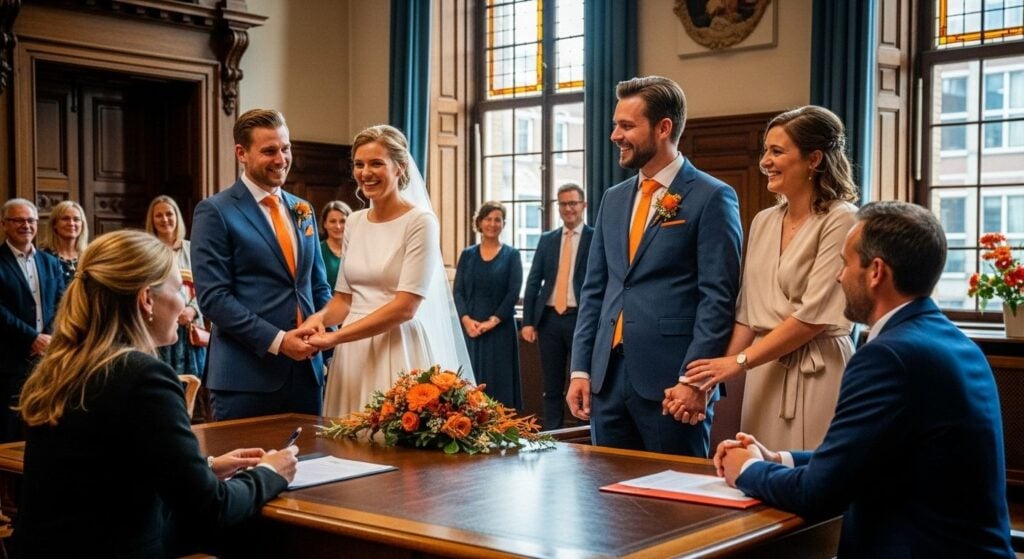
Marriage in the Netherlands is a legal milestone for couples and comes with concrete rights and responsibilities that shape everyday life. It goes far beyond just a romantic promise. Even the age restriction is strict, with Dutch law requiring both partners to be at least 18 years old for a legal union. Most people expect marriage to simply be about love or tradition, but in the Netherlands, it is a finely tuned legal contract that affects everything from finances to healthcare. Surprised? That age limit is only the beginning of how Dutch laws give marriage true power.
Table of Contents
- Defining Marriage: Legal Concepts And Requirements
- The Importance Of Marriage Laws In The Netherlands
- Key Components Of Marriage Legislation
- Rights And Obligations Of Spouses Under Dutch Law
- Impact Of Marriage Laws On Business And Society
Quick Summary
| Takeaway | Explanation |
|---|---|
| Marriage requires mutual consent. | Partners must voluntarily agree to enter into marriage without any form of pressure. |
| Minimum marriage age is 18. | Individuals must be at least 18 years old to legally marry in the Netherlands. |
| Registration with authorities is essential. | Couples must officially register their marriage with local municipal authorities to be legally recognized. |
| Both partners must have legal capacity. | Individuals must be legally capable of consenting to marriage without restrictions. |
| Close relatives cannot marry each other. | Dutch law prohibits marriage between certain close family members to maintain social ethics. |
Defining Marriage: Legal Concepts and Requirements
Marriage in the Netherlands represents a profound legal union between two individuals, governed by comprehensive legal frameworks that protect individual rights and establish clear societal guidelines. Understanding the intricate legal concepts surrounding marriage involves examining its fundamental definitions, requirements, and essential characteristics within Dutch law.
Legal Definition and Fundamental Principles
In the Dutch legal system, marriage is formally defined as a voluntary, legally recognized partnership between two individuals, irrespective of gender. This progressive approach reflects the Netherlands’ commitment to equality and individual autonomy. The legal recognition of marriage provides couples with specific rights, responsibilities, and protections under national legislation.
Key principles underlying marriage laws in the Netherlands include:
- Mutual Consent: Both partners must voluntarily enter the marriage without coercion
- Legal Capacity: Individuals must possess full legal capacity to consent
- Age Requirements: Minimum age for marriage is strictly 18 years
- Legal Equality: Complete legal parity between partners regardless of gender
Essential Marriage Requirements
To establish a legally valid marriage in the Netherlands, several critical requirements must be fulfilled. Prospective partners need to satisfy specific legal conditions that ensure the integrity and authenticity of their marital commitment.
Essential requirements include:
- Residency Status: At least one partner must be a Dutch national or legally residing in the Netherlands
- Marital Status: Neither partner can be currently married or in a registered partnership
- Family Relationship Restrictions: Close familial relationships prohibit marriage between certain relatives
- Witness Verification: Minimum of two witnesses aged 18 or older must be present during the marriage ceremony
The marriage process involves formal registration with local municipal authorities, where a Registrar of Births, Deaths, Marriages, and Registered Partnerships officiates the legal union. This official documentation ensures that the marriage is legally recognized and provides couples with comprehensive legal protections and rights under Dutch civil law.
The table below summarises the key requirements for a legally valid marriage in the Netherlands, helping readers quickly identify the main legal conditions and stipulations mentioned in the text.
| Requirement | Description |
|---|---|
| Mutual Consent | Both partners must voluntarily agree to marry without coercion. |
| Minimum Age | Each individual must be at least 18 years old. |
| Legal Capacity | Individuals must be capable of consenting to marriage under Dutch law. |
| Residency Status | At least one partner must be a Dutch national or have legal residence in the Netherlands. |
| Marital Status | Neither partner can be currently married or in a registered partnership. |
| Witnesses | A minimum of two witnesses aged 18 or older must attend the marriage ceremony. |
| Family Relationship Restriction | Close relatives are prohibited from marrying each other by law. |
| Official Registration | The marriage must be registered with local municipal authorities. |
The Importance of Marriage Laws in the Netherlands
Marriage laws in the Netherlands play a pivotal role in protecting individual rights, ensuring social stability, and providing a comprehensive legal framework for personal relationships. These laws extend far beyond simple ceremonial recognition, serving as critical mechanisms for establishing personal, economic, and social protections for couples.
Social and Personal Rights Protection
The marriage laws of the Netherlands are designed to safeguard fundamental human rights and promote equality. By establishing clear legal guidelines, these regulations ensure that both partners receive equal treatment, protection, and opportunities within their marital relationship. The legal system recognizes marriage as a voluntary partnership where individual autonomy and mutual respect are paramount.
Key aspects of social and personal rights protection include:
- Personal Autonomy: Guaranteeing individual choice and consent in marriage
- Legal Equality: Ensuring complete legal parity between partners
- Protection Against Discrimination: Preventing marital discrimination based on gender or sexual orientation
- Individual Dignity: Maintaining personal rights and freedoms within the marital context
Economic and Legal Implications
Marriage laws in the Netherlands provide substantial economic and legal benefits that extend across multiple domains of personal and professional life. These regulations create a robust framework for financial planning, inheritance, taxation, healthcare decision making, and property rights.
Critical economic and legal protections encompass:

- Financial Interdependence: Establishing legal mechanisms for joint financial management
- Inheritance Rights: Defining clear succession and inheritance protocols
- Healthcare Representation: Granting partners legal authority for medical decisions
- Property Ownership: Creating standardized guidelines for shared asset management
The comprehensive nature of Dutch marriage laws reflects a sophisticated understanding of human relationships. By balancing individual rights with societal responsibilities, these regulations create a supportive environment that recognizes the complexity of personal partnerships while providing clear, enforceable legal protections.
Key Components of Marriage Legislation
The Dutch marriage legislation comprises a sophisticated legal framework that encompasses multiple dimensions of marital relationships, providing comprehensive guidelines for establishing, maintaining, and potentially dissolving marriages. These legislative components are meticulously designed to protect individual rights, ensure societal stability, and create a transparent legal environment for couples.
Structural Legal Framework
The marriage legislation in the Netherlands establishes a robust structural foundation that defines the legal parameters of marital unions. This framework articulates precise conditions, rights, and obligations that govern marital relationships, ensuring clarity and predictability for couples.
Critical structural elements include:
- Legal Recognition: Formal acknowledgment of marriage as a legally binding partnership
- Registration Requirements: Mandatory documentation and municipal registration processes
- Consent Mechanisms: Clear protocols ensuring voluntary participation
- Comprehensive Regulatory Guidelines: Detailed regulations covering various marital scenarios
Rights and Obligations
Dutch marriage legislation comprehensively outlines the specific rights and obligations that emerge upon marriage. These legal provisions create a balanced approach that protects individual interests while establishing mutual responsibilities between partners.
Key rights and obligations encompass:
- Financial Interdependence: Establishing shared financial responsibilities and protections
- Property Management: Clear guidelines for asset ownership and management
- Inheritance Rights: Defined succession protocols and inheritance entitlements
- Mutual Support Obligations: Legal requirements for reciprocal care and support
The Netherlands offers multiple partnership models beyond traditional marriage, including registered partnerships and cohabitation agreements. These alternative frameworks provide flexible legal options that accommodate diverse relationship dynamics while maintaining robust legal protections.
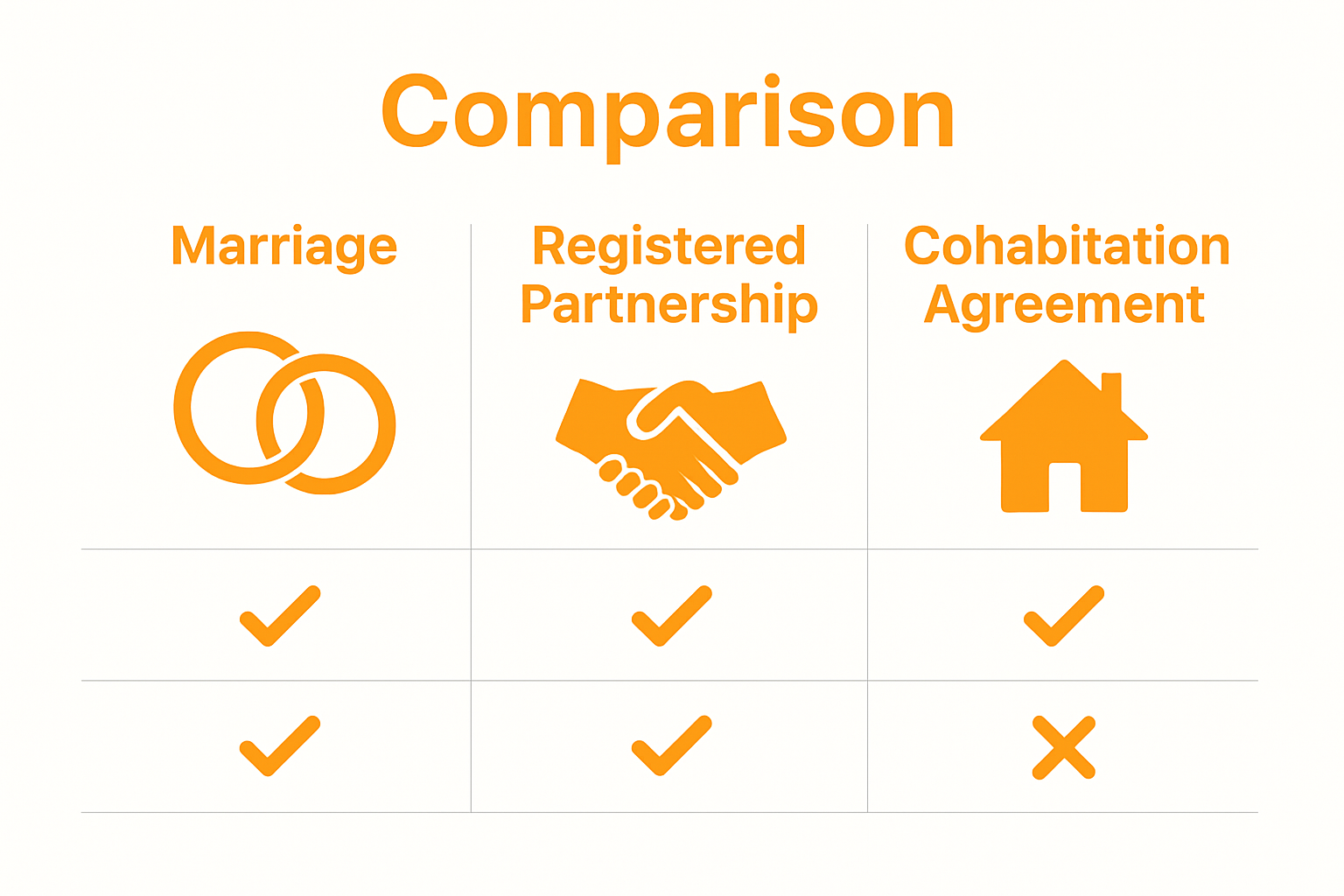 By creating comprehensive legislative frameworks, Dutch law ensures that couples have clear, enforceable mechanisms to define and protect their personal and collective interests.
Rights and Obligations of Spouses Under Dutch Law
Dutch marriage law establishes a comprehensive system of rights and obligations that define the legal relationship between spouses. These legal provisions create a balanced framework that protects individual interests while fostering mutual responsibilities and shared commitments within marital partnerships.
Personal and Financial Interdependence
Spouses in the Netherlands are granted a complex set of personal and financial rights that reflect the holistic nature of marital relationships. The legal framework recognizes marriage as a partnership where both individuals maintain personal autonomy while simultaneously establishing interconnected legal responsibilities.
Key personal and financial rights include:
- Mutual Support Obligation: Legal requirement for reciprocal emotional and financial care
- Independent Financial Decision Making: Preservation of individual financial agency
- Joint Asset Management: Collaborative approaches to property and financial planning
- Healthcare Decision Rights: Mutual authorization for medical and personal welfare decisions
Legal Maintenance and Support Mechanisms
The Dutch legal system provides robust mechanisms for ensuring ongoing support and financial protection for spouses during and potentially after marriage. These maintenance provisions aim to prevent economic vulnerability and establish clear pathways for resolving potential financial disputes.
Critical maintenance and support elements encompass:
- Spousal Maintenance: Legal provisions for financial support following relationship dissolution
- Property Division Protocols: Standardized guidelines for equitable asset distribution
- Inheritance Rights: Comprehensive frameworks defining succession and inheritance entitlements
- Cross Border Legal Protections: Mechanisms ensuring legal continuity in international contexts
The intricate legal framework surrounding marital rights in the Netherlands demonstrates a sophisticated approach to relationship regulation.
This table highlights the primary rights and obligations of spouses under Dutch law as discussed in the article, providing a concise reference for readers to understand what is expected within a marriage.
| Right or Obligation | Explanation |
|---|---|
| Mutual Support Obligation | Spouses are legally required to provide each other with emotional and financial support. |
| Independent Financial Decisions | Each partner retains authority to make independent financial choices. |
| Joint Asset Management | Both individuals collaborate on issues of property ownership and financial planning. |
| Inheritance Rights | Clear frameworks are defined for spousal inheritance entitlements. |
| Healthcare Decision Rights | Partners can make important medical decisions for each other. |
| Spousal Maintenance | Financial support may be legally required if the marriage ends. |
| Property Division Protocols | Dutch law stipulates guidelines for the equitable division of property upon dissolution. |
| Cross Border Legal Protections | Mechanisms exist to ensure marital rights are protected in an international context. |
Impact of Marriage Laws on Business and Society
Marriage laws in the Netherlands extend far beyond personal relationships, representing complex legal mechanisms that significantly influence economic structures, social dynamics, and institutional frameworks. These regulations create intricate connections between individual rights, business operations, and broader societal functioning.
Economic Implications and Business Dynamics
Dutch marriage legislation profoundly impacts economic interactions by establishing clear legal parameters for financial partnerships, asset management, and entrepreneurial collaborations. The legal framework provides businesses and individuals with predictable mechanisms for managing financial relationships and protecting economic interests.
Key economic considerations include:
- Asset Protection: Establishing legal boundaries for individual and shared business assets
- Inheritance Planning: Creating structured approaches for business succession and wealth transfer
- Financial Risk Management: Defining legal mechanisms for mitigating potential economic vulnerabilities
- Business Partnership Frameworks: Supporting transparent financial relationships between spouses
Social Transformation and Institutional Change
Marriage laws serve as powerful instruments for social evolution, reflecting and driving broader societal transformations. The Netherlands demonstrates a progressive approach by creating legal frameworks that recognize diverse relationship structures and promote individual autonomy while maintaining social cohesion.
Critical social impact elements encompass:
- Gender Equality: Promoting legal parity and challenging traditional power structures
- Individual Rights: Protecting personal freedoms within institutional frameworks
- Social Recognition: Legitimizing diverse relationship models
- Cultural Adaptation: Reflecting contemporary social values through legal mechanisms
Through sophisticated legal design, marriage laws in the Netherlands function as dynamic social technologies. They simultaneously protect individual rights, facilitate economic interactions, and respond to evolving societal norms, demonstrating an intricate balance between personal freedom and collective regulatory requirements.
Struggling to Navigate Dutch Marriage Law? Let Us Guide You
Understanding the complex requirements and far-reaching impact of marriage laws in the Netherlands can be overwhelming—especially if you are concerned about your legal rights, residency status, or financial security as a partner. Whether you are planning a marriage, need help registering your union, or want clarity on issues like property, inheritance, or mutual obligations, the regulations described in this article highlight how many critical details you must address to safeguard your future.
At Law & More, our experienced family law team helps both Dutch and international clients successfully manage every legal aspect of marriage in the Netherlands. We offer clear guidance, from meeting strict registration and consent requirements, to protecting your assets, or resolving sensitive maintenance issues. Ready to secure your marital rights and avoid costly mistakes? Visit our main site, contact us for a consultation with one of our experts, and let us provide the tailored legal support you need. Take action today and experience the confidence that comes from having a trusted advisor by your side.
Frequently Asked Questions
What are the legal requirements to get married in the Netherlands?
To marry in the Netherlands, you must meet several requirements: at least one partner must be a Dutch national or legally residing in the country, both must be at least 18 years old, and neither can be currently married or in a registered partnership. Additionally, close relatives are prohibited from marrying, and a minimum of two witnesses aged 18 or older must be present during the ceremony.
How is marriage defined under Dutch law?
Marriage in the Netherlands is defined as a voluntary, legally recognised partnership between two individuals, irrespective of gender. This signifies a commitment that is protected under national legislation, and it provides couples with specific rights and responsibilities.
What rights do spouses have in a Dutch marriage?
Spouses in the Netherlands are granted various rights, including mutual support obligations, independent financial decision-making, joint asset management, and rights relating to healthcare decisions. The law aims to balance individual freedoms with collective responsibilities within the marriage.
How does marriage law affect business partnerships in the Netherlands?
Marriage law in the Netherlands has significant impacts on business dynamics, including asset protection, inheritance planning, financial risk management, and providing a framework for transparent financial relationships between spouses involved in business together.