



Dutch relationships have a reputation for being refreshingly direct and strikingly equal, weaving together tradition and progress in the most unexpected ways. Most would assume that passion rules the heart in Europe’s most liberal corner, but the Netherlands stands out in its unromantic approach to romance.
In fact, over 40 percent of couples now opt for registered partnerships or cohabitation agreements instead of classic marriage, turning what seems like a practical decision into a bold declaration of modern love.
Table of Contents
-
Examining The Legal Framework Of Marriage And Prenups In The Netherlands
-
How Prenups Influence Relationships: A Romantic Or Ruthless Perspective?
-
Real-Life Implications Of Prenuptial Agreements In Dutch Marriages
Quick Summary
| Takeaway | Explanation |
| Dutch marriages prioritise equality and respect | Marital relationships in the Netherlands focus on mutual respect and equal partnership dynamics between partners. |
| Prenuptial agreements are common | These legal documents are seen as responsible and practical tools for financial planning, ensuring clarity and protection. |
| Open financial discussions strengthen relationships | Engaging in prenuptial discussions fosters better communication, trust, and understanding of financial goals between partners. |
| Multiple legal partnership options exist | The Netherlands offers various forms of legal recognition, including civil marriages, registered partnerships, and cohabitation agreements. |
| Prenuptial agreements mitigate financial risk | They provide clarity on asset distribution and responsibilities, enhancing financial security for both partners in a marriage. |
The Essence of Love and Marriage in Dutch Culture
The Netherlands presents a fascinating landscape of love, relationships, and marriage that blends traditional values with progressive social attitudes. Dutch culture approaches matrimony with a unique blend of pragmatism, personal freedom, and deep emotional commitment.
Cultural Perspectives on Partnership
Dutch society views marriage not merely as a romantic institution but as a partnership of equals. Couples in the Netherlands prioritise mutual respect, open communication, and individual autonomy within their relationships. This approach reflects the broader Dutch cultural values of directness, transparency, and personal independence.
Key characteristics of Dutch marital relationships include:
-
Emphasis on equality between partners
-
High degree of personal space and individual identity
-
Practical approach to relationship dynamics
-
Strong communication and negotiation skills
Legal and Social Frameworks
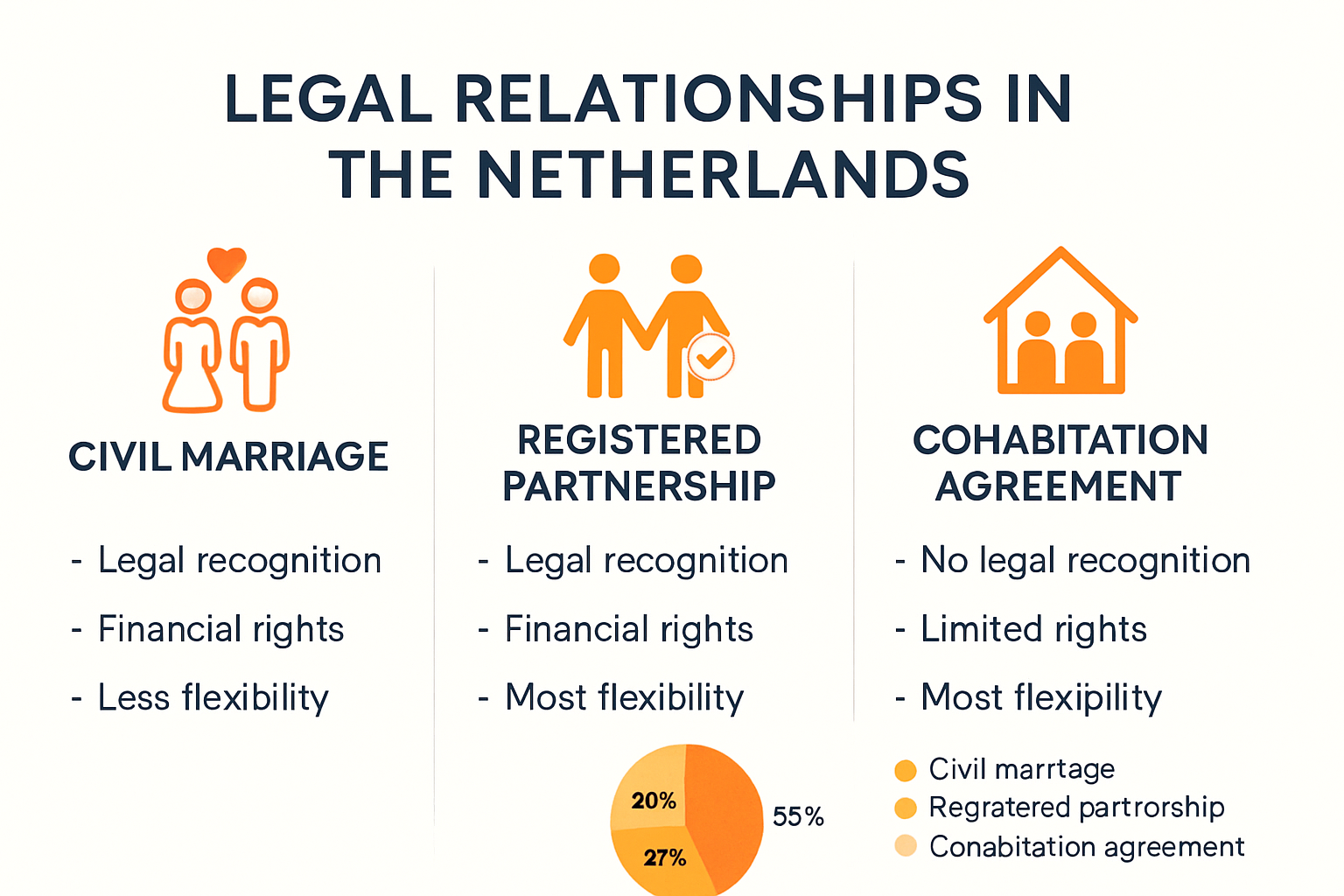
The Netherlands offers multiple relationship frameworks that demonstrate its progressive approach to love and commitment. Beyond traditional marriage, Dutch law recognises registered partnerships and cohabitation agreements, providing couples multiple options to formalise their relationships.
These frameworks allow couples to choose a legal structure that best suits their personal preferences and life circumstances. Registered partnerships, for instance, provide similar legal protections to marriage but with more flexibility in terms of personal arrangements.
Prenuptial Agreements: A Pragmatic Approach
Prenuptial agreements are particularly common in the Netherlands, reflecting the culture’s practical approach to relationships. Rather than being viewed as unromantic, these legal documents are seen as responsible financial planning and mutual protection.
Couples often discuss financial arrangements openly before marriage, viewing prenups as a method of ensuring transparency and preventing potential future conflicts. This approach demonstrates the Dutch cultural value of clear communication and mutual understanding in personal relationships.
Ultimately, Dutch culture celebrates love not through grand romantic gestures, but through respect, equality, and genuine partnership.
What is a Prenuptial Agreement and Why is it Significant?
A prenuptial agreement represents a strategic legal document that couples create before marriage to establish clear financial boundaries, asset protection, and potential separation terms. Far from being a pessimistic approach to marriage, these agreements serve as proactive financial planning tools that offer transparency and mutual understanding.
Understanding Prenuptial Agreements
Prenuptial agreements, commonly known as prenups, are comprehensive legal contracts that outline how financial assets, debts, and potential future wealth will be managed during marriage and in the event of divorce. These documents go beyond simple monetary considerations, addressing complex financial dynamics between partners.
The table below outlines common features typically addressed in Dutch prenuptial agreements, providing a concise reference for their key elements.
| Feature | Explanation |
| Distribution of Existing Assets | Specifies how personal and business assets are divided |
| Management of Inheritance | Determines handling of current and future inheritances |
| Protection of Individual Interests | Shields each partner[NULL]27s personal finances from joint obligations |
| Debt Responsibility | Clarifies which debts are personal or shared |
| Provisions for Spousal Support | Outlines terms for potential maintenance payments if required |
Key elements typically covered in prenuptial agreements include:
-
Distribution of existing personal and business assets
-
Management of potential inheritance
-
Protection of individual financial interests
-
Clarification of debt responsibilities
-
Provisions for potential spousal support
Legal and Financial Protection
The primary purpose of a prenuptial agreement is risk mitigation. By establishing clear financial expectations before marriage, couples can prevent potential future conflicts and misunderstandings. These agreements provide a transparent framework for financial interactions, reducing emotional and legal complexities during potential relationship transitions.
Prenups are particularly valuable for individuals with:
-
Significant personal wealth
-
Ownership of businesses
-
Anticipated inheritance
-
Complex financial portfolios
-
Previous marriage experiences
Emotional and Practical Considerations
Contrary to popular perception, prenuptial agreements are not indicators of mistrust but demonstrations of mature financial planning. They encourage open, honest conversations about financial expectations, individual goals, and shared responsibilities. By addressing potential financial scenarios proactively, couples can build stronger, more transparent relationships.
The process of creating a prenup requires mutual respect, honest communication, and a shared commitment to financial clarity. Each partner must fully disclose their financial situation, engage in transparent negotiations, and approach the agreement as a collaborative effort to protect mutual interests.

Ultimately, a well-crafted prenuptial agreement serves as a powerful tool for establishing trust, understanding, and financial security within a marriage.
Examining the Legal Framework of Marriage and Prenups in the Netherlands
The Dutch legal system provides a comprehensive and progressive approach to marriage and prenuptial agreements, reflecting the country’s commitment to individual autonomy, financial transparency, and equitable relationship structures. This framework offers couples multiple options for formalising their partnerships with robust legal protections.
Marriage Types and Legal Recognition
The Netherlands recognises multiple forms of legal partnership, each with distinct legal implications. Couples can choose between civil marriage, religious marriage, and registered partnerships, each offering different levels of legal protection and personal flexibility.
Key legal partnership options include:
-
Civil marriage with full legal recognition
-
Religious marriage with additional civil registration
-
Registered partnerships with similar legal protections
-
Cohabitation agreements for non-marital partnerships
Below is a comparison of the different legal partnership options recognised in the Netherlands, summarising their key features and legal implications.
| Partnership Type | Legal Recognition | Level of Flexibility | Key Features |
| Civil Marriage | Full | Moderate | Standard community property regime, full spousal rights |
| Religious Marriage | Requires civil reg. | Variable | Must also be registered civilly for legal validity |
| Registered Partnership | Nearly full | High | Similar legal protections as marriage, more flexibility |
| Cohabitation Agreement | Limited | Very High | Customised legal arrangements, less automatic protection |
Prenuptial Agreement Regulations
Dutch law provides a sophisticated legal framework for prenuptial agreements, emphasising fairness, transparency, and mutual consent. These agreements must be drafted by a qualified notary and signed before marriage to be legally binding. The Dutch Civil Code mandates full financial disclosure and ensures that both parties enter the agreement voluntarily.
Critical legal requirements for prenuptial agreements include:
-
Mandatory notarial certification
-
Complete financial transparency
-
Voluntary agreement without coercion
-
Reasonable and fair terms for both parties
-
Potential future modification provisions
Property and Financial Considerations
The Netherlands operates under a default matrimonial property regime of community property, which means all assets acquired during marriage are typically considered joint property. However, prenuptial agreements allow couples to deviate from this standard, creating personalised financial arrangements that suit their specific circumstances.
Prenuptial agreements can address complex financial scenarios such as:
-
Protecting pre-marital assets
-
Defining inheritance rights
-
Establishing separate property regimes
-
Managing business ownership interests
-
Determining potential spousal support
Ultimately, the Dutch legal framework surrounding marriage and prenuptial agreements prioritises individual choice, financial clarity, and mutual respect, providing couples with robust tools for managing their personal and financial relationships.
How Prenups Influence Relationships: A Romantic or Ruthless Perspective?
Prenuptial agreements represent a complex emotional and legal landscape where pragmatism intersects with romantic expectations. These legal documents challenge traditional notions of love by introducing financial transparency and strategic planning into relationship dynamics.
Psychological Dimensions of Prenuptial Agreements
Couples navigating prenuptial agreements confront profound psychological challenges that test their understanding of trust, commitment, and mutual respect. The process of creating a prenup demands unprecedented levels of emotional vulnerability and financial honesty. Partners must openly discuss potential future scenarios, financial histories, and individual expectations in ways that traditional romantic narratives often avoid.
Emotional challenges during prenup discussions typically include:
-
Confronting underlying financial anxieties
-
Negotiating personal boundaries
-
Addressing potential power imbalances
-
Managing expectations about relationship longevity
-
Balancing romantic idealism with practical considerations
Communication and Relationship Dynamics
Contrary to popular belief, prenuptial agreements can actually strengthen relationship communication when approached constructively. These conversations provide a structured opportunity for couples to develop deeper mutual understanding about their financial values, personal goals, and long-term relationship vision.
Positive communication outcomes from prenup discussions may include:
-
Enhanced financial transparency
-
Improved conflict resolution skills
-
Deeper emotional intimacy
-
Shared understanding of individual priorities
-
Mutual respect for personal autonomy
Redefining Romantic Expectations
Prenuptial agreements challenge romanticised notions of love by introducing rational, strategic thinking into relationship frameworks. Rather than undermining emotional connections, these documents can be viewed as mature expressions of commitment that prioritise mutual protection and shared understanding.
Key perspective shifts include recognising that:
-
Financial planning is an act of care
-
Transparency demonstrates relationship strength
-
Mutual protection is a form of love
-
Individual autonomy complements partnership
-
Practical considerations need not diminish emotional connection
Ultimately, prenuptial agreements represent a nuanced approach to love that balances emotional connection with practical considerations, challenging simplistic romantic narratives and promoting more sophisticated, respectful relationship dynamics.
Real-Life Implications of Prenuptial Agreements in Dutch Marriages
Prenuptial agreements in the Netherlands transcend mere legal documentation, representing complex real-world strategies for managing personal and financial relationships. These agreements reflect the intricate interplay between individual autonomy, financial protection, and interpersonal dynamics in modern Dutch marriages.
Financial Protection and Risk Management
Prenuptial agreements serve as sophisticated financial risk management tools for couples navigating complex economic landscapes. By establishing clear financial boundaries before marriage, individuals can protect personal assets, business interests, and potential inheritance, ensuring financial stability regardless of relationship outcomes.
Key financial protection strategies include:
-
Safeguarding pre-marital business investments
-
Protecting family inheritance
-
Defining individual versus joint financial responsibilities
-
Establishing separate property regimes
-
Creating transparent wealth management frameworks
Business and Entrepreneurial Considerations
For entrepreneurs and professionals, prenuptial agreements become critical mechanisms for protecting professional investments and career trajectories. Dutch law recognises the unique challenges faced by business owners entering marriages, providing flexible legal frameworks that allow comprehensive asset protection without compromising relationship integrity.
Entrepreneurial protection elements typically address:
-
Ownership rights of existing businesses
-
Treatment of future business growth
-
Potential spousal involvement in business operations
-
Mechanisms for business valuation during separation
-
Strategies for maintaining business continuity
Inheritance and Generational Wealth Planning
Prenuptial agreements play a significant role in managing inheritance and generational wealth transfer. Dutch legal frameworks enable nuanced approaches to preserving family assets across generations, allowing couples to create personalised strategies that respect both individual autonomy and familial financial legacies.
Inheritance planning considerations include:
-
Protecting inherited family properties
-
Managing complex multi-generational financial structures
-
Defining inheritance rights for potential children
-
Creating transparent wealth transfer mechanisms
-
Balancing individual and familial financial interests
Ultimately, prenuptial agreements in the Netherlands represent sophisticated legal tools that empower couples to navigate complex financial landscapes with transparency, mutual respect, and strategic foresight.
Turn Complex Emotions and Legal Matters into Clear Solutions
If you are struggling to navigate the emotional and practical realities of love, marriage, or prenuptial agreements in the Netherlands, you are not alone. This article has shown how Dutch couples face the challenge of balancing personal independence, mutual respect, and the need for financial certainty. Clear communication and tailored agreements such as prenups can seem daunting, especially with the intricate legal expectations and emotional conversations involved.
In the Netherlands, prenuptial agreements can only be made legally valid through a notarial deed, which makes the notary indispensable in the process. The notary not only ensures that the agreement is legally accurate, clear, and properly registered with the matrimonial property register, but also plays an important advisory role by explaining the legal consequences of marrying without such an agreement and outlining the available options, such as separation of property, settlement clauses, or arrangements regarding the marital home. Acting as an independent and impartial officer, the notary safeguards the interests of both partners, ensures that the agreement is entered into voluntarily and equally, and provides the necessary explanations so that both parties fully understand the implications.
Law & More is a law firm and not a notary office. We refer to a notary in case you are interested in prenuptial agreements. In all other matters of family law, our family lawyers can provide legal clarity around marriage, property, and family matters. We bring a multilingual, client-focused approach to every case and ensure that your interests are protected.
Frequently Asked Questions
What are the key characteristics of marriage in Dutch culture?
Dutch culture emphasises equality, open communication, and individual autonomy within marriage, prioritising mutual respect and practical relationship dynamics.
How do prenuptial agreements work in the Netherlands?
Prenuptial agreements in the Netherlands establish clear financial boundaries and asset protection before marriage. They must be notarised and include full financial disclosure from both partners.
What types of legal partnerships are recognised in the Netherlands?
The Netherlands recognises various forms of legal partnerships, including civil marriages, religious marriages, registered partnerships, and cohabitation agreements, each with distinct legal protections.
Can a prenuptial agreement prevent future conflicts in a marriage?
Yes, a prenuptial agreement can help prevent future conflicts by providing clarity on financial arrangements, ensuring open communication, and setting expectations for potential future scenarios.