




Temporary property rentals in the Netherlands have seen a dramatic shakeup for 2025, with landlords now facing much stricter rules and scrutiny. Brace yourself. Municipalities can now hit property owners with hefty penalties for even minor compliance mistakes, and the days of casual rental agreements are over. Yet while the headlines focus on increased enforcement and tenant rights, the most overlooked risk is simple paperwork errors that can cost thousands. Here’s where even experienced landlords can slip up without realising it.
Table of Contents
Quick Summary
| Takeaway | Explanation |
| Comprehensive Documentation is Essential | Property owners must create detailed rental agreements outlining rental duration, reasons for temporary leases, and conditions for contract changes to comply with regulations and protect tenant rights. |
| Navigating Legal Regulations is Crucial | Understanding the Fixed Term Tenancy Act and the Affordable Rent Act is imperative for landlords to avoid misclassifying properties and risking significant penalties. |
| Proactive Tenant Relations Improve Management | Establishing clear communication, responding promptly to maintenance requests, and respecting tenant privacy fosters positive relationships and mitigates potential conflicts. |
| Robust Financial Compliance Protocols are Necessary | Landlords should maintain precise rental price calculations that align with government standards to prevent financial errors and legal challenges. |
| Risk Management is Key for Corporate Rentals | Businesses must implement comprehensive risk mitigation strategies, including proper insurance and documentation, to adeptly navigate the complexities of temporary property rentals. |
Legal Requirements for Temporary Property Rentals
Navigating the legal landscape of temporary property rentals in the Netherlands requires a comprehensive understanding of recent legislative changes and strict regulatory frameworks. Property owners and tenants must now adhere to more complex regulations that prioritize tenant protection and market stability.
Understanding Rental Contract Restrictions
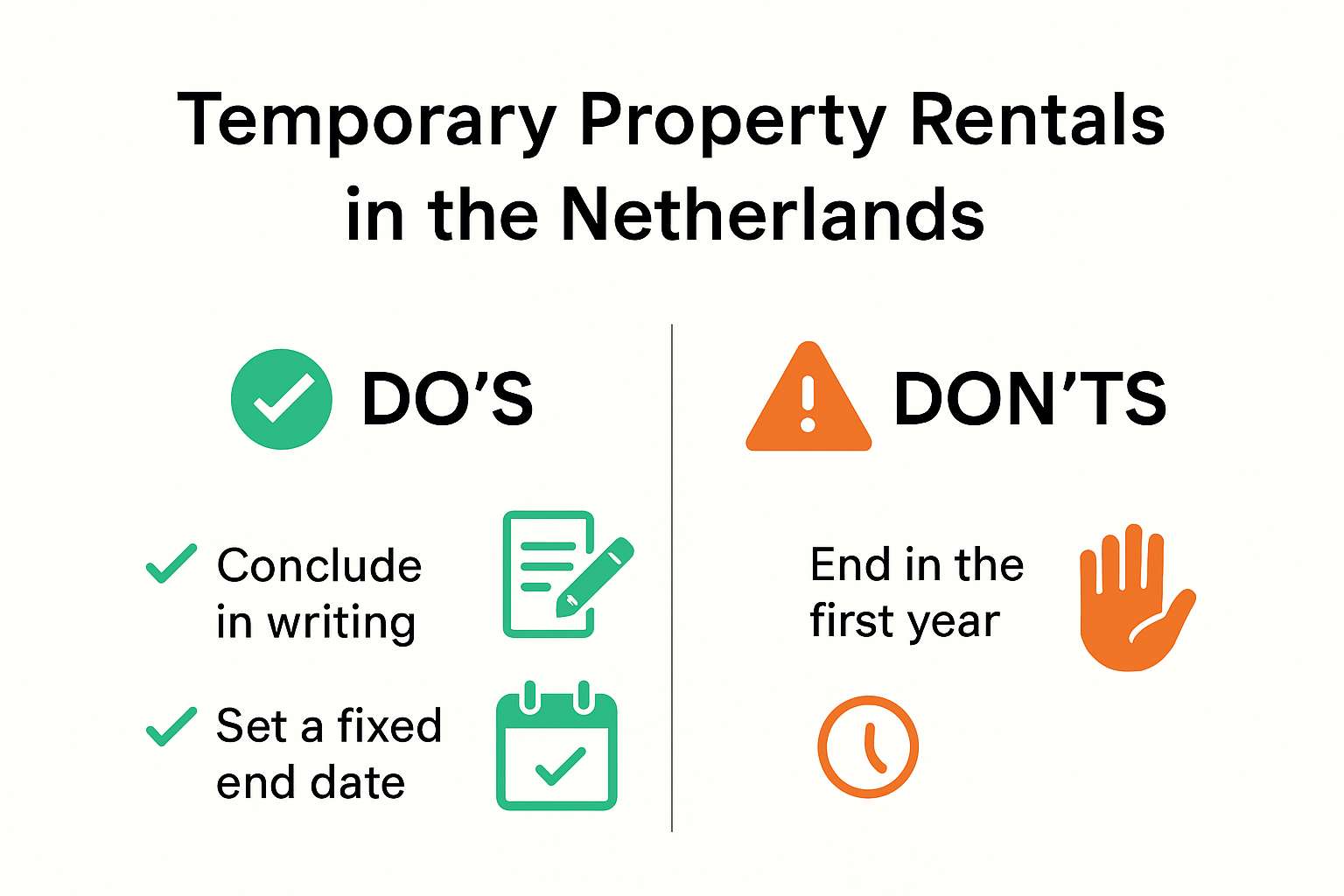
The Netherlands has significantly transformed its temporary rental regulations in 2025, fundamentally changing how property owners can approach short term and temporary leases. Under the new Fixed Term Tenancy Act, indefinite tenancy agreements have become the standard model, effectively limiting the scope of temporary rental contracts. Property owners can now only implement temporary rental agreements under specific, narrowly defined circumstances.
Qualifying exceptions for temporary rentals include scenarios such as student housing, properties undergoing renovation, and rentals protected under the Vacancy Act. Landlords must meticulously document and validate their rationale for pursuing a temporary rental arrangement. Failure to meet these strict criteria can result in substantial legal penalties and potential contract invalidation.
Compliance and Documentation Requirements
Property owners must prepare comprehensive documentation that transparently outlines the precise terms of temporary rental agreements. This documentation must include explicit details about the rental duration, specific reasons justifying the temporary nature of the contract, and clear provisions for potential contract extensions or terminations.
The Affordable Rent Act introduces additional complexity by mandating detailed points calculations for rental properties. Landlords must provide transparent pricing mechanisms that align with government regulated standards. This requirement ensures that rental prices remain fair and consistent with market regulations, protecting tenants from arbitrary pricing strategies.
Enforcement and Legal Consequences
Municipalities have been granted expanded powers to monitor and enforce rental regulations. Property owners found in violation of these guidelines can face significant financial penalties, potential legal action, and restrictions on future rental activities. The Good Landlordship Act empowers local authorities to investigate complaints, conduct property inspections, and impose sanctions against non compliant landlords.
Tenants now have robust legal protections that enable them to challenge temporary rental agreements that do not meet the stringent regulatory requirements. This shift represents a fundamental transformation in the rental market, prioritizing tenant stability and preventing potential exploitation.
Successful navigation of these legal requirements demands a proactive approach. Property owners must invest time in understanding the nuanced regulations, maintaining meticulous documentation, and ensuring full compliance with evolving legal standards. Professional legal consultation can provide critical guidance in interpreting and implementing these complex rental frameworks effectively.
The legal landscape for temporary property rentals in the Netherlands continues to evolve, reflecting a broader commitment to creating a fair, transparent, and balanced housing market that protects the interests of both tenants and property owners.
To help clarify the main qualifying scenarios for temporary rental agreements allowed in 2025, the following table summarises the exceptions and core documentation requirements:
| Qualifying Exception | Description | Key Documentation Needed |
| Student Housing | Housing provided specifically to students under official status | Proof of student status, documented rental term |
| Property Under Renovation | Property rented while awaiting or during a renovation process | Renovation schedule, official permits |
| Vacancy Act Regulation | Rental under Dutch Vacancy Act for temporarily vacant properties | Vacancy Act certificate, contract with conditions |
| Temporary Project Staffing | Housing provided for fixed-term work/project assignments | Proof of employment/project, temporary assignment |
Best Practices for Hosts and Landlords
Successful property rental in the Netherlands demands strategic planning, comprehensive understanding of legal frameworks, and proactive management approaches. Hosts and landlords must adapt to increasingly complex regulatory environments while maintaining positive relationships with tenants.
Transparent Rental Agreements and Documentation

Creating robust and transparent rental agreements represents the foundational step for responsible property management. Landlords must develop comprehensive documentation that explicitly outlines all rental terms, expectations, and legal obligations.
Key elements of a comprehensive rental agreement include precise rental duration specifications, clear maintenance responsibilities, comprehensive property condition descriptions, and explicit financial terms. Landlords should provide detailed inventories documenting the property’s condition at the start of tenancy, including photographic evidence and written assessments. This approach protects both parties and establishes clear expectations from the outset.
Proactive Property Management and Tenant Relations
Effective property management extends beyond legal compliance and requires developing positive, professional relationships with tenants. Landlords should establish clear communication channels, respond promptly to maintenance requests, and maintain professional boundaries. Regular property inspections help identify potential issues before they escalate, demonstrating commitment to property maintenance and tenant welfare.
Understanding and respecting tenant privacy rights is crucial. Landlords must provide minimum 24-hour notice before property visits and cannot enter rental spaces without explicit permission. Implementing systematic maintenance schedules, addressing repair requests efficiently, and maintaining open communication lines contribute to positive tenant experiences and reduce potential conflicts.
Financial and Legal Risk Management
Navigating the complex financial landscape of property rentals requires strategic planning and comprehensive risk management. Landlords must stay informed about evolving rent control regulations, accurately calculate permissible rent increases, and maintain detailed financial records. The Affordable Rent Act introduces stringent requirements for rent calculations, mandating transparent pricing mechanisms aligned with government standards.
Professional landlords should consider comprehensive insurance coverage protecting against potential property damages, liability claims, and rental income disruptions. Developing contingency plans for scenarios such as unexpected vacancies, tenant disputes, or property maintenance emergencies provides additional financial security.
Successful property rental in the Netherlands demands continuous learning, adaptability, and a commitment to professional standards. Landlords who invest time in understanding regulatory frameworks, maintaining transparent relationships, and implementing systematic management approaches will be best positioned to thrive in the evolving rental market.
The rental landscape continues to prioritize tenant protection and market stability. Hosts and landlords who embrace these principles, remain proactive in their approach, and maintain high professional standards will successfully navigate the complex Dutch rental environment.
The following table summarises key best practices landlords should follow for robust compliance and tenant relations:
| Best Practice Area | Action/Requirement | Benefit |
| Transparent Documentation | Provide detailed written agreements, inventories, and financial terms | Minimises disputes and ensures legal clarity |
| Responsive Tenant Management | Respond promptly to requests, maintain clear communication channels | Builds trust and reduces potential conflicts |
| Regular Property Inspections | Schedule and document inspections, monitor property condition | Prevents issues and demonstrates due diligence |
| Privacy and Access Compliance | Give 24+ hours’ notice before visits, respect tenant privacy | Meets legal requirements, improves goodwill |
| Systematic Maintenance Protocols | Implement scheduled maintenance and emergency response plans | Maintains property value and tenant safety |
Common Pitfalls to Avoid in 2025
The Dutch rental market in 2025 presents numerous potential challenges for both property owners and tenants. Understanding the most prevalent risks can help stakeholders navigate the complex regulatory landscape and avoid costly legal and financial mistakes.
Misinterpreting Rental Contract Regulations
One of the most significant pitfalls for landlords involves misunderstanding the nuanced regulations surrounding temporary rental agreements. The Fixed Term Tenancy Act has dramatically restricted the circumstances under which temporary contracts can be issued. Property owners frequently make critical errors by attempting to implement temporary rental agreements without meeting the strict legal criteria. Learn more about tenant protection strategies to prevent potential legal complications.
Common mistakes include incorrectly classifying rental properties, failing to provide proper documentation, or attempting to circumvent permanent tenancy requirements. Landlords must carefully verify their specific circumstances against the limited exceptions for temporary rentals. Scenarios such as student housing, renovation projects, or properties under the Vacancy Act require meticulous documentation and precise legal justification.
Financial and Pricing Compliance Errors
The Affordable Rent Act introduces complex pricing mechanisms that catch many landlords off guard. Property owners frequently miscalculate permissible rent levels, risking significant financial penalties and potential legal challenges. The points calculation system requires precise documentation and transparent pricing strategies that align with government regulated standards.
Key financial pitfalls include:
-
Overpricing rental properties beyond legally permitted rates
-
Failing to provide detailed rent calculations
-
Implementing unauthorized rent increases
-
Neglecting to adjust rental prices according to official guidelines
Municipalities have enhanced enforcement capabilities, enabling them to investigate and penalize landlords who do not comply with pricing regulations. Tenants now have robust legal mechanisms to challenge inappropriate rental pricing, potentially resulting in financial reimbursements and legal consequences for non compliant landlords.
Overlooking Tenant Protection and Communication Requirements
Successful property management demands more than legal compliance. Landlords frequently underestimate the importance of comprehensive communication and proactive tenant relations. The Good Landlordship Act empowers tenants with extensive protections, making professional and transparent interactions crucial.
Critical communication pitfalls include:
-
Inadequate maintenance response protocols
-
Violating tenant privacy rights
-
Failing to provide proper notice for property inspections
-
Neglecting to document communication and maintenance interactions
Property owners must establish clear communication channels, respond promptly to maintenance requests, and maintain detailed records of all interactions. Municipalities now have expanded powers to investigate and penalize landlords who fail to meet these professional standards.
Navigating the 2025 rental market requires a proactive, informed approach. Landlords must invest significant time in understanding evolving regulations, maintaining meticulous documentation, and prioritizing transparent, professional relationships with tenants. Those who fail to adapt to these complex requirements risk substantial financial and legal consequences.
The rental landscape continues to prioritize tenant stability and market fairness. Property owners who approach their responsibilities with diligence, professionalism, and a commitment to understanding current regulations will successfully manage their rental properties in this challenging environment.
Guidance for Corporate and Business Rentals
Corporate and business property rentals in the Netherlands require sophisticated understanding of complex legal frameworks and strategic management approaches. The 2025 regulatory landscape demands unprecedented levels of precision and compliance from organizations seeking to lease commercial and professional spaces.
Strategic Rental Agreement Frameworks
Business entities must develop comprehensive rental strategies that align with the evolving legal requirements of the Fixed Term Tenancy Act. Corporate rental agreements now require more nuanced documentation and explicit justifications for temporary occupancy.
Key considerations for corporate rental agreements include:
-
Precise definition of rental purpose
-
Clear documentation of temporary occupation rationale
-
Comprehensive inventory and condition assessments
-
Explicit maintenance and modification permissions
-
Transparent exit strategies and contract termination conditions
Organizations must meticulously document the specific circumstances justifying temporary rental arrangements. This includes demonstrating project specific needs, renovation requirements, or transitional business strategies that necessitate short term property access.
Financial and Regulatory Compliance Protocols
The Affordable Rent Act introduces sophisticated pricing mechanisms that significantly impact corporate rental strategies. Business entities must develop robust financial compliance protocols that account for complex point based rental calculations and government regulated pricing standards.
Critical financial management considerations include:
-
Accurate rental price calculations
-
Transparent financial reporting
-
Comprehensive documentation of pricing rationales
-
Regular compliance audits
-
Proactive adaptation to regulatory changes
Municipalities have expanded enforcement capabilities, enabling them to conduct detailed investigations into corporate rental practices. Companies must maintain meticulous financial records and be prepared to justify their rental pricing and agreement structures.
Risk Management and Operational Strategies
Successful corporate rental management demands sophisticated risk mitigation approaches. Organizations must develop comprehensive strategies that address potential legal, financial, and operational challenges associated with temporary property rentals.
Key risk management strategies include:
-
Comprehensive insurance coverage
-
Detailed contingency planning
-
Professional legal consultation
-
Regular compliance training
-
Systematic documentation practices
The 2025 rental landscape prioritizes transparency, tenant protection, and market stability. Corporate entities must approach property rentals with a holistic perspective that balances operational requirements with legal and ethical considerations.
Navigating the complex Dutch rental environment requires continuous learning, adaptability, and a commitment to professional excellence. Businesses that invest in understanding regulatory frameworks, maintaining transparent relationships, and implementing systematic management approaches will successfully manage their rental portfolios in this challenging regulatory landscape.
The future of corporate rentals demands a proactive, informed approach that prioritizes legal compliance, financial transparency, and strategic flexibility. Organizations that embrace these principles will be best positioned to thrive in the evolving Dutch property rental market.
Frequently Asked Questions
What are the legal requirements for temporary property rentals in the Netherlands in 2025?
Property owners must comply with the Fixed Term Tenancy Act, which outlines that temporary leases can only be issued under specific circumstances like student housing, properties under renovation, or as specified by the Vacancy Act. Additionally, comprehensive documentation is required.
How can landlords avoid penalties for non-compliance with rental regulations?
Landlords can avoid penalties by understanding and adhering to the complex regulations, maintaining accurate documentation, ensuring rental agreements are transparent, and implementing systematic management practices to meet legal standards.
What common mistakes should landlords avoid in temporary rental agreements?
Landlords should avoid misclassifying properties, failing to document rental contract conditions, and ignoring tenant rights. It’s crucial to accurately calculate rental prices in compliance with the Affordable Rent Act to prevent legal challenges.
How can effective communication improve landlord-tenant relationships?
Establishing clear communication channels, promptly responding to maintenance requests, and respecting tenant privacy are significant in fostering positive relationships. This proactive approach reduces conflicts and enhances tenant satisfaction.
Feeling Overwhelmed by New Dutch Rental Laws?
Staying compliant with temporary rental regulations in the Netherlands for 2025 is no simple task. Even experienced landlords face stress when managing documentation and interpreting the Fixed Term Tenancy Act or the Affordable Rent Act. As highlighted in the article, simple paperwork mistakes or misinterpreting contract restrictions can put your property investment at serious risk. With municipalities empowered to investigate, impose penalties, and enforce rules more firmly than ever, the cost of a single misstep could be devastating.
Why not protect your rental interests with specialist help you can trust? At Law & More, our multilingual team provides personal, rapid legal support tailored to both Dutch and international clients. From drafting compliant agreements and calculating rent according to the points system, to advising on tenant relations and risk management, our legal experts ensure you stay one step ahead. Visit our main site or learn more about your rights and obligations as a landlord today. Secure your properties by connecting with our professionals now before tighter regulations create bigger risks tomorrow.