


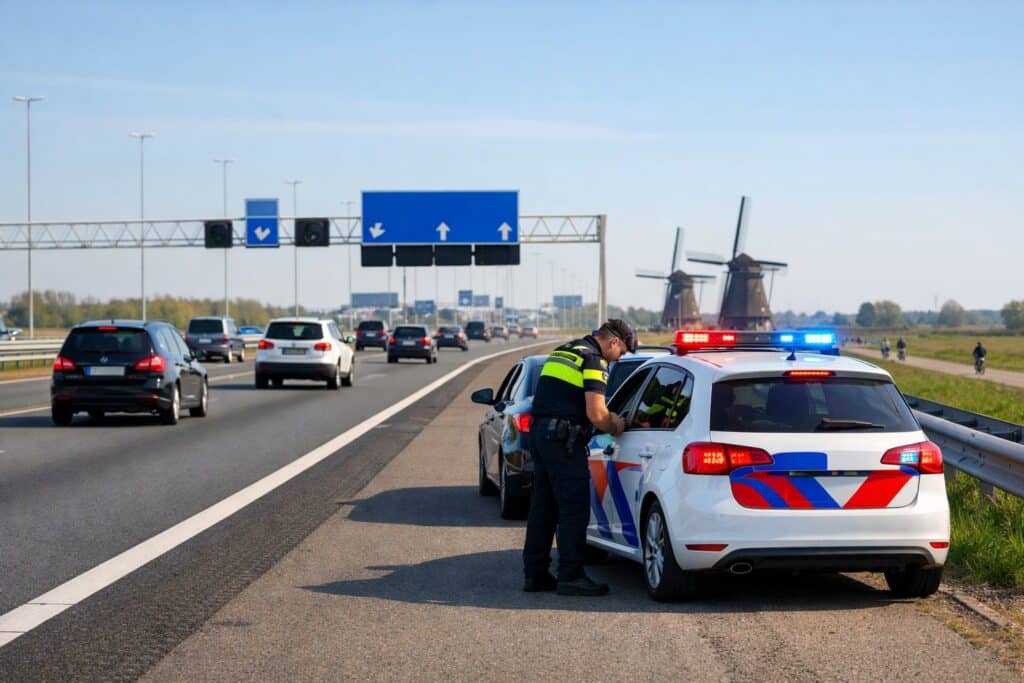
Speeding fines in the Netherlands are taken seriously, but not all speeding violations are treated equally. Most speeding offences result in a standard fine that you can simply pay without going to court.
However, if you exceed the speed limit by too much, your violation shifts from a minor administrative matter to a potential criminal offence with far more serious consequences.
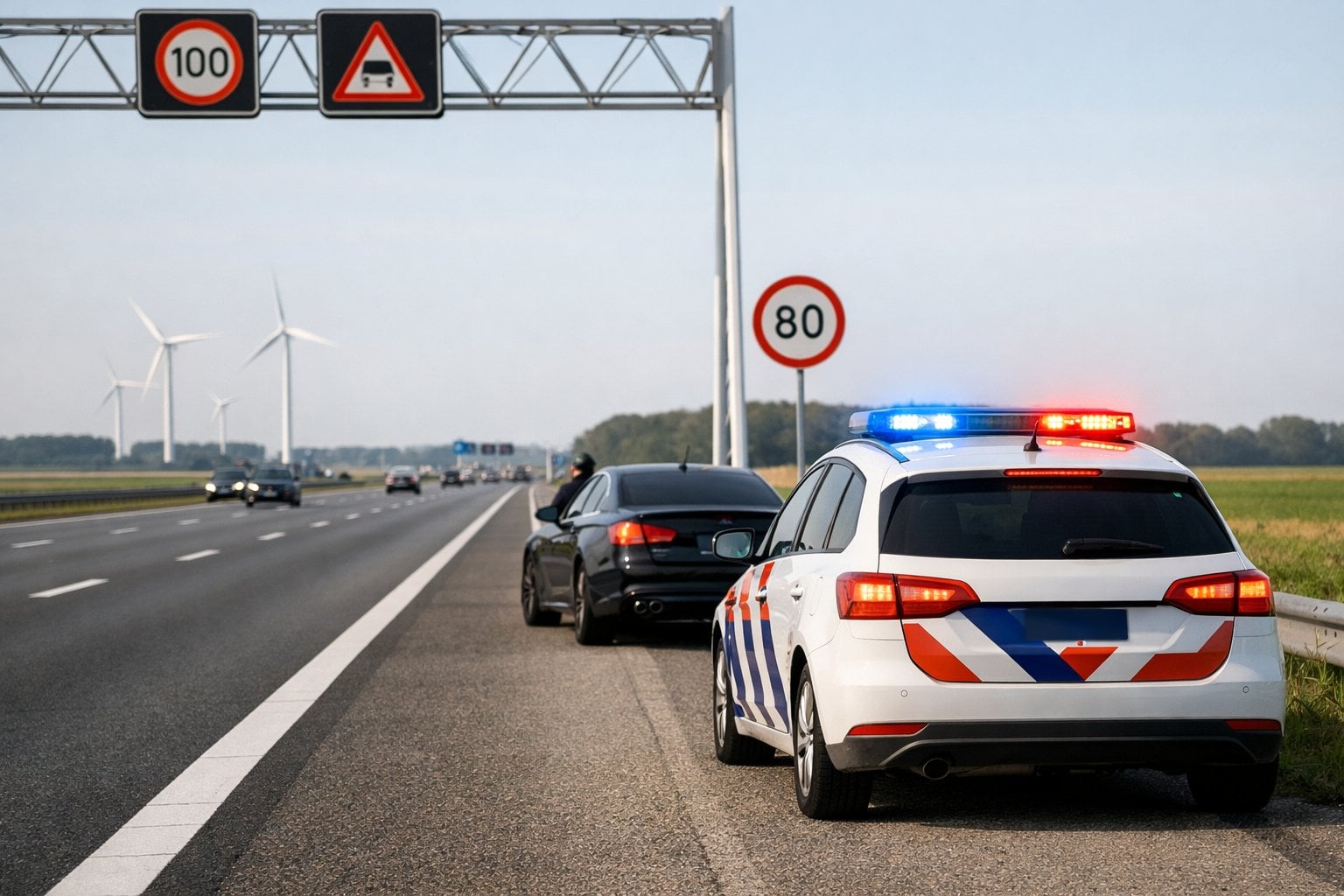
If you speed more than 30 km/h over the limit in urban or rural areas, or more than 40 km/h over the limit on a motorway, your case will be referred to the Public Prosecution Service and you may face criminal penalties including licence suspension, a court summons, or even a criminal record. This is a critical threshold that many drivers don’t realise exists until they’ve already crossed it.
Understanding where this line sits can help you avoid turning a simple traffic fine into a criminal matter. The Dutch system has clear rules about when speeding becomes a serious offence.
Understanding Speeding Offences in the Netherlands
In the Netherlands, speeding violations are classified based on how much you exceed the posted limit. Fines increase proportionally to the severity of the offence.
Dutch traffic laws draw a clear line between administrative penalties for minor infractions and criminal prosecution for excessive speeding.
Definition of Speeding Under Dutch Law
Speeding in the Netherlands occurs when you drive faster than the posted speed limit in any given area. Dutch traffic laws treat most speeding violations as minor traffic offences handled through administrative procedures rather than criminal proceedings.
The Central Judicial Collection Agency (CJIB) processes these administrative fines automatically when you’re caught by speed cameras or issued a penalty notice by a police officer. Each fine includes a €9 administration fee on top of the base penalty amount.
The severity of your offence depends on how many kilometres per hour you exceed the limit. Minor violations typically result in a standardised fine that you can pay directly to the CJIB.
However, excessive speeding triggers a different response from authorities.
Differentiating Minor and Major Speeding Violations
Minor speeding violations in the Netherlands involve exceeding the limit by up to 30 km/h within city limits or outside built-up areas, and up to 40 km/h on motorways. These offences remain under administrative law and result in fixed fines ranging from €31 to €378, depending on the location and extent of the violation.
Major speeding violations occur when you exceed these thresholds. If you drive more than 30 km/h over the limit in urban or rural areas, or more than 40 km/h over the limit on motorways, you’ll receive a punishment order (strafbeschikking) instead of a standard fine.
A punishment order places your case under criminal law, meaning the Public Prosecution Service handles your violation. This results in a criminal record, substantially higher penalties, and potentially more severe consequences such as driving bans.
The exact penalties vary based on circumstances and your driving history.
Standard Speed Limits and Enforcement Methods
The Netherlands maintains specific speed limits depending on the road type and area. Within city limits, the standard limit is 50 km/h, though many residential areas have 30 km/h zones.
Outside built-up areas, limits typically range from 60 to 80 km/h. Motorways generally allow 100 to 130 km/h, though limits may change based on time of day or environmental conditions.
Speed enforcement relies heavily on automated camera systems throughout the country. These cameras operate at fixed locations and in mobile units, capturing violations without requiring a police officer to be present.
When caught speeding, you’ll receive different fines based on location:
| Location | 5 km/h over | 15 km/h over | 30 km/h over |
|---|---|---|---|
| City limits | €35 | €139 | €346 |
| Outside cities | €32 | €133 | €329 |
| Motorways | €31 | €123 | €302 |
Police officers can also issue on-the-spot fines during traffic stops, particularly for serious violations or when additional offences are detected.
From Traffic Fine to Criminal Offence: When Does Speeding Cross the Line?
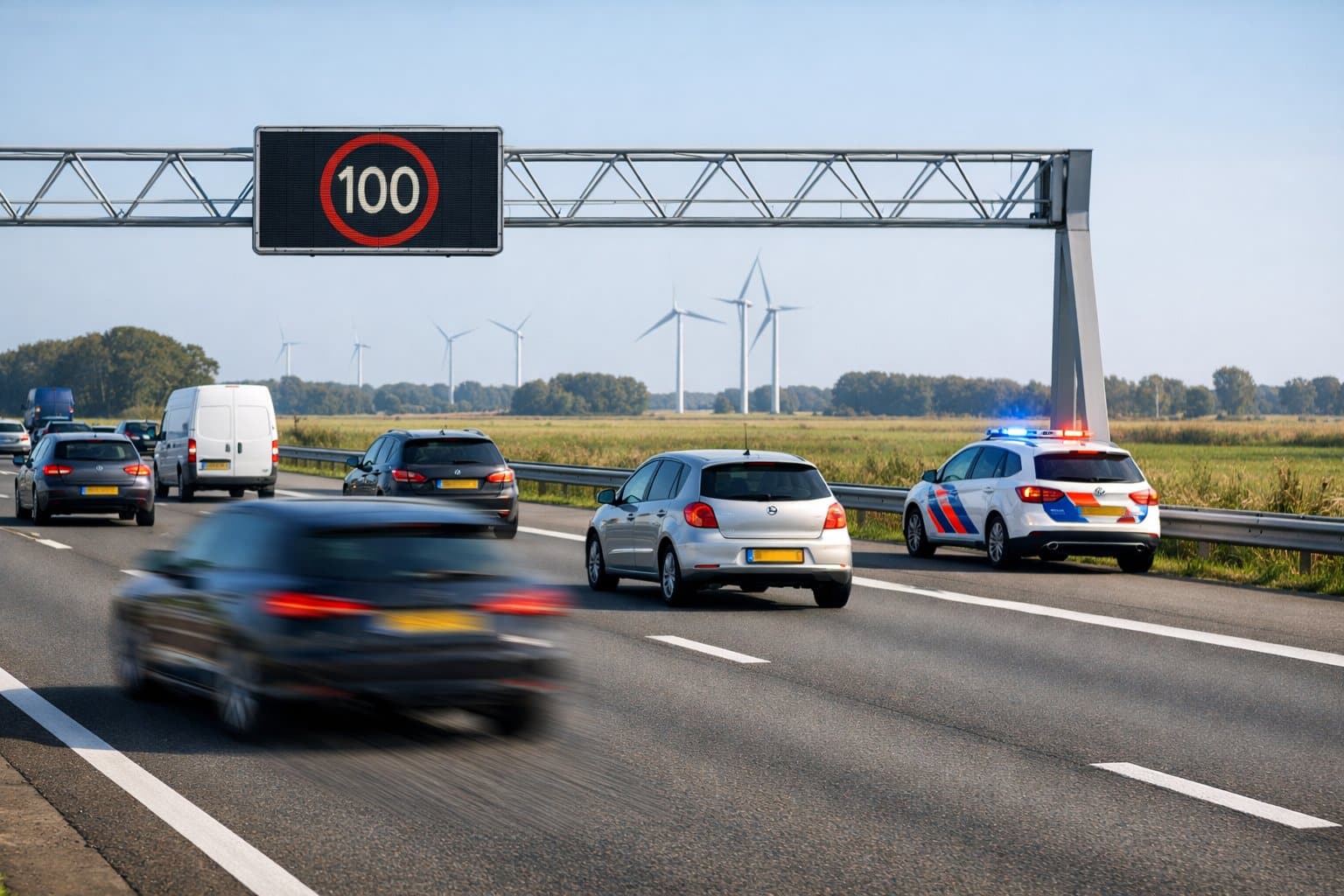
In the Netherlands, most speeding violations remain administrative matters handled through fines. Exceeding certain speed thresholds transforms your traffic offence into a criminal matter with lasting consequences.
The distinction between a simple traffic fine and a criminal offence depends primarily on how far you exceed the posted speed limit.
Thresholds for Criminal Speeding Offences
Dutch traffic laws establish clear boundaries between administrative and criminal speeding violations. When you drive more than 30 km/h over the speed limit within built-up areas or outside built-up areas, your case moves from administrative law to criminal law.
On motorways, the threshold increases to 40 km/h over the limit. Below these thresholds, the Central Judicial Collection Agency (CJIB) handles your case administratively.
You’ll receive a traffic fine by post, which ranges from €32 to €495 depending on the location and severity of the violation. Once you cross these speed thresholds, the Public Prosecutor becomes involved, and your offence is documented on your criminal record.
This applies to drivers from any EU member state caught speeding in the Netherlands.
Consequences of Serious Speeding Violations
Criminal speeding offences carry significantly harsher penalties than standard traffic fines in the Netherlands. You’ll receive a penal order (strafbeschikking) from the Public Prosecutor, which typically includes substantially higher fines than administrative violations.
Beyond financial penalties, a criminal speeding conviction creates a permanent record. You must report this criminal offence to your car insurance provider, which will likely increase your premiums.
The documentation of serious offences means future employers or organisations may access this information during background checks. In the most severe cases, criminal speeding violations can result in driving licence suspension or even court proceedings.
The courts may impose additional penalties, including driving bans for extended periods.
Role of the Public Prosecutor
The Public Prosecutor manages all criminal speeding cases in the Netherlands, issuing penal orders for offences that exceed the speed thresholds. This official determines the appropriate penalty based on the severity of your violation and any aggravating circumstances.
When you receive a penal order, you have the right to lodge an appeal if you disagree with the decision. The appeal process allows you to contest the charge through the court system, starting with the Subdistrict Court.
The Public Prosecutor also coordinates with the CJIB for enforcement of criminal traffic fines. If you fail to pay, they authorise more serious consequences, including potential imprisonment for up to seven days in extreme cases of non-payment.
The Dutch System for Handling Speeding Fines
The Netherlands uses two separate legal tracks to handle speeding violations. Minor offences fall under administrative law, whilst serious violations move into the criminal justice system with harsher penalties.
Administrative Law and the Mulder Procedure
Most speeding tickets in the Netherlands are processed through administrative law. The Central Judicial Collection Agency (Centraal Justitieel Incassobureau or CJIB) handles these cases using what’s known as the Mulder Procedure.
When you commit a minor speeding offence, you’ll receive a fine notice marked with the letter “M” in the top right corner. This letter shows the type of violation and the amount you must pay.
You have eight weeks to pay the fine.
Payment Reminder System:
- First reminder: 1.5 times the original fine
- Second reminder: 3 times the original fine
If you receive a €50 speeding fine and don’t pay, the first reminder increases it to €75. The second reminder raises it to €150.
The police officer or speed camera records your violation, but you never appear in court for these minor offences.
The Criminal Law Process in Major Offences
Serious speeding violations don’t go through the CJIB’s administrative process. Instead, the Public Prosecution Service (Openbaar Ministerie) handles these cases under criminal law.
These major offences include excessive speeding and require a different approach. You may receive a punishment order directly from the prosecutor, or your case might go to criminal court.
The penalties are significantly higher than administrative Dutch traffic fines. Criminal speeding cases can result in large fines, driving bans, or even prison sentences.
The prosecutor decides whether to handle your case through a punishment order or send it to court for a judge’s decision.
How Speeding Fines Are Calculated and Issued
Speeding fines in the Netherlands follow a structured system based on how much you exceed the limit and where the violation occurs. The Central Fine Collection Agency (CJIB) handles all traffic fines using standardised amounts that vary by location type.
Calculation of Fine Amounts by Exceedance and Location
Your fine amount depends on two main factors: the speed by which you exceeded the limit and the type of road where the violation happened. Built-up areas carry the highest penalties, followed by regional roads and motorways.
The speed limits are 50 km/h in built-up areas, 80 km/h on regional roads, and 100-130 km/h on motorways. Fines increase progressively with each kilometre over the limit.
For example, exceeding the limit by 4-5 km/h costs €34-46 in built-up areas, €32-44 outside built-up areas, and €31-42 on motorways. If you exceed by 21-25 km/h, you’ll pay €236-298 in built-up areas, €216-275 outside, and €203-257 on motorways.
Special zones like roadwork areas and school zones typically carry higher fines. All fine notices include a €9 administration fee on top of the base amount.
Different Fine Categories and Examples
Fines in the Netherlands are divided into administrative penalties for standard violations and court cases for serious offences. Minor speeding falls under administrative law, handled directly by the CJIB without court involvement.
If you exceed the speed limit by 1-10 km/h, you’ll receive a standard fixed fine ranging from €12 to €98 depending on location. Exceeding by 11-30 km/h results in fines between €87 and €365.
Once you exceed the limit by more than 50 km/h, your case goes to court rather than receiving a fixed fine. This applies regardless of road type.
The judge then determines your penalty, which may include licence suspension alongside financial penalties.
You’ll receive your fine notice by post with payment details and a six-week deadline. The notice includes your violation details, the fine amount, and a payment reference number for bank transfer or online payment through CJIB.
Receiving, Paying and Contesting Speeding Fines
When you receive a speeding fine in the Netherlands, the Centraal Justitieel Incasso Bureau (CJIB) handles the process. You have specific rights and deadlines for payment or appeal that you need to understand.
Understanding the Fine Notice
The CJIB sends your fine notice by post to your registered address. The notice includes details about where and when the violation occurred, how fast you were driving, and the exact amount you must pay.
Your fine notice shows the base penalty plus €9 in administration costs. Each notice has a unique reference number you need for payment or appeals.
The letter explains whether your violation falls under administrative law or requires a punishment order. You should check that all information is correct, including the vehicle registration, date, time, and location.
If you were not driving the vehicle at the time, you can identify the actual driver to the CJIB.
Paying Fines: Methods and Deadlines
You must pay your traffic fine within eight weeks of receiving the notice. Fines over €75 can be paid in instalments if you cannot afford the full amount at once.
The CJIB offers several payment methods:
- Online through the CJIB website using iDEAL
- Bank transfer to the account number on your notice
- By post with a cheque or payment form
If you miss the eight-week deadline, you receive two reminder letters with additional costs. Continued non-payment leads to enforcement measures, including wage garnishment or bailiff action.
Foreign drivers face the same consequences through European enforcement agreements.
Appealing or Contesting a Speeding Fine
You can appeal minor traffic offences if you disagree with the penalty. You must submit your objection to the CJIB within six weeks of receiving the fine notice.
Your appeal should explain why you contest the fine. Valid reasons include incorrect vehicle identification, faulty speed measurement equipment, or emergency circumstances.
You need to provide evidence supporting your claim, such as photos or witness statements. The CJIB reviews your objection first.
If they reject it, your case goes to the district court for a formal hearing. You do not need to pay the fine whilst your appeal is being processed.
If the court rules against you, you must pay the original fine plus additional costs.
Implications of Serious Speeding: Criminal Records and Additional Sanctions
Serious speeding offences in the Netherlands can result in a criminal record that affects your insurance premiums and employment prospects. Authorities may also impose licence suspensions or seize your vehicle, and cross-border enforcement agreements ensure penalties follow you across EU member states.
Criminal Record and Insurance Consequences
When you receive a criminal conviction for excessive speeding in the Netherlands, this creates a permanent entry on your criminal record. Unlike simple traffic fines, which are administrative matters, criminal speeding convictions remain accessible to employers and other organisations conducting background checks.
This can affect your employment opportunities, particularly in positions requiring driving or roles with strict integrity requirements. Your insurance company will likely increase your premiums substantially after a criminal speeding conviction.
Insurers view criminal traffic offences as indicators of high-risk behaviour. Some insurance providers may refuse to renew your policy entirely, forcing you to seek coverage from specialist insurers at significantly higher rates.
These increased costs can persist for several years after your conviction.
Further Penalties: Licence Suspension and Vehicle Seizure
A police officer can immediately confiscate your driving licence if you commit a serious speeding offence. The court may then impose a driving ban lasting several months or even years, depending on the severity.
During this period, you cannot legally operate any motor vehicle in the Netherlands or other EU countries. In extreme cases, authorities can seize and potentially confiscate your vehicle.
This applies when you drive at speeds far exceeding legal limits or commit repeated serious offences. The Central Fine Collection Agency (CJIB) coordinates the enforcement of these sanctions and ensures compliance with court orders.
Vehicle seizure represents one of the most severe penalties available under Dutch traffic law.
Cross-Border Enforcement Within the EU
The Netherlands participates in the Cross-Border Enforcement Directive, which allows sharing of traffic offence information across EU member states. If you commit a serious speeding offence whilst driving a vehicle registered in another EU member state, Dutch authorities will forward the case to your home country.
Your home country’s Central Fine Collection Agency equivalent will then pursue payment and potentially impose additional national penalties. This enforcement works in both directions.
Speeding convictions from other EU countries can affect your Dutch driving record and insurance status. The system ensures you cannot escape consequences simply by crossing borders within the European Union.
Frequently Asked Questions
What are the speed limits in different areas within the Netherlands?
The Netherlands has three main speed limit categories based on road type. Built-up areas (urban zones marked by place name signs) have a default limit of 50 km/h unless signs indicate otherwise.
Outside built-up areas on rural roads, the standard limit is 80 km/h. Motorways typically have variable limits ranging from 100 km/h to 130 km/h.
Many motorways restrict speeds to 100 km/h during daytime hours (usually 06:00 to 19:00) for environmental reasons. Electronic signs display the current limit, which can change based on time of day, weather conditions, or traffic flow.
Special zones have lower limits. Residential zones (woonerven) limit speeds to 15 km/h or 30 km/h depending on signage.
Road work zones enforce reduced speeds with higher fines for violations. Always check posted signs as limits can vary from these defaults.
At what point does exceeding the speed limit result in a criminal charge?
Exceeding the speed limit by more than 30 km/h in urban or rural areas triggers a criminal investigation rather than a simple administrative fine. On motorways, the threshold is 40 km/h over the posted limit.
These cases receive an OM-beschikking (prosecutor’s determination) instead of a standard fine notice. The prosecutor reviews your case and determines appropriate penalties.
You may face substantially higher fines than the standard amounts, a court summons, or immediate driving licence suspension. The authorities treat these violations as reckless driving due to the serious safety risk.
Criminal speeding offences remain on your record and can affect future violations. Repeat offenders face increasingly severe consequences including longer licence suspensions or mandatory court appearances.
How does the Dutch point system affect drivers caught speeding?
The Netherlands does not use a traditional point system like some other countries. Instead, authorities track violations through your driving record and can impose licence suspensions based on the severity of offences.
Multiple violations within a short period increase the likelihood of administrative action against your licence. For serious speeding violations that enter criminal territory, prosecutors may immediately confiscate your driving licence.
This confiscation can last several months depending on how excessive your speed was. The government considers your complete driving history when determining penalties.
Foreign drivers face different enforcement since Dutch authorities cannot suspend foreign licences. However, they can ban you from driving in the Netherlands and report violations to your home country through European Union information-sharing systems.
What are the potential penalties for driving well over the speed limit?
Administrative fines for speeding range from €33 for 5 km/h over on a motorway to €435 for 30 km/h over in built-up areas. Each fine includes an additional €9 administration fee.
These amounts apply only to violations below criminal thresholds. Criminal speeding violations carry penalties determined by prosecutors or courts.
Fines can reach several thousand euros depending on circumstances. Authorities may suspend your licence for 6 months or longer for extreme speeding.
Very excessive speeds can lead to vehicle impoundment. In cases involving dangerous driving or causing accidents, you may face criminal prosecution with potential imprisonment.
The court considers factors like weather conditions, traffic density, and whether you were fleeing police when determining sentences.
Are there any differences in penalties for speeding for learners or professional drivers?
Novice drivers (those with licences for less than 5 years) face the same speeding fines as experienced drivers. The fine amounts in the standard schedule apply regardless of how long you have held your licence.
However, authorities may scrutinise repeat violations more closely for new drivers. Professional drivers operating commercial vehicles do not receive reduced fines.
Their employers may face additional penalties or administrative actions if company vehicles repeatedly violate traffic laws. Professional drivers must maintain higher standards as their licences are essential for employment.
Learner drivers supervised under the 3,000 km programme face consequences that affect their supervising driver as well. The vehicle owner typically receives the fine, which could be the supervisor or driving school.
Serious violations during learning can delay licence acquisition.
How can one contest a speeding fine or criminal charge in the Netherlands?
You can contest a fine by submitting a written objection (bezwaarschrift) to the CJIB within 6 weeks of receiving the fine notice. State your reasons clearly and provide supporting evidence such as photographs, witness statements, or technical data.
Common grounds include incorrect vehicle identification, faulty speed measurement equipment, or emergency circumstances. The CJIB reviews your objection and determines whether to withdraw or maintain the fine.
If they uphold the fine and you still disagree, you can appeal to the district court. You must pay a court fee, which is refunded if you win your case.
Legal representation is not required but may help with complex cases. For criminal speeding charges, the process differs.
You receive a prosecutor’s determination that you can contest by requesting a court hearing. The court examines evidence including calibration records of speed cameras and police testimony.
You have the right to legal representation and can present your defence. Camera malfunctions or measurement errors occasionally occur.
Speed cameras must meet strict calibration standards. Authorities typically deduct 3-5 km/h from measured speeds as a margin of error.
If you believe the measurement was inaccurate, request technical documentation about the specific camera during your appeal.