


Shareholder agreements are foundational for Dutch companies and set the ground rules for who owns what, who decides, and how profits get shared. Yet while many see them as dry paperwork, there is one fact that stands out with real significance: modern Dutch shareholder agreements now embed digital tools and real-time monitoring to adapt to unpredictable changes and disputes faster than ever before. Instead of being a mere legal formality, these agreements have evolved into living frameworks that shape corporate culture, protect every stakeholder, and redefine how companies in the Netherlands prepare for the future.
Table of Contents
- Understanding What Is Shareholder Agreement
- Essential Clauses In Dutch Shareholder Agreements
- Benefits For Individuals And Businesses In The Netherlands
- Drafting And Enforcing Shareholder Agreements In 2025
Quick Summary
| Takeaway | Explanation |
|---|---|
| Shareholder agreements define rights and obligations. | They provide a structured framework for relationships among shareholders, outlining their respective rights and responsibilities. |
| Include key clauses for governance and financial rights. | Vital clauses cover ownership restrictions, decision-making processes, and financial rights, ensuring clarity and fairness in corporate operations. |
| Protect minority shareholders’ interests. | Agreements establish safeguards for minority shareholders against potential exploitation by majority shareholders, promoting fair treatment. |
| Future-proof agreements with technological integration. | Embrace digital tools and adaptable clauses to navigate evolving landscapes and improve communication among shareholders. |
| Anticipate potential conflicts with dispute resolution mechanisms. | Include predefined procedures to address conflicts efficiently, reducing the likelihood of legal escalation. |
Understanding What Is Shareholder Agreement
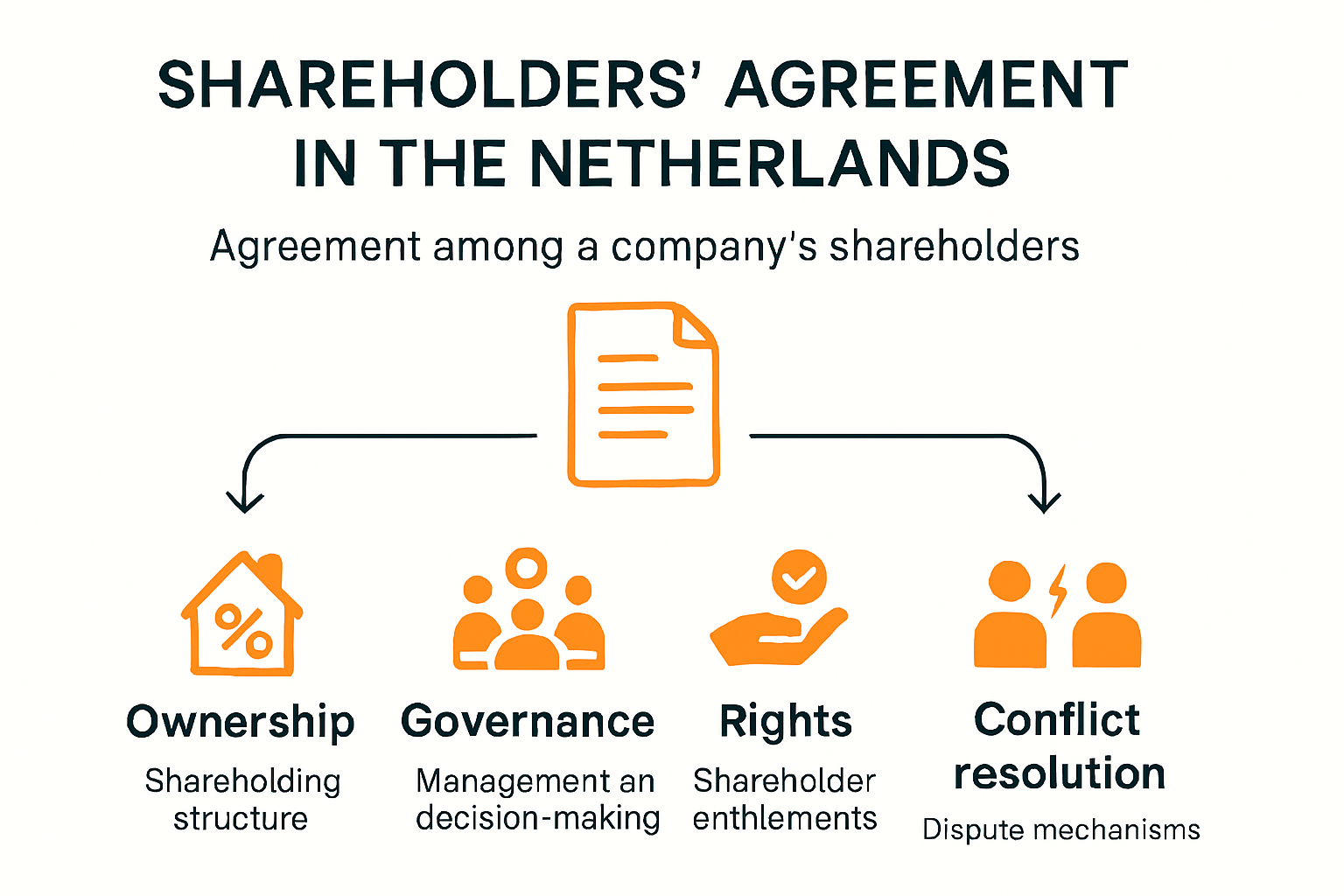
A shareholder agreement represents a critical legal document that establishes the fundamental rules and relationships between shareholders in a company. This comprehensive contract outlines the rights, responsibilities, and obligations of shareholders, providing a structured framework for corporate governance and potential conflict resolution.
The Essential Components of a Shareholder Agreement
At its core, a shareholder agreement serves multiple strategic purposes for businesses. It defines the precise mechanisms of shareholder interactions, protecting both minority and majority shareholders’ interests. The document typically addresses key aspects such as ownership percentages, voting rights, dividend distribution, and procedures for transferring shares.
Specifically, the agreement establishes clear guidelines for critical scenarios like shareholder disputes, exit strategies, and potential sale of company shares. By predetermining these processes, companies can prevent potential legal complications and ensure smoother operational dynamics. For Dutch companies, this becomes particularly important given the complex regulatory environment and the need for transparent corporate governance.
Key Objectives and Strategic Implications
The primary objective of a shareholder agreement is to create a predictable and stable environment for corporate decision making. It acts as a proactive mechanism to mitigate potential conflicts by establishing clear protocols for various business scenarios. For instance, the agreement might specify how new shareholders can be admitted, under what conditions existing shareholders can sell their shares, and the mechanisms for resolving deadlocks in strategic decision making.
Moreover, such agreements provide significant protection for minority shareholders who might otherwise be vulnerable to decisions made by majority shareholders. By explicitly defining rights and protections, the document ensures fair treatment and creates a balanced framework for corporate interactions. This becomes especially crucial in Dutch corporate structures, where nuanced legal interpretations can significantly impact shareholder relationships.
For Dutch companies in 2025, a well-crafted shareholder agreement is not just a legal document but a strategic tool. It reflects the company’s commitment to transparency, fairness, and structured corporate governance. The agreement serves as a blueprint for managing complex shareholder dynamics, anticipating potential challenges, and creating a robust framework for collaborative business operations.
Ultimately, understanding what a shareholder agreement entails requires recognizing its role as more than a mere legal formality. It is a sophisticated instrument that balances legal protection with strategic business planning, ensuring that all shareholders have a clear, mutually understood pathway for corporate engagement and mutual success.
Essential Clauses in Dutch Shareholder Agreements

Dutch shareholder agreements are sophisticated legal instruments that require meticulous drafting to protect the interests of all parties involved. These agreements go beyond standard corporate documentation by providing comprehensive frameworks for governance, ownership rights, and potential dispute resolution.
Ownership and Transfer Restrictions
One of the most critical clauses in Dutch shareholder agreements involves detailed provisions regarding share ownership and transfer mechanisms. These clauses establish clear guidelines for how shares can be bought, sold, or transferred between existing and potential shareholders. Drag-along and tag-along rights play a crucial role in this context, offering protection mechanisms for both majority and minority shareholders.
Specifically, drag-along rights enable majority shareholders to force minority shareholders to join in the sale of a company, ensuring potential transaction opportunities are not blocked. Conversely, tag-along rights protect minority shareholders by allowing them to join a sale initiated by majority shareholders under the same terms and conditions. These provisions are particularly important in the Dutch corporate landscape, where complex ownership structures are common.
Governance and Decision Making Protocols
Effective shareholder agreements must articulate precise governance structures and decision making protocols. This includes defining voting rights, establishing quorum requirements for shareholder meetings, and outlining the processes for making significant corporate decisions. The agreement should specify the percentage of votes required for different types of resolutions, ranging from routine operational matters to transformative strategic initiatives.
Additionally, these agreements often include detailed mechanisms for resolving potential deadlocks. In scenarios where shareholders cannot reach a consensus on critical issues, predefined dispute resolution procedures become invaluable. These might include mediation clauses, arbitration mechanisms, or specific buyout provisions that allow for fair and structured resolution of complex corporate disputes.
Financial Rights and Dividend Distribution
Financial clauses represent another crucial component of Dutch shareholder agreements. These provisions comprehensively outline the financial rights and obligations of shareholders, including dividend distribution policies, profit sharing mechanisms, and financial reporting requirements. The agreement should transparently define how and when financial distributions will occur, ensuring all shareholders understand their potential returns and financial commitments.
Moreover, these financial clauses often include provisions for valuation methods, exit strategies, and potential scenarios involving share repurchases or new share issuances. By establishing clear financial frameworks, shareholder agreements minimize potential conflicts and provide predictability in corporate financial interactions.
For Dutch companies in 2025, crafting a robust shareholder agreement requires a nuanced understanding of legal complexities and potential future scenarios. These documents must be flexible enough to accommodate growth and change while providing sufficient structure to protect all shareholders’ interests. The most effective agreements anticipate potential challenges and create clear, fair mechanisms for addressing them.
Ultimately, a well-constructed shareholder agreement serves as more than a legal document. It becomes a strategic tool that facilitates transparent communication, establishes trust among shareholders, and provides a solid foundation for collaborative corporate governance.
To provide a quick reference, the following table summarises some of the essential clauses typically included in Dutch shareholder agreements and their key purposes:
| Clause Type | Purpose | Example/Details |
|---|---|---|
| Ownership & Transfer Restrictions | Control over share transfers, protect minority/majority interests | Drag-along, Tag-along, pre-emption rights |
| Governance Protocols | Define voting rights, decision making, and deadlock resolutions | Quorum requirements, voting thresholds, mediation/arbitration |
| Dividend & Financial Clauses | Ensure fairness in profit sharing and reporting | Dividend policy, profit sharing rules, financial reporting |
| Exit Strategies | Outline agreed terms for leaving the company or selling shares | Buyout provisions, share valuation methods, exit triggers |
| Dispute Resolution Mechanisms | Efficiently address internal conflicts | Arbitration clauses, mediation, escalation steps |
Benefits for Individuals and Businesses in the Netherlands
Shareholder agreements offer substantial strategic advantages for both individuals and businesses operating within the Netherlands, providing a robust framework for corporate collaboration and risk management. These legal instruments create a structured environment that balances individual interests with collective corporate objectives.
Protection of Individual Shareholder Rights
For individual shareholders, these agreements represent a critical mechanism for safeguarding personal investments and ensuring fair treatment. Minority shareholder protections become particularly important, preventing potential exploitation by majority shareholders. The agreement establishes clear mechanisms for transparent decision making, dividend distribution, and equitable share valuation.
Specifically, individuals benefit from predefined exit strategies, comprehensive information rights, and explicit protocols for share transfers. These provisions ensure that shareholders can make informed decisions about their investments, understand their rights and obligations, and have clear pathways for resolving potential conflicts. For entrepreneurs and investors in the Netherlands, such clarity reduces uncertainty and provides a sense of security in their corporate partnerships.
Strategic Business Advantages
Businesses derive significant strategic advantages from well-crafted shareholder agreements. These documents serve as proactive governance tools that minimize potential legal disputes, establish clear communication channels, and create predictable frameworks for corporate decision making. By outlining precise mechanisms for shareholder interactions, companies can focus on growth and innovation rather than managing internal conflicts.
Moreover, shareholder agreements enable businesses to attract sophisticated investors by demonstrating a commitment to transparency and structured corporate governance. They provide potential investors with confidence by revealing clear protocols for critical scenarios such as ownership transitions, performance expectations, and dispute resolution mechanisms. This becomes especially crucial in the complex Dutch corporate landscape, where nuanced legal interpretations can significantly impact business operations.
Long Term Corporate Sustainability
Perhaps the most profound benefit of shareholder agreements lies in their capacity to support long-term corporate sustainability. These documents are not merely legal formalities but strategic instruments that anticipate potential challenges and create flexible yet structured mechanisms for addressing them. By establishing clear expectations and protocols, businesses can navigate complex ownership dynamics with greater predictability and mutual understanding.
For Dutch companies in 2025, a comprehensive shareholder agreement represents more than a legal requirement. It becomes a dynamic tool for fostering trust, facilitating collaborative decision making, and creating a resilient corporate ecosystem. The most effective agreements balance legal precision with strategic flexibility, recognizing that business environments continually evolve.
Ultimately, shareholder agreements in the Netherlands transcend traditional legal documentation. They emerge as sophisticated instruments of corporate diplomacy, bridging individual aspirations with collective business objectives. By providing clear frameworks for interaction, risk management, and mutual growth, these agreements enable shareholders and businesses to build stronger, more transparent, and more sustainable corporate relationships.
To help clarify these advantages, the following table summarises the main benefits of shareholder agreements for both individuals and businesses in the Netherlands:
| Benefit Area | For Individuals (Shareholders) | For Businesses (Companies) |
|---|---|---|
| Protection | Safeguards investments, minority rights | Legal clarity, reduced risk of disputes |
| Strategic Advantage | Clear exit/information rights, share valuation | Attracts investment, structured governance |
| Decision Making | Transparent protocols, voting rights | Predictable processes, less internal conflict |
| Financial Security | Defined dividend and profit distribution | Predictable financial obligations and reporting |
| Long-Term Sustainability | Fairness over time, clarity for succession | Stability, resilience, supports collaborative growth |
Drafting and Enforcing Shareholder Agreements in 2025
Navigating the complexities of shareholder agreements requires a sophisticated approach in 2025, with evolving legal landscapes and increasingly dynamic business environments demanding more nuanced and comprehensive documentation strategies. Dutch companies must now craft agreements that are not only legally robust but also adaptable to rapid technological and economic changes.
Strategic Drafting Considerations
Effective shareholder agreements in 2025 demand a forward-thinking approach that anticipates potential future scenarios. Technological disruption and rapid market transformations necessitate flexibility within legal frameworks. Drafting professionals must now incorporate provisions that address emerging challenges such as digital transformation, remote work dynamics, and potential global economic uncertainties.
Key considerations include creating mechanisms for digital governance, establishing clear protocols for technology-driven decision making, and defining shareholder rights in increasingly complex corporate ecosystems. This requires a holistic approach that goes beyond traditional legal frameworks, integrating forward-looking clauses that can adapt to unpredictable business landscapes. Shareholders must now consider scenarios involving artificial intelligence, blockchain technologies, and potential regulatory shifts that could impact corporate structures.
Enforcement Mechanisms and Legal Compliance
Enforcement of shareholder agreements has become increasingly sophisticated in 2025. Modern agreements must include comprehensive dispute resolution mechanisms that leverage both traditional legal approaches and alternative resolution strategies. This involves creating multi-tiered resolution protocols that can efficiently address conflicts while minimizing potential legal escalation.
Moreover, enforcement now requires a more proactive approach. Companies must establish clear monitoring systems that can detect potential breaches early, allowing for immediate intervention. This might include digital tracking mechanisms, regular compliance audits, and predefined escalation procedures that ensure transparency and quick resolution of potential conflicts. The most effective agreements now incorporate real-time reporting and communication protocols that enable shareholders to maintain ongoing visibility into corporate operations.
Technological Integration and Future-Proofing
The most advanced shareholder agreements in 2025 leverage technological solutions to enhance their effectiveness. Digital platforms now enable real-time collaboration, document management, and communication between shareholders. Blockchain technologies offer unprecedented levels of transparency and security in documenting shareholder interactions and agreements.
Companies must now consider how technological integration can enhance the effectiveness of their shareholder agreements. This includes developing digital platforms that facilitate seamless communication, implementing secure document management systems, and creating mechanisms for transparent and verifiable decision-making processes. The most sophisticated agreements will integrate cutting-edge technologies that provide enhanced security, transparency, and efficiency.
For Dutch companies, drafting and enforcing shareholder agreements in 2025 represents a complex but exciting challenge. Success requires a delicate balance between legal precision and strategic flexibility. The most effective agreements will not simply protect current interests but anticipate and adapt to future corporate landscapes.
Ultimately, shareholder agreements have evolved from static legal documents to dynamic strategic tools. They now serve as comprehensive frameworks that enable collaborative governance, technological adaptation, and sustainable corporate growth. The most successful companies will view these agreements not as constraints but as sophisticated instruments for navigating an increasingly complex business world.
Frequently Asked Questions
What is a shareholder agreement?
A shareholder agreement is a legal document that outlines the rights, responsibilities, and obligations of shareholders in a company. It establishes the rules for governance, decision making, and profit distribution among shareholders.
Why is a shareholder agreement important for Dutch companies?
A shareholder agreement is crucial for Dutch companies as it creates a stable and predictable governance framework. It protects the interests of all shareholders, particularly minority shareholders, and helps mitigate potential conflicts by outlining clear procedures and rights.
What essential clauses should be included in a Dutch shareholder agreement?
Key clauses to include in a Dutch shareholder agreement are ownership and transfer restrictions, governance protocols, financial rights and dividend distribution, exit strategies, and dispute resolution mechanisms. These clauses ensure fair treatment and clarity in corporate operations.
How can technology enhance shareholder agreements in 2025?
In 2025, technology can enhance shareholder agreements by integrating digital tools for real-time monitoring, communication, and document management. Solutions such as blockchain can provide transparency and security, allowing for efficient decision-making processes and conflict resolution.
Secure Your Corporate Future with Tailored Shareholder Agreements
Building a robust shareholder agreement is about more than just legal compliance. If you have ever worried about safeguarding your rights as a minority shareholder, or struggled with unclear ownership and decision-making protocols, then you understand how vital a forward-thinking, adaptable agreement is for your company. The article highlights the complexities Dutch companies face in 2025, from rapid technological changes to the need for dynamic dispute solutions. If your organisation wants to protect value, ensure transparent governance and guarantee fair treatment for every stakeholder, addressing these pain points is essential.
Law & More specialises in transforming these challenges into clarity and security. With comprehensive experience in corporate law and an innovative approach to modern shareholder agreements, our team offers solutions that anticipate conflict, protect your interests and keep your business resilient. Discover how we can future-proof your corporate relationships by visiting our website. Do not wait until uncertainty becomes a risk. Take the next step today and schedule an appointment with our legal experts, so your business is ready for the evolving Dutch market.