


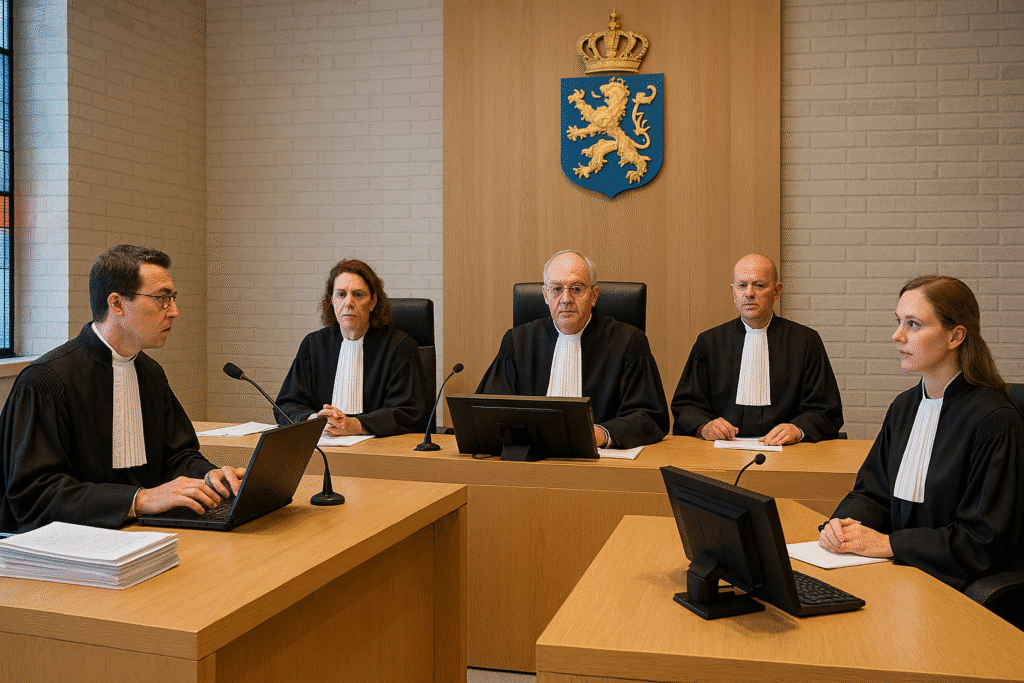
Introduction: What is a Pro Forma Hearing and Why is it Important
A pro forma hearing is a criminal procedure in which a criminal case is formally heard without substantive assessment, used by the public prosecutor’s office to continue pre-trial detention when the police investigation has not yet been completed. A pro forma hearing takes place when the legal term for pre-trial detention is about to be exceeded and the investigation has not yet been completed.
For suspects, lawyers and family members, a pro forma hearing means that the case is not yet being dealt with in substance – no ruling is made on guilt or innocence. Instead, procedural aspects of the case are dealt with, such as assessing whether there are sufficient grounds to extend the pre-trial detention. This article discusses exactly what happens during such a hearing, what your rights are and how you can best prepare yourself.
The pro forma procedure is essential for complex criminal cases where the investigation requires more time. It offers protection against arbitrary detention while giving the judiciary room for thorough investigation of serious crimes.
Pro Forma Hearing Explained: Key Concepts and Definitions
Basic Definitions
A pro forma hearing (literally ‘for form’s sake’) is a court hearing at which no substantive consideration of the criminal case takes place. The judge only decides on the continuation of pre-trial detention and deals with any requests from the solicitor. The term ‘pro forma’ means ‘for form’s sake’, indicating that the hearing is held to comply with formal legal requirements.
The difference with a regular criminal hearing is crucial: during a pro forma hearing, no witnesses are heard, the defendant is not asked about guilt or innocence, and the judge does not rule on the offence itself. Witnesses and experts are only heard during later hearings, such as the substantive hearing or the preliminary hearing. The public prosecutor only provides an update on the status of the investigation.
Related terminology:
- Pre-trial detention: The period during which a suspect is held in custody during the investigation
- Suspension: Postponing the case for a certain period of time
- Indictment: The official charge against the suspect
- Preliminary hearing: A preparatory hearing at which the planning of the criminal case is discussed
Legal framework
The legal basis for pro forma hearings is laid down in Article 282(4) of the Code of Criminal Procedure. This law stipulates that a suspect may remain in pre-trial detention for a maximum of 110 days before the case must come before the court. If the investigation has not been completed after this period, a pro forma hearing must be held.
During each pro forma hearing, the court assesses whether the suspect should remain in pre-trial detention or whether this should be lifted. There is no legal limit to the number of times a case can be adjourned via pro forma hearings, as long as the investigation is progressing.
Why Pro Forma Hearings Are Essential in Criminal Law
Pro forma hearings are an important safeguard for the rights of suspects in lengthy investigations. Without this procedure, complex criminal cases would often lead to the automatic release of suspects when investigation deadlines are exceeded, regardless of the seriousness of the offence. The pro forma hearing also serves as an administrative and procedural step to prevent formal errors.
Statistical context: Thousands of pro forma hearings are held each year in the Netherlands, particularly in cases involving organised crime, financial offences and terrorism. These cases often require international cooperation and extensive forensic investigation, making the standard investigation deadlines too short.
The procedure strikes a balance between:
- Legal protection: Periodic review by an independent judge
- Effective investigation: Scope for thorough investigation of complex crimes
- Transparency: Opportunity for solicitors to submit investigation requests
Comparison table: Pro Forma Hearing vs Other Hearings
| Aspect | Pro Forma Hearing | Preliminary hearing | Substantive hearing |
|---|---|---|---|
| Object | Continuation of pre-trial detention | Planning of proceedings | Verdict on guilt |
| Content | Status of investigation | Agreements on evidence | Full hearing of the case |
| Witnesses | Not heard | Can be scheduled | To be heard |
| Victims’ right to speak | Not possible | Limited possibility | Fully possible |
| Possible outcome | Suspension or revocation of pre-trial detention | Planning of court days | Verdict and sentence |
| Time limit | 30-90 days suspension | Variable | Final closure |
Step-by-Step: What Happens During a Pro Forma Hearing
Step 1: Preparation and Registration
The first pro forma hearing is announced via an official invitation to the defendant and their solicitor. This letter contains:
- Date, time and location of the hearing
- The current charges
- Information about compulsory attendance
Preparation by the solicitor:
- Review of the available criminal file
- Drafting of possible requests (investigation requests, lifting of pre-trial detention)
- Consultation with client about strategy and expectations
The defendant is entitled to legal assistance and must be informed about the nature of the proceedings.
Step 2: Course of the Hearing
Opening and formalities (5-10 minutes):
- The judge opens the hearing and checks attendance
- Reading of the charges by the public prosecutor
- Confirmation of the suspect’s identity
Status of the investigation (10-15 minutes):
- Public prosecutor provides update on progress of police investigation
- Explanation of what investigative actions still need to be taken
- Estimation of the time required to complete the investigation
Lawyer’s requests (10-20 minutes):
- Possible investigation requests (additional witnesses, expert investigation)
- The solicitor may request that a witness be summoned for a subsequent hearing.
- Request for the lifting or suspension of pre-trial detention
- Other procedural requests
Judge’s decision (5 minutes):
- Decision on continuation of pre-trial detention
- Decision on requests submitted
- Setting of new hearing date
Step 3: After the pro forma hearing
Standard procedure:
- Suspension of the investigation for 30 days (in exceptional cases up to 90 days)
- Scheduling of next hearing or transition to preliminary hearing
- Communication of decision to all parties involved
- After a 30-day suspension, the defendant will appear in court again.
The maximum time between pro forma hearings is set by law, but the court may set shorter time limits if there are doubts about the progress of the investigation.
Common mistakes and misunderstandings
Mistake 1: Thinking that a pro forma hearing means that the case will be dismissed Pro forma does not mean that the public prosecutor will drop the case. It is a procedural step to gain time for further investigation. The case will continue as normal after the investigation has been completed.
Mistake 2: Expecting substantive proceedings during a pro forma hearing Family members and suspects sometimes expect evidence or guilt to be discussed during the hearing. This is deliberately not done – the purpose is purely procedural.
Mistake 3: Underestimating the importance of legal representation Although no substantive hearing takes place, a solicitor can submit important requests that influence the proceedings and the period of detention.
Pro tip for preparation:
- Ensure that family members know what to expect from a pro forma hearing
- Discuss with your solicitor which investigation requests are appropriate
- Understand that patience is required – complex cases take time
Practical example: The Drenthe Art Theft Case
Case: On 9 May 2024, a pro forma hearing was held at the North Netherlands District Court in the Drenthe art theft case, in which millions of euros worth of artworks were stolen from the Drents Museum.
Chronology from arrest to pro forma hearing:
- March 2024: Arrest of three suspects after months of investigation
- April 2024: Pre-trial detention extended, investigation into international art trade ongoing
- May 2024: 110-day period reached, pro forma hearing necessary
During the hearing:
- Public prosecutor reported that the investigation focused on international handling of stolen goods
- It is possible that a statement from the victim or suspect will be added to the file during the hearing
- Lawyers requested release from pre-trial detention due to lack of flight risk
- Court ruled that pre-trial detention remained justified given the seriousness of the offence
Result:
- Investigation suspended for 60 days
- Preliminary hearing scheduled for August 2024
- Pre-trial detention maintained for all suspects
Lessons from this case:
- International aspects significantly extend investigation periods
- Seriousness of the offence weighs heavily in decision on pre-trial detention
- Transparent communication about the progress of the investigation is crucial
Frequently asked questions about pro forma hearings
Question 1: How long can someone remain in pre-trial detention due to pro forma hearings? There is no legal limit to the number of adjournments, but each extension must be well-founded. The judge assesses each time whether continued pre-trial detention is still proportionate. In practice, complex cases can take years.
Question 2: Can victims exercise their right to speak during a pro forma hearing? No, the right to speak is only possible during the substantive hearing of the criminal case. Victims can, however, submit a written victim statement, which will be added to the case file. This means that the victim can share his or her experiences and wishes with the court in writing prior to the substantive hearing. Victim Support Netherlands can offer support in this regard.
Question 3: Are pro forma hearings open to the public? Yes, pro forma hearings are in principle open to the public, unless the judge decides otherwise in the interests of the investigation. In the Drenthe art theft case, the court decided to restrict public access in order not to jeopardise the investigation.
Question 4: What are the costs of a pro forma hearing? There are no direct court fees for pro forma hearings for the suspect.
Question 5: Can the judge release the defendant during a pro forma hearing? Yes, if the judge decides that there are no longer grounds for pre-trial detention or that the investigation is taking an unreasonable amount of time, the pre-trial detention may be lifted. However, this only happens in exceptional cases.
Conclusion: Key points to note about pro forma hearings
The pro forma hearing is a procedural necessity in complex criminal cases with long investigation periods. The system protects both the rights of suspects and the ability of the judiciary to thoroughly investigate serious crimes.
Key points to remember:
- Suspects remain in pre-trial detention without substantive hearing of the case
- Legal representation is crucial for investigation requests and legal protection
- The procedure can take months or even years in complex cases
- Periodic review by the judge prevents arbitrary detention
- Family members must have realistic expectations about the duration
Next steps: One or more pro forma hearings are usually followed by a preliminary hearing in which the schedule for the substantive hearing is discussed. This is when witnesses are summoned and the actual evidence is prepared. A preliminary hearing is broader in scope and focuses more on identifying investigation requirements and planning further investigation.
Advice: If you are unclear about the procedure, it is essential to seek legal assistance. An experienced solicitor can not only represent the interests of the suspect, but also guide family and other parties involved through this complex process.