



A non-competition clause stops you from working for a competitor or starting a similar business after you leave your job. Your employer includes this clause in your employment contract to protect their business secrets, client relationships, and competitive position. You agree not to compete with them for a set period within a specific geographic area. The clause can seriously limit where you work next, especially in specialized industries.
This article explains how non-competition clauses work under Dutch law. You’ll learn what makes these clauses legally valid, how employers draft them, and what rules apply today. We cover the upcoming 2025 changes that will restrict how employers use these clauses, including new compensation requirements and time limits. You’ll also see real examples of Dutch non-competition clauses and understand when a court might refuse to enforce one. Whether you’re signing a new contract or challenging an existing clause, you’ll know your rights and obligations.
Why non-competition clauses matter in Dutch law
Dutch employers use non-competition clauses to protect their business interests when employees leave. You might gain access to confidential client lists, trade secrets, specialized knowledge, or strategic plans during your employment. Your employer worries you could take this information to a competitor or use it to launch a competing business.

Career impact and legal consequences
The clause directly affects your career mobility and earning potential after you resign or get dismissed. You could face legal action and financial penalties if you violate the agreement by accepting a job with a competitor. Employers rely on these clauses to maintain their competitive advantage and safeguard investments in training. Dutch courts balance employer protection against your freedom to work, which is why judges scrutinize whether each non-competition clause is reasonable and enforceable under current law.
Your future job opportunities depend on how your clause is written and whether Dutch courts consider it valid.
How to draft and agree a non-competition clause
Your employer must put the non-competition clause in writing to make it legally valid. You cannot rely on verbal agreements or informal understandings. The clause typically appears in your employment contract itself, though it can also be in a separate document that references your employment terms. You must sign the document to show you understand and accept the restrictions.
Written agreement requirements
Both you and your employer need to sign the clause before it becomes enforceable. Your signature confirms you voluntarily agreed to the terms. You must be at least 18 years old when you sign, or the clause is automatically invalid under Dutch law. Courts will not enforce non-competition clauses signed by minors, regardless of how reasonable the terms appear.
Verbal promises about non-competition mean nothing in court without a written, signed agreement.
What to include in the clause
Your clause should specify which activities the restriction covers and name specific competitors you cannot work for. It must define the geographic area where the restriction applies, such as a city, province, or the entire Netherlands. The duration should state exactly how long the restriction lasts after your employment ends. Your employer should explain the business interests they’re protecting, and the clause often includes a penalty amount if you breach the terms.

Key rules for non-competition clauses today
Dutch law sets strict conditions for valid non-competition clauses under current regulations. Your employer cannot simply include any restriction they want in your contract. The clause must meet specific legal requirements, and courts actively protect employees from unreasonable limitations on their ability to work. Understanding these rules helps you recognize whether your non-competition clause holds up legally.

Permanent vs. fixed-term contracts
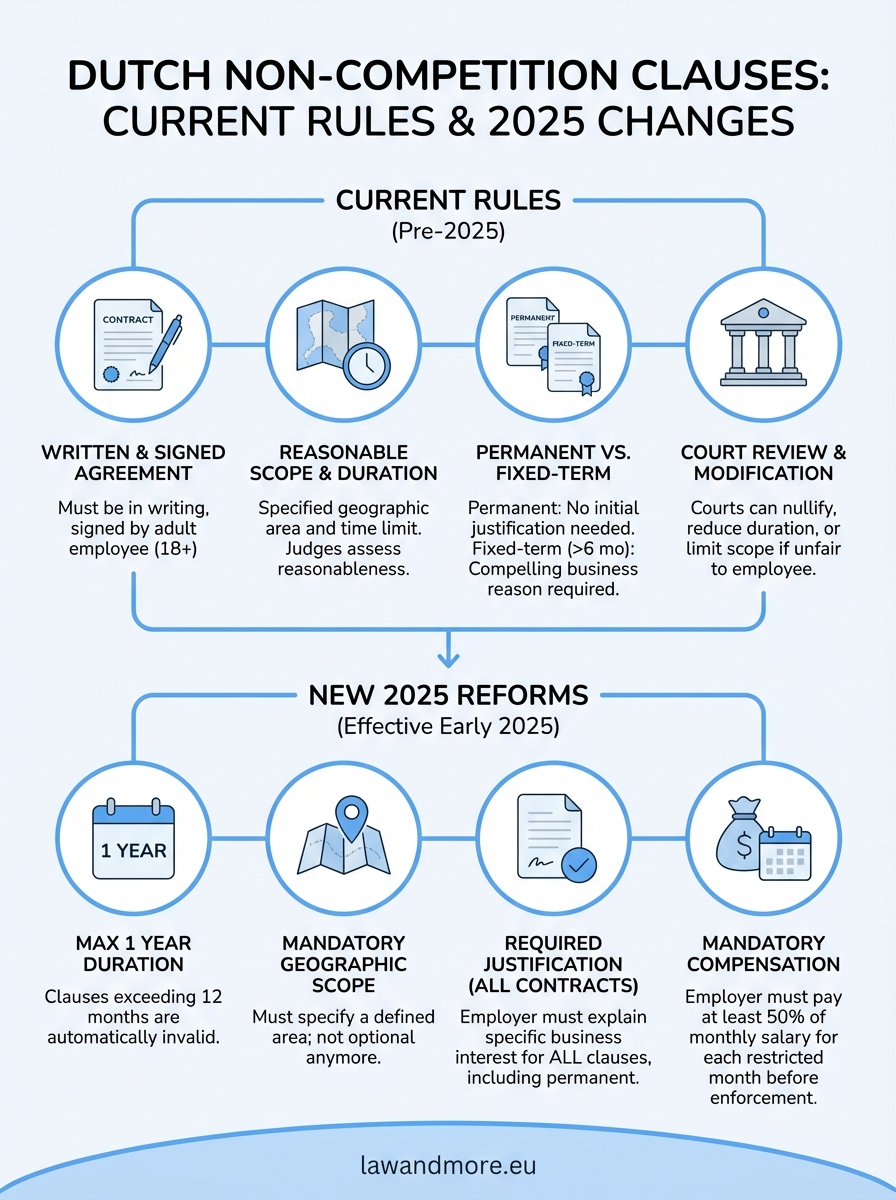
Your contract type determines what justification your employer needs for a non-competition clause. Employers can include these clauses in permanent employment contracts without explaining their business reasons in the contract itself. Fixed-term contracts under six months cannot include a non-competition clause at all. Fixed-term contracts longer than six months can include one only if your employer documents a compelling business or service interest directly in the written agreement. Courts reject clauses in temporary contracts that lack this specific justification.
What makes a clause enforceable
Your non-competition clause must clearly specify the restricted activities, name the competitors you cannot work for, and define a geographic area where the restriction applies. Vague or overly broad clauses give courts reason to invalidate them. The clause typically includes a penalty amount you would owe if you breach the terms, which encourages compliance but also helps courts measure reasonableness.
Courts throw out clauses that make it impossible for you to work in your field or earn a living.
Court review and modification
You can ask a Dutch court to nullify or modify your non-competition clause if it unfairly disadvantages you compared to your employer’s legitimate interests. Judges weigh whether the restriction is necessary to protect actual business assets versus simply blocking competition. Courts can reduce the duration, limit the geographic scope, or eliminate specific activity restrictions. They can also completely void clauses that serve no genuine business purpose or that would leave you unable to work in your profession.
Expected Dutch changes to non-competition in 2025
The Dutch government approved a modernization bill on March 1, 2024, that will fundamentally change non-competition clauses starting in early 2025. These reforms aim to stop employers from using standard clauses without considering employee interests. The new law introduces strict limits on duration, scope, and justification while requiring employers to compensate employees when enforcing restrictions. You gain stronger protections whether you sign a permanent or temporary contract.
New time and scope limits
Your employer can enforce a non-competition clause for a maximum of one year after your employment ends under the new rules. Clauses that extend beyond 12 months become invalid automatically. Every non-competition clause must specify a geographical area where the restriction applies, which was not mandatory before. Your employer must also provide written justification explaining the specific business or service interest that warrants restricting your work, even in permanent contracts where this was previously optional.

The one-year maximum protects you from indefinite career restrictions that served no real business purpose.
Mandatory compensation requirement
Employers must pay you at least half your monthly salary for each month the non-competition clause remains in effect. Your employer cannot invoke the restriction without paying this compensation, which represents a major shift from current law. The payment must reach you no later than your last working day. This requirement applies to all enforced clauses, even those you signed before the law takes effect, though older clauses keep their original duration and scope terms.
Examples of Dutch non-competition clauses
Dutch non-competition clauses follow similar patterns but vary in specific restrictions and scope based on your role and industry. Employers tailor these clauses to protect their particular business interests while trying to maintain enforceability under Dutch law. Real examples show how companies balance protection with reasonable limitations on your career choices.
Tech sector non-competition clause
A software developer’s contract might state: "You agree not to work for companies developing financial software products in the Netherlands for 12 months after employment ends. You cannot contact our clients or use proprietary code developed during employment. Breach results in a €25,000 penalty." This clause protects the employer’s technical knowledge and client relationships while limiting your work to a specific software niche rather than blocking all tech jobs.
Specific restrictions like "financial software" make clauses more enforceable than blanket bans on all technology work.
Sales position non-competition clause
A sales manager’s agreement might read: "You may not work for companies selling industrial machinery in Brabant and Limburg provinces for 18 months after leaving. You cannot solicit our existing customers. Violation incurs a €15,000 penalty plus damages." This geographic limitation protects the employer’s regional market without preventing you from working elsewhere in the Netherlands or in different industries.
Key takeaways
Dutch non-competition clauses protect employer business interests but must meet strict legal requirements to remain valid. Your clause needs written agreement, clear geographic scope, and reasonable duration. Courts actively review whether restrictions unfairly limit your career compared to legitimate employer needs. The 2025 reforms introduce a one-year maximum duration, mandatory geographic boundaries, and required compensation equal to half your monthly salary for each restricted month.
Employers must justify these clauses in writing, even for permanent contracts. You can challenge unreasonable restrictions in court if they prevent you from working in your field. The new law strengthens your position by requiring payment before enforcement begins. Understanding these rules helps you negotiate better terms or contest invalid clauses.
Need legal advice on your non-competition clause? Law & More’s employment law specialists review contracts and represent employees throughout the Netherlands.