


Dutch immigration law shapes who can live, work, and settle in the Netherlands, touching the lives of thousands on both personal and professional fronts. Yet, the rules go far beyond what most imagine. For example, businesses must meet strict salary thresholds for highly skilled migrants, often set higher than standard market rates. And while family reunification is meant to bring loved ones together, the process can be surprisingly complex—with requirements that catch even the best prepared off guard.
Table of Contents
Quick Summary
| Takeaway | Explanation |
| Understanding Immigration Law is Essential | Immigration law in the Netherlands is complex, governing entry, residence, and work for non-Dutch nationals, necessitating a comprehensive understanding of regulations and processes. |
| Family Reunification is a Key Provision | The Dutch immigration policy prioritises family reunification, allowing close family members to join residents under specific conditions, reinforcing the importance of demonstrating financial stability and relationship authenticity. |
| Rigorous Compliance is Necessary for Businesses | Companies must navigate intricate immigration rules when recruiting international talent, ensuring compliance with work permits and demonstrating that candidates meet specific skill requirements while managing documentation meticulously. |
| Expert Legal Advice is Critical | Engaging qualified immigration lawyers can streamline complex bureaucratic processes, providing strategic guidance and tailored solutions for both individuals and businesses to mitigate risks associated with immigration law. |
Understanding What Is Immigration Law in the Netherlands
Immigration law represents a complex legal framework that governs how individuals from outside the Netherlands can enter, reside, work, and potentially establish permanent status within the country. At its core, immigration law encompasses a comprehensive set of regulations that define the rights, obligations, and processes for non-Dutch nationals seeking to integrate into Dutch society.
The Legal Foundations of Immigration Regulation
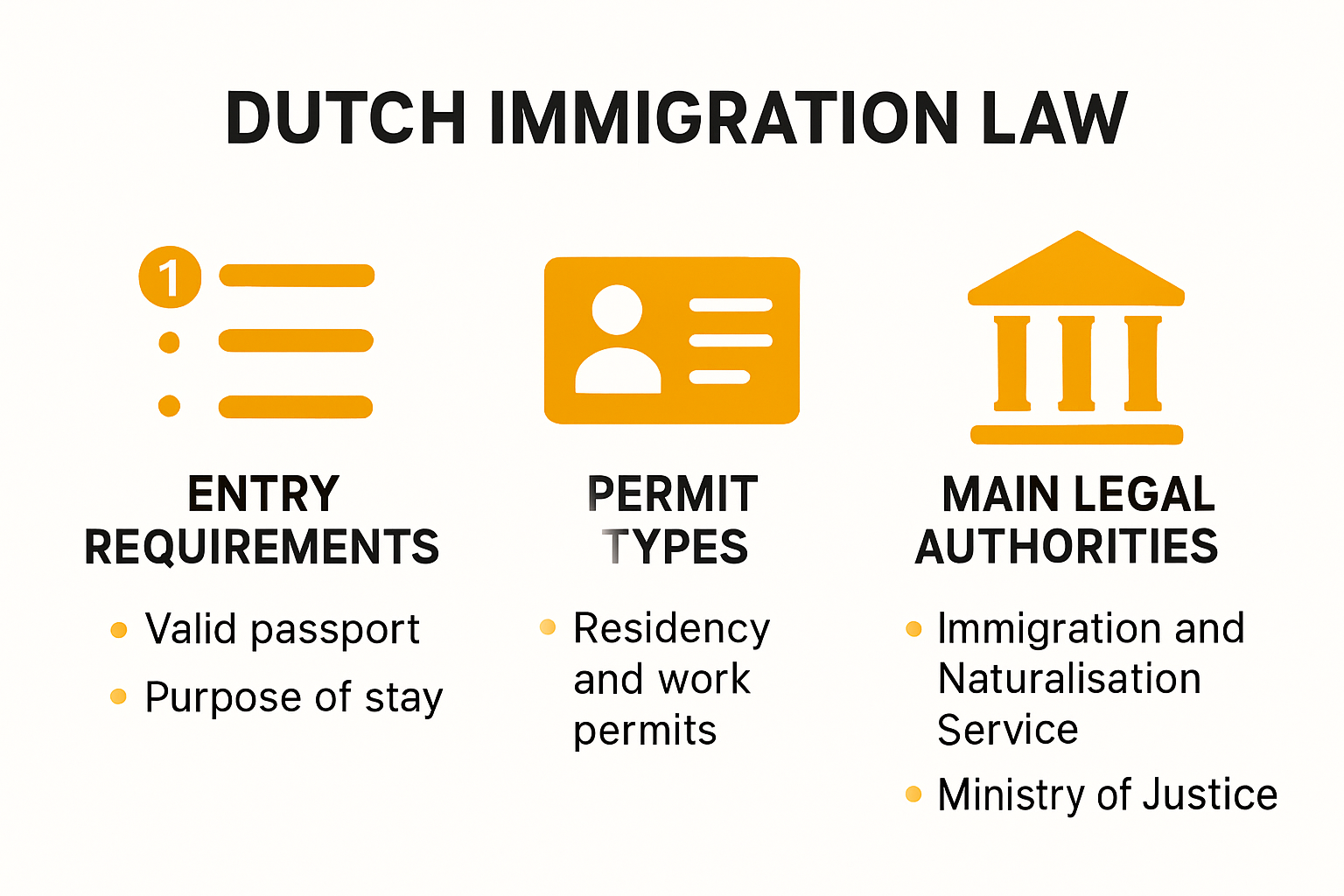
The Dutch immigration system operates through a structured approach that balances national security, economic needs, humanitarian considerations, and international obligations. The Immigration and Naturalisation Service (IND) serves as the primary administrative body responsible for implementing and enforcing these intricate legal provisions. These regulations cover multiple categories of entry and residence, including work permits, study visas, family reunification, asylum applications, and long-term residency pathways.
Key legal instruments that shape immigration law include national legislation, European Union directives, and international treaties. The Dutch government maintains a nuanced approach that considers both the country’s economic requirements and humanitarian commitments. This means immigration policies are dynamically adjusted to address labour market demands, demographic changes, and global migration trends.
Categories of Immigration Status
Immigration law in the Netherlands distinguishes between several critical status categories that determine an individual’s rights and obligations. These include temporary residence permits, permanent residency, work visas for highly skilled migrants, student permits, and refugee protection status. Each category has specific eligibility criteria, documentation requirements, and legal implications.
For businesses and employers, understanding these categories is crucial when recruiting international talent. Employers must navigate complex regulatory frameworks to ensure compliance with work authorization regulations. This often involves demonstrating that a potential international employee meets specific skill requirements and that no suitable local candidate is available for the position.
Compliance and Legal Considerations
Navigating Dutch immigration law requires meticulous attention to detail and a comprehensive understanding of evolving regulatory landscapes. Non-compliance can result in significant legal consequences, including visa rejections, financial penalties, and potential deportation. Both individuals and organizations must stay informed about current regulations, documentation requirements, and procedural nuances.
Businesses operating in the Netherlands or seeking to recruit international talent must develop robust immigration management strategies. This involves working closely with legal experts who specialize in immigration law to ensure seamless navigation of complex bureaucratic processes. Learn more about Dutch immigration regulations to understand the intricate legal framework that governs international movement and residency.
The Dutch immigration system reflects a balanced approach that considers economic needs, humanitarian obligations, and national security. While the regulations may seem complex, they are designed to facilitate legitimate international movement while maintaining stringent screening processes. Individuals and businesses that invest time in understanding these regulations can successfully navigate the immigration landscape, contributing to the Netherlands’ rich multicultural environment.
Key Immigration Rules for Individuals and Families
Immigration law for individuals and families in the Netherlands represents a nuanced legal framework that balances personal rights, family unity, and national regulatory requirements. Understanding these rules is crucial for those seeking to establish or maintain their residency status through family connections or personal circumstances.
Family Reunification and Relationship-Based Immigration
Family reunification stands as a cornerstone of Dutch immigration policy, enabling individuals to bring close family members to the Netherlands under specific conditions. The legal framework recognizes different types of family relationships, each with distinct requirements and documentation processes. Typically, this includes provisions for spouses, registered partners, minor children, and in some cases, dependent parents or adult children with significant care needs.
To provide a clear overview, the following table summarises the recognised family relationship types and core requirements mentioned in the content:
| Relationship Type | Documentation Required | Key Criteria (as listed in content) |
| Legally married couples | Marriage certificate, proof of relationship | Documented marital status |
| Registered partnerships | Official government recognition, certificates | Government-recognised partnership |
| Unmarried partners | Evidence of long-term relationship | Proof of committed, long-term relationship |
| Minor children | Birth certificates, proof of dependency | Must be dependent on the primary resident |
| Dependent parents/adult children | Evidence of care needs, legal documents | Significant care/dependency required (in some cases) |

Residency Permits and Status Categories
Individuals seeking to join family members in the Netherlands must navigate a complex system of residency permits. These permits are categorized based on the specific relationship and the legal status of the sponsoring family member. For instance, a partner of a Dutch citizen might have different requirements compared to a partner of a permanent resident or a highly skilled migrant.
The application process involves rigorous assessment of personal circumstances, including background checks, financial evaluations, and verification of relationship authenticity. Applicants must provide extensive documentation, including marriage certificates, proof of relationship, financial statements, and evidence of housing arrangements. Learn more about family reunification processes to understand the intricate details of establishing family-based residency.
Legal Rights and Obligations
Once granted residency through family connections, individuals assume specific legal rights and responsibilities. These include obligations to comply with Dutch immigration regulations, maintain valid documentation, and potentially pursue integration courses required for long-term residency or citizenship.
Families must be prepared for potential periodic reviews of their residency status. The Dutch immigration authorities conduct assessments to ensure that family relationships remain genuine and that the sponsoring family member continues to meet financial and legal requirements. Failure to comply with these regulations can result in permit revocation or other legal consequences.
Navigation of these complex immigration rules requires careful planning, thorough documentation, and often professional legal guidance. While the process may seem challenging, the Netherlands maintains a compassionate approach to family immigration, recognizing the fundamental importance of family unity while maintaining robust regulatory standards.
Business Immigration Law: Dutch Corporate Essentials
Business immigration law in the Netherlands represents a sophisticated legal framework designed to facilitate international talent acquisition while maintaining rigorous regulatory standards. For corporations operating in a global marketplace, understanding these intricate regulations is crucial to successfully recruiting, transferring, and retaining international professionals.
Highly Skilled Migrant Framework
The Dutch government has developed a specialized immigration pathway specifically tailored for businesses seeking top-tier international talent. The Highly Skilled Migrant (HSM) permit stands as a cornerstone of this approach, offering streamlined entry for professionals who meet stringent qualification criteria. Employers must demonstrate the candidate’s exceptional skills, typically through advanced educational credentials, specialized expertise, or significant professional experience.
To help businesses and applicants understand the primary components of the Highly Skilled Migrant Framework, the following table summarises its core requirements as described in the article:
| Requirement | Description |
| Salary Threshold | Minimum salary based on age and experience, above market rate |
| Skills/Education | Advanced qualifications or specialised professional skills |
| Recognised Sponsor Status | Employer must be registered/approved by IND |
| Employment Contract | Comprehensive and compliant employment terms |
| Professional Development | Commitment to ongoing skills and professional growth |
Corporate Transfer and Mobility Regulations
International businesses operating in the Netherlands face complex regulations governing employee transfers and mobility. The Intra-Corporate Transferee (ICT) permit provides a specialized mechanism for companies to move key personnel across international branches. This permit allows corporations to temporarily transfer employees with specific expertise, facilitating knowledge exchange and organizational development.
The regulatory framework distinguishes between short-term and long-term transfers, each with unique documentation and compliance requirements. Companies must provide detailed documentation demonstrating the strategic necessity of the transfer, the employee’s specialized role, and the temporary nature of the assignment.
Compliance and Strategic Considerations
Navigating business immigration law requires a proactive and strategic approach. Corporations must develop robust internal processes to manage documentation, track permit expiration dates, and ensure continuous compliance with evolving regulatory requirements. This involves close collaboration between human resources, legal departments, and immigration specialists.
The Dutch immigration system emphasizes not just skill acquisition but also integration. Many permits include requirements for language training, cultural orientation, and potential pathways to permanent residency. Businesses that view immigration as a holistic strategic process rather than a mere administrative task are more likely to successfully attract and retain international talent.
Ultimately, business immigration law in the Netherlands balances economic needs with stringent regulatory oversight. By understanding these complex regulations, corporations can transform potential legal challenges into strategic opportunities for global talent acquisition and organizational growth. Successful navigation requires expertise, attention to detail, and a comprehensive understanding of both legal requirements and business objectives.
How to Access Expert Immigration Law Advice
Navigating the complex landscape of immigration law requires specialized legal expertise that can transform challenging bureaucratic processes into strategic pathways for successful residency and compliance. Professional immigration law advice offers critical guidance through intricate regulatory frameworks, helping individuals and businesses mitigate risks and optimize their immigration strategies.
Identifying Qualified Immigration Legal Professionals
Selecting the right immigration legal expert demands careful consideration of several key factors. Professionals specializing in immigration law should possess comprehensive understanding of Dutch and European immigration regulations, demonstrating both academic credentials and practical experience in handling diverse immigration scenarios. Qualified immigration lawyers typically hold advanced legal degrees, possess multilingual capabilities, and maintain current knowledge of rapidly evolving legislative changes.
When evaluating potential legal advisors, individuals and businesses should prioritize professionals with proven track records in specific immigration domains. This includes expertise in work permits, family reunification, corporate transfers, and residency applications. Critical qualifications to seek include:
-
Extensive experience with Dutch immigration regulations
-
Proven success in handling complex immigration cases
-
Deep understanding of EU and international immigration frameworks
-
Strong communication skills in multiple languages
-
Membership in professional legal associations
Strategic Consultation and Case Assessment
A comprehensive immigration law consultation involves more than basic legal advice. Experienced immigration lawyers conduct thorough case assessments, evaluating individual circumstances, potential challenges, and optimal strategic approaches. This process includes detailed documentation review, comprehensive risk analysis, and personalized recommendation development.
Businesses and individuals benefit from structured consultation processes that provide clear roadmaps for immigration procedures. Discover expert guidance for immigration challenges to understand how professional legal support can simplify complex administrative processes. Effective consultations typically encompass comprehensive case evaluations, strategic planning, and ongoing support throughout the entire immigration journey.
Selecting the Right Immigration Legal Support
Choosing appropriate legal representation requires a strategic approach that considers multiple factors beyond basic legal expertise. Potential clients should evaluate communication styles, responsiveness, transparent fee structures, and the lawyer’s ability to provide holistic guidance that extends beyond immediate legal requirements.
Modern immigration law practices offer flexible consultation models, including initial diagnostic sessions, comprehensive case management, and ongoing strategic support. Many law firms now provide digital consultation options, enabling clients to access expert advice regardless of geographical constraints. This approach democratizes access to high-quality legal guidance, ensuring that individuals and businesses can receive sophisticated immigration support.
Ultimately, expert immigration law advice represents an investment in successful navigation of complex legal landscapes. By partnering with qualified professionals who understand the nuanced interplay between personal circumstances and regulatory requirements, individuals and businesses can transform potential legal challenges into strategic opportunities for growth and integration.
Frequently Asked Questions
What is immigration law?
Immigration law is a legal framework that governs how individuals from outside a country can enter, reside, work, and establish permanent status. In the Netherlands, it encompasses regulations related to visas, residency permits, work authorisations, and family reunification.
How does family reunification work under Dutch immigration law?
Family reunification allows close family members to join residents in the Netherlands under certain conditions. This typically includes spouses, registered partners, and minor children, each requiring specific documentation to demonstrate the relationship and financial stability.
What are the requirements for highly skilled migrants in the Netherlands?
Highly skilled migrants must meet a minimum salary threshold, possess advanced educational qualifications or exceptional professional skills, and be sponsored by a recognised employer registered with the Immigration and Naturalisation Service (IND).
How can individuals and businesses access expert law advice?
Individuals and businesses should seek qualified immigration lawyers with specialised knowledge in Dutch and European immigration regulations. They can conduct thorough consultations, assess individual cases, and provide tailored strategic guidance to navigate complex immigration processes.
Solve Immigration Challenges with Personalised Legal Expertise
Understanding Dutch immigration law means working through complex requirements, strict salary thresholds for highly skilled migrants, and detailed documentation for family reunification. Many individuals and businesses feel overwhelmed by changing rules and the possibility of making costly mistakes. If you are worried about compliance, or if the uncertainty around your application is keeping you up at night, you are not alone. This is exactly where Law & More steps in. Our team is deeply familiar with Dutch and European immigration frameworks and provides support tailored to your unique situation. We will guide you through work permits, family reunification, and permanent residency applications, while ensuring all your questions are answered promptly in your preferred language.
Do not let complicated immigration procedures delay your future or your business growth. Let our knowledgeable lawyers offer you peace of mind and practical solutions, whether you are an individual, family, or employer. Visit Law & More today to discuss your specific needs or to book a confidential consultation. Take the first step towards certainty and successful immigration in the Netherlands now.