


Divorce in the Netherlands might sound straightforward, but there is a lot beneath the surface. Did you know that a mutual consent divorce can be finalised in as little as three to six months, while a contested one could drag on well beyond a year? Most expect the hardest part to be the legal battles and paperwork. Yet, the real challenge often strikes later, as families and business owners must adapt to sweeping financial and emotional changes they never saw coming.
Table of Contents
- Key Steps In The Dutch Divorce Process
- Required Documents And Legal Timeframes
- Impacts On Families And Business Owners
- Choosing The Right Legal Support In Netherlands
Quick Summary
| Takeaway | Explanation |
| Gather Essential Documentation | Before initiating divorce proceedings, compile crucial documents such as marriage certificates, financial statements, and a detailed parenting plan for those with children. |
| Understand Legal Timeframes | Mutual consent divorce can take 3 to 6 months, while contested divorces may extend beyond 12 months. Ensure compliance with specific deadlines at each stage of the process. |
| Consider Emotional and Financial Impacts | Divorce affects family dynamics and may complicate business ownership and asset division. Plan carefully for financial restructuring and post-divorce adjustments. |
| Choose Appropriate Legal Support | Select from various legal professionals, including mediators and family law attorneys, based on your circumstances to ensure proper guidance through the divorce process. |
Key Steps in the Dutch Family Law Divorce Process
Divorce proceedings in the Netherlands require careful navigation through a structured legal process. Understanding the key steps helps individuals prepare emotionally and legally for this significant life transition. The Dutch family law system emphasizes collaboration and clear documentation to facilitate a smoother separation.
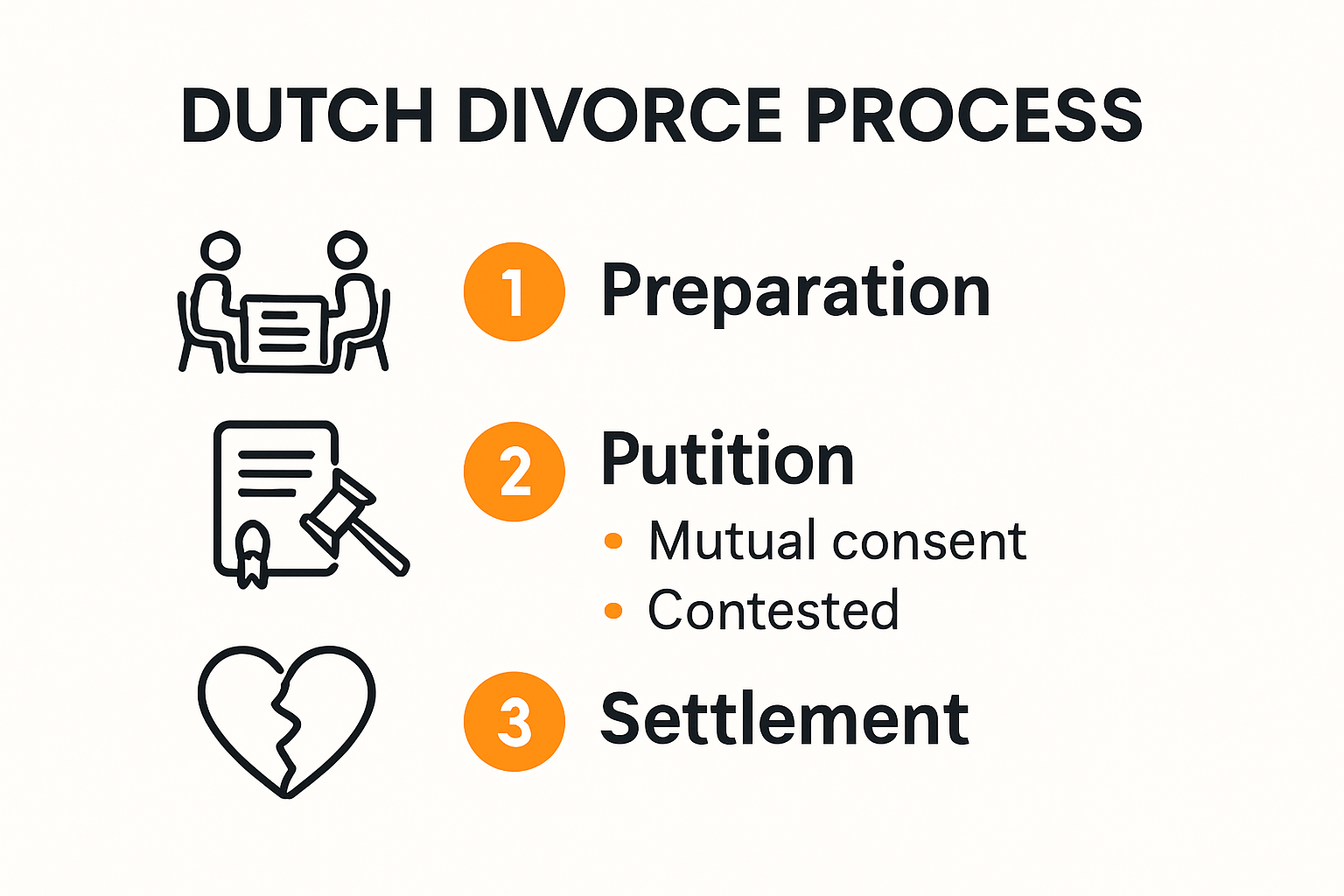
Initial Divorce Preparation and Documentation
Before initiating divorce proceedings, couples must gather comprehensive documentation. This includes marriage certificates, financial statements, property records, and details about shared assets and children. Dutch law requires a thorough assessment of marital assets and potential arrangements for child custody and support.
Preparation involves making critical decisions about property division, spousal support, and child arrangements. Couples can choose between two primary routes: mutual consent divorce or contested divorce. Mutual consent divorce typically proceeds more quickly and with less emotional strain, as both parties agree on key settlement terms.
Legal Filing and Court Proceedings
The formal divorce process begins with filing a petition at the district court. One spouse must initiate the proceedings by submitting a detailed divorce request. The Dutch legal system mandates that at least one spouse must be a resident of the Netherlands or have Dutch nationality. Learn more about navigating divorce procedures with professional guidance.
Court proceedings involve several critical stages. The court reviews all submitted documentation, assesses financial settlements, and determines child custody arrangements. Professional legal representation becomes crucial during this phase, as complex legal interpretations and negotiations often emerge. Experienced family law attorneys can help clients understand their rights and potential outcomes.
Finalizing the Divorce Settlement
Once all negotiations are complete, the court issues a formal divorce decree. This legal document officially terminates the marriage and outlines the final settlement terms. The decree covers critical aspects such as property division, financial responsibilities, and child custody arrangements.
After receiving the divorce decree, couples must register the document with the local municipality. This registration ensures the divorce is legally recognized and facilitates necessary administrative updates. Individuals should prepare for potential emotional and practical challenges during this transition, seeking support from legal professionals and personal support networks.
The Dutch divorce process prioritizes fair resolution and minimal conflict. While legal procedures can seem complex, understanding these key steps helps individuals approach divorce with clarity and confidence. Professional legal guidance remains essential in navigating the nuanced landscape of family law in the Netherlands.
To help readers visualise the main steps and transitions, the following table outlines the typical stages of the Dutch divorce process, including key actions and deliverables at each stage.
| Step | Key Actions/Requirements | Outcome/Deliverable |
| Preparation | Gather documents, assess assets, draft parenting plan (if children) | Prepared documentation, proposed terms |
| Filing | Submit divorce petition to district court via lawyer | Initiation of legal proceedings |
| Court Proceedings | Court reviews documentation, schedules hearings, negotiations occur | Agreements on assets, custody, support |
| Divorce Decree | Court issues formal divorce decree | Official termination of marriage |
| Registration | Register divorce with local municipality | Legal recognition of divorce |
| Post-Divorce Administration | Update ID, bank accounts, insurance, property, and pension arrangements | Administrative transition complete |
Required Documents and Legal Timeframes
The Dutch divorce process demands meticulous documentation and adherence to specific legal timelines. Understanding the required documents and procedural deadlines is crucial for a smooth and efficient separation. Individuals navigating this complex legal landscape must be prepared with comprehensive paperwork and a clear understanding of the legal process.
Essential Documentation for Divorce Proceedings
Couples initiating divorce must compile a comprehensive set of documents. These typically include original marriage certificates, proof of residency, detailed financial statements, and comprehensive property inventories. For couples with children, a detailed parenting plan becomes a mandatory requirement. This plan outlines child custody arrangements, visitation schedules, and financial responsibilities for child support.
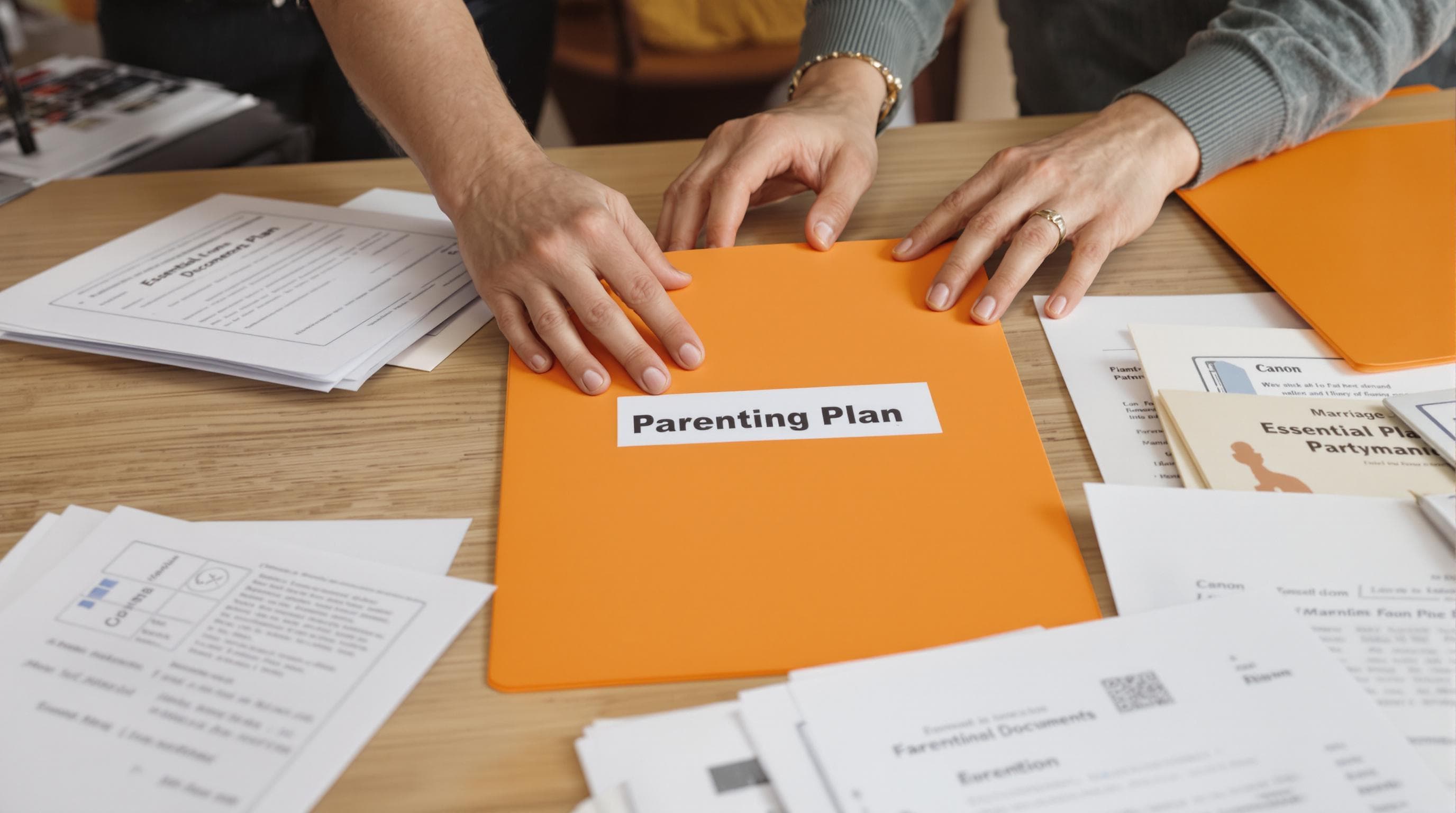
Financial documentation plays a critical role in the divorce process. Individuals must gather recent tax returns, bank statements, investment records, pension information, and documentation of shared and individual assets. These documents help the court make fair determinations about property division and potential spousal support.
Legal Timeframes and Court Procedures
The Dutch legal system establishes specific timeframes for divorce proceedings. Typically, a mutual consent divorce can be completed within three to six months. Contested divorces often require longer processing times, potentially extending to twelve months or more. The initial filing must be submitted through a registered lawyer, who will prepare and submit the necessary divorce petition to the district court.
Court proceedings follow a structured timeline. After initial filing, the court provides a response period for the other spouse. This allows both parties to review the divorce petition and submit any counterarguments or additional documentation. The court then schedules hearings and reviews all submitted materials. Each stage has specific deadlines, and missing these can potentially delay the entire divorce process.
Post Divorce Administrative Requirements
Upon receiving the final divorce decree, couples must complete several administrative steps. The divorce must be registered with the local municipality where the marriage was originally recorded. This registration is crucial for officially terminating the marriage and updating legal records. Individuals should also update personal documentation, including identification papers, bank accounts, and insurance policies.
Additional administrative tasks include updating pension arrangements, revising inheritance documents, and modifying any joint financial accounts. Couples with children must ensure their parenting plan is fully implemented and registered with relevant authorities. Professional legal guidance can help navigate these complex post divorce administrative requirements.
The Dutch divorce process prioritizes clear documentation, fair resolution, and structured legal procedures. While the process may seem intricate, understanding the required documents and legal timeframes helps individuals approach divorce with confidence and clarity. Professional legal support remains essential in managing these complex legal transitions.
Impacts on Families and Business Owners
Divorce represents a complex legal and emotional journey with profound implications for families and business owners in the Netherlands. The process extends far beyond legal separation, touching multiple aspects of personal and professional life. Understanding these multifaceted impacts helps individuals prepare for potential challenges and develop strategic approaches to managing transitions.
Family Dynamics and Child Welfare
Children remain the most vulnerable participants in divorce proceedings. Dutch family law prioritizes their emotional and financial well being, mandating comprehensive parenting plans that address custody, visitation, and financial support. These plans must detail how parents will collaborate in raising children post divorce, ensuring minimal disruption to the children’s daily lives.
Emotional support becomes crucial during this transition. Children may experience complex feelings of loss, confusion, and potential loyalty conflicts. Professional counseling and structured co parenting approaches can mitigate negative psychological impacts. Parents are encouraged to maintain open communication, avoid conflict in front of children, and create stable environments that support their children’s emotional resilience.
Business Ownership and Asset Division
For business owners, divorce introduces significant financial and operational complexities. Dutch law considers businesses as marital assets subject to potential division, which can dramatically impact company ownership and strategic planning.
Business valuation becomes a critical process during divorce. Forensic accountants and legal professionals collaborate to assess the company’s true value, considering factors like future earning potential, existing contracts, and market conditions. Entrepreneurs might need to implement strategies such as buyout arrangements, structured settlements, or creating separate ownership agreements to protect their business interests.
Financial Restructuring and Long Term Planning
Divorce necessitates comprehensive financial restructuring. Couples must untangle joint financial obligations, reassess retirement plans, and potentially adjust investment strategies. This process involves detailed financial audits, reassessing insurance policies, updating estate planning documents, and potentially establishing new financial independence.
Business owners face additional layers of complexity. They must consider how divorce might impact business credit, investor confidence, and potential partnership agreements. Proactive legal and financial planning can help mitigate potential disruptions. This might involve creating prenuptial agreements, establishing clear business succession plans, or developing strategies to protect intellectual property and business assets.
The Dutch legal system recognizes divorce as a nuanced process affecting multiple life domains. While challenging, careful preparation and professional guidance can help individuals navigate these transitions effectively. Understanding the potential impacts on families and businesses allows for more strategic decision making, ultimately supporting smoother legal and personal transitions.
Choosing the Right Legal Support in Netherlands
Selecting appropriate legal support during divorce proceedings represents a critical decision that can significantly impact the entire separation process. The Netherlands offers multiple legal pathways and professional resources to guide individuals through this complex transition. Understanding the nuanced landscape of legal support helps individuals make informed choices that protect their interests and facilitate smoother proceedings.
Types of Legal Professionals and Their Roles
Diverse legal professionals specialize in family law and divorce proceedings in the Netherlands. Divorce lawyers provide comprehensive legal representation, offering strategic advice and managing court interactions. Mediators serve as neutral third parties who help couples negotiate settlements collaboratively, potentially reducing emotional stress and legal expenses.
Specialized family law attorneys bring deep expertise in Dutch legal frameworks. They understand intricate details of property division, child custody regulations, and spousal support calculations. These professionals can navigate complex scenarios involving international marriages, business ownership, and substantial asset portfolios.
Selecting the Right Legal Approach
Couples in the Netherlands can choose between several legal approaches depending on their specific circumstances. Mediation offers a collaborative method where both parties work with a neutral professional to reach mutually agreeable terms. This approach typically reduces legal costs and emotional tension. Collaborative divorce involves each spouse retaining independent legal representation while committing to resolving disputes outside traditional court settings.
Traditional litigation remains an option for couples unable to reach agreements through mediation. This approach involves formal court proceedings where a judge makes final determinations about asset division, child custody, and financial support. While more adversarial, litigation provides structured resolution for complex or high conflict divorce situations.
To assist readers in understanding which legal pathway may be best suited to their situation, the following table compares the main Dutch divorce approaches discussed, summarising their characteristics and benefits.
| Approach | Description | When to Consider | Typical Advantages |
| Mediation | Neutral mediator helps both parties agree to terms collaboratively | Amicable separations, low conflict | Cost effective, less stressful |
| Collaborative Divorce | Each spouse has a lawyer, commitment to resolve outside court | Complex but collaborative cases | Maintains communication, less adversarial |
| Traditional Litigation | Court makes final decisions on disputes | High conflict, no agreement possible | Legally binding, resolves stalemates |
Financial Considerations and Legal Aid
Legal support in the Netherlands involves various financial considerations. Many lawyers offer initial consultations to assess case complexity and provide cost estimates. Some individuals qualify for subsidized legal aid through the Legal Aid Board, which helps manage legal expenses for those with limited financial resources.
Professional legal support costs vary based on case complexity, chosen approach, and professional rates. Hourly rates for specialized family law attorneys can range significantly. Mediation often presents a more cost effective alternative, allowing couples to manage expenses while maintaining collaborative communication.
Choosing legal support requires careful evaluation of personal circumstances, financial capabilities, and desired outcomes. The Dutch legal system prioritizes fair and compassionate resolution, offering multiple pathways to navigate divorce proceedings. Professional guidance helps individuals make informed decisions, protect their interests, and transition through this significant life change with clarity and confidence.
Frequently Asked Questions
What is the typical duration of a divorce process in the Netherlands?
A mutual consent divorce can be finalised in approximately three to six months, while contested divorces often take more than a year to resolve.
What documents are required to initiate a divorce in the Netherlands?
Essential documents include marriage certificates, proof of residency, financial statements, and detailed custody plans for couples with children.
How does divorce impact children in the Netherlands?
Dutch family law prioritises the well-being of children, requiring comprehensive parenting plans that outline custody, visitation, and financial responsibilities to ensure stability post-divorce.
What types of legal professionals can assist with divorce in the Netherlands?
Couples can seek support from mediators, and specialized family law attorneys. Law & More offers both.
Ready to Navigate Your Dutch Divorce With Confidence?
Facing divorce in the Netherlands often means more than just legal paperwork. The emotional toll, uncertainty around child welfare, and the financial risks for families and business owners can quickly become overwhelming. You want clarity on court procedures, documentation, and how to protect both your interests and your peace of mind. As highlighted in our guide, choosing the right legal support and understanding options like mediation, collaborative divorce, and litigation is crucial for a smooth transition.
At Law & More, our experienced lawyers in Eindhoven and Amsterdam are skilled in Dutch and international family law. We provide personal guidance, explain every procedure, and defend your interests throughout the process. Whether you need support with asset division, parenting plans, or safeguarding your business, our multilingual team delivers tailor-made solutions with transparent communication. Do not let uncertainty hold you back. Request a consultation today and let us help you take the first step towards stability and a new chapter. Your future deserves trusted expertise.