


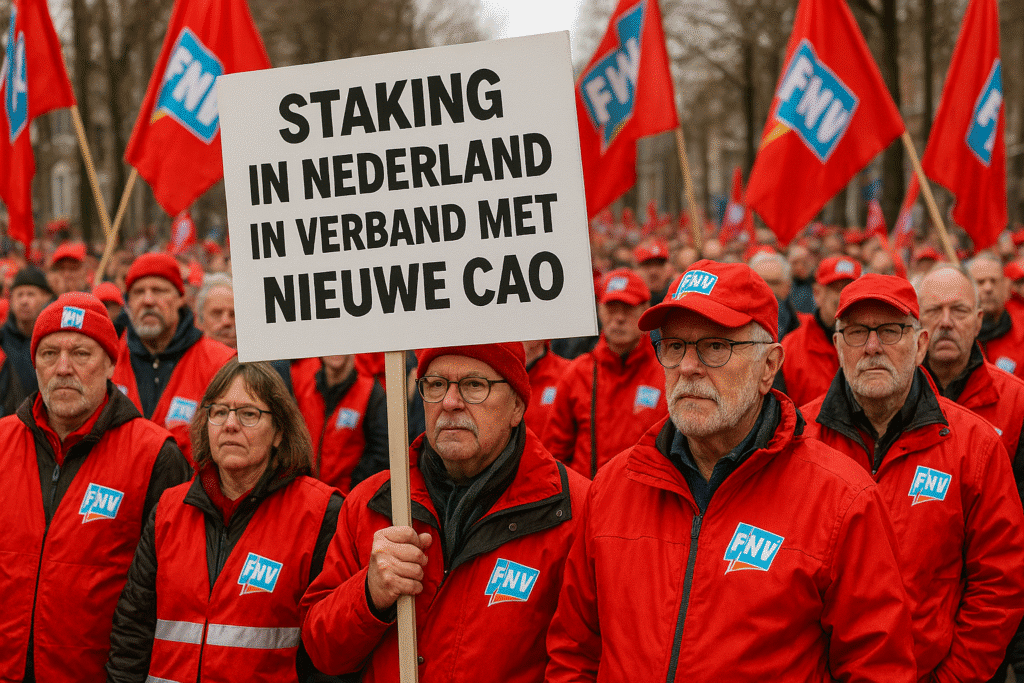
Introduction to the CLA
A collective labour agreement, or CLA for short, is a written agreement in which employers and employees within a specific industry or company lay down agreements on terms and conditions of employment. These include matters such as wages, working hours, notice periods, pension schemes and other important conditions that affect the daily practice of workers. The purpose of a collective labour agreement is to provide clear and fair rules for both employers and employees, so that the employment relationship remains healthy and balanced.
In the Netherlands, many industries and companies are bound by a collective labour agreement. When a collective labour agreement is declared generally binding by the Minister of Social Affairs and Employment, it applies not only to the members of the relevant employer and employee organisations, but to all employers and employees within the industry concerned. This ensures that everyone within that sector benefits from the same terms of employment and rights, which contributes to equal treatment and transparency in the workplace.
The collective labour agreement thus forms an important foundation for individual employment contracts. Employers and employees know exactly where they stand, and the agreements in the collective labour agreement provide guidance when making choices about employment, wages and other terms of employment. In this way, the collective labour agreement contributes to a stable and fair labour market in the Netherlands.
Consequences of violating the collective labour agreement and employment contract
Most people know what a collective labour agreement is, what its advantages are and which one applies to them. However, many people do not know what the consequences can be if the employer does not comply with the collective labour agreement. You can read more about this in this blog!
If an employer or employee does not comply with the collective labour agreement, the other party can be forced to comply with the provisions of the collective labour agreement through legal proceedings.
Is compliance with the collective labour agreement mandatory?
A collective labour agreement sets out agreements on the terms and conditions of employment for employees in a specific industry or within a company. A collective labour agreement regulates the terms and conditions of employment for all staff of a company or industry. The agreements included in a collective labour agreement are usually more favourable to the employee than the terms of employment resulting from the law. These include agreements relating to salary, notice period, probationary period, overtime pay or pension. The most common types of collective labour agreements are industry-wide collective labour agreements and company-wide collective labour agreements. In certain cases, the collective labour agreement is declared generally binding.
This means that employers within the industry covered by the collective agreement are obliged to apply the rules set out in the collective agreement. Almost all industry-wide collective agreements have been declared generally binding. In that case, the employment contract between the employer and the employee may not deviate from the provisions of the collective agreement in a manner that is detrimental to the employee. Both as an employee and as an employer, it is therefore advisable to be aware of the collective agreement that applies to you.
Legal proceedings
Collective labour agreements are concluded between employers’ and employees’ organisations. Once the collective labour agreement has been concluded, both employers and employees are obliged to comply with the agreements in the collective labour agreement.
If the employer fails to comply with the mandatory agreements in the collective labour agreement, they are in breach of contract. They are not complying with the agreements that apply to them. In this case, the employee can go to court to ensure that the employer still fulfils their obligations. In addition, the employee organisation has the option of demanding compliance with the obligations in court.
The employee or the employees’ organisation can take legal action to demand compliance and compensation for the damage resulting from non-compliance with the collective labour agreement. Some employers believe they can avoid the collective agreement by making specific agreements with the employee (in the employment contract) that deviate from the agreements in the collective agreement. However, these agreements are not valid, which means that the employer is still liable for non-compliance with the provisions of the collective agreement.
The Labour Inspectorate
In addition to the employee and the employees’ organisation, the Dutch Labour Inspectorate can also conduct an independent investigation. The Dutch Labour Inspectorate can conduct an independent investigation in the event of a collective labour agreement violation. Such an investigation can be announced or unannounced. This investigation may consist of asking questions to the employees present, temporary workers, representatives of the company and other persons. In addition, the Labour Inspectorate may request access to the company’s records.
Those involved are obliged to cooperate with the Labour Inspectorate’s investigation. The basis for the powers of the Labour Inspectorate stems from the General Administrative Law Act. If the Labour Inspectorate finds that the mandatory collective labour agreement provisions are not being complied with, it will notify the employers’ and employees’ organisations. They can then take action against the employer concerned.
Fixed penalty
Finally, the collective labour agreement may contain a provision or regulation on the basis of which employers who do not comply with the collective labour agreement can be fined. This is also referred to as a fixed penalty. The amount of this fine therefore depends on what is stipulated in the collective labour agreement that applies to your employer. The amount of the fine therefore varies, but can be substantial. In principle, such fines can be imposed without the intervention of a court.
What can you do if your employer does not comply with the collective labour agreement?
If, as an employee, you notice that your employer is not complying with the collective labour agreement, it is important to first clarify the situation. Check which collective labour agreement applies to your employment contract and what provisions it contains. The collective labour agreement is often mentioned in your individual employment contract or is known to the personnel department.
You can then discuss the situation with your employer or the HR department. In the event of disagreements about collective labour agreements, employees must seek a solution together with their employer. Sometimes there is a misunderstanding or administrative error that can be easily resolved. If this does not lead to the desired result, you can contact your trade union or employee organisation. Employees can also get help from a trade union or the Legal Advice Centre if they cannot reach agreement with their employer. These parties can enter into discussions with the employer on your behalf and, if necessary, involve collective labour agreement parties.
If the situation is not resolved, you can submit a request to a disputes committee or the court to demand compliance with the collective labour agreement. You can engage a disputes committee in the sector if you have a disagreement about the collective labour agreement. It is important to properly record your rights and keep any correspondence. Engaging an employment lawyer can also help you to substantiate your case and represent your interests. If approaching the employer is unsuccessful, employees can contact the parties to the collective labour agreement or the Dutch Labour Inspectorate.
Do you have a question about this topic or would you like to know more about related topics within employment law? Feel free to ask your trade union, the Legal Desk or another expert. More information about this topic and other relevant topics can be found on our website or at the aforementioned authorities.
The role of collective bargaining parties and the Ministry of Social Affairs
The collective labour agreement is concluded between employers’ organisations and trade unions, also known as collective bargaining parties. They negotiate the terms and conditions of employment and lay these down in the collective labour agreement. If there is any uncertainty or disagreement about the interpretation or compliance with the collective labour agreement, the collective bargaining parties can be approached for clarification or mediation.
The Ministry of Social Affairs and Employment plays a role in declaring collective labour agreements generally binding. This means that a collective labour agreement applies to all employers and employees within a specific sector, even if they are not members of the relevant employers’ organisations or trade unions. However, the Ministry cannot intervene in individual disputes about compliance with the collective agreement; this is the responsibility of the courts or dispute committees.
The importance of a clear employment contract and collective bargaining
A good individual employment contract that clearly sets out the applicable collective labour agreement prevents many problems. This is also known as an incorporation clause. It states that the provisions of the collective labour agreement form part of the employment contract and describes how the collective labour agreement provisions apply, for example when a collective labour agreement ends or is extended.
In addition, it is important that collective bargaining negotiations are conducted transparently and carefully, so that both employers and employees have confidence in the agreements. New collective agreements can also have retroactive effect, which means that agreements apply retroactively to the period before the collective agreement was concluded. If a new collective agreement is concluded after a period without a collective agreement, it will often apply retroactively to the period in which no new collective agreement was in force.
Good agreements and compliance with the collective labour agreement create clarity and a healthy relationship between employers and employees, which contributes to a pleasant and fair working relationship.
Do you have any questions about the collective labour agreement that applies to you? Please contact us. Our solicitors specialise in employment law and will be happy to help you!