


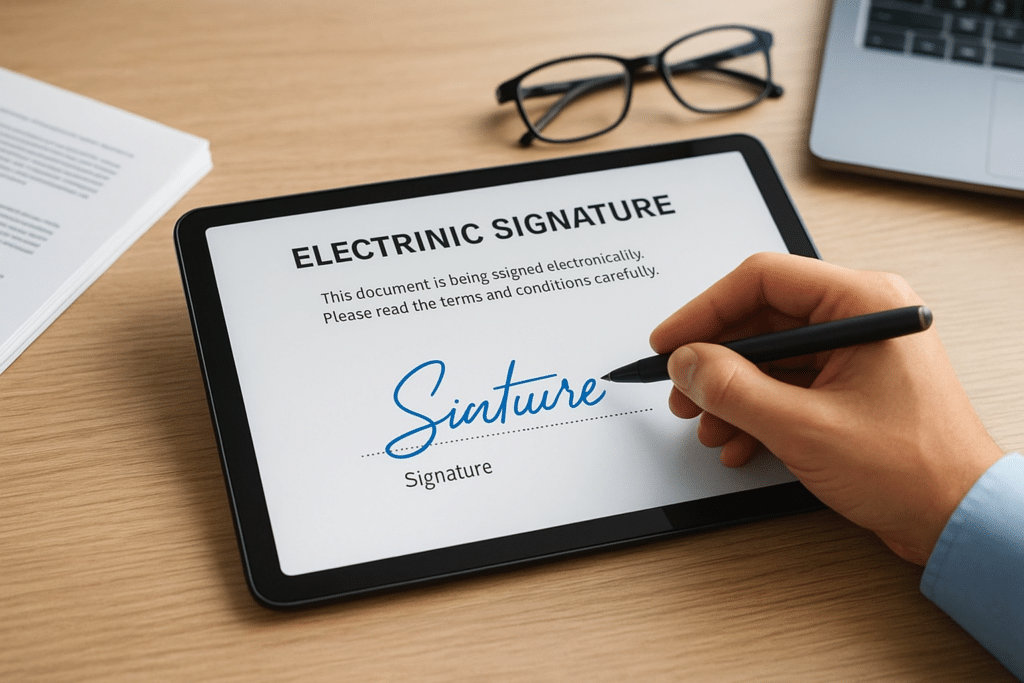
Electronic signature legal validity means that your digitally signed document holds the same legal weight as one signed with pen and ink. The signature creates a binding contract. Courts accept it as evidence. But there’s a catch: you need to meet specific conditions. The right authentication method. Proof of identity. Evidence that no one tampered with the document. Without these elements, your electronic signature might face challenges in court.
This guide walks you through everything you need to know about electronic signature validity. You’ll learn the legal framework in the EU and Netherlands. We’ll cover the three types of electronic signatures and when to use each one. You’ll discover the practical requirements that make signatures legally binding. We’ll also show you common mistakes that undermine validity and how to avoid them. Whether you’re signing employment contracts, real estate agreements, or business deals, you’ll know exactly what makes your electronic signature stand up in court.
Why electronic signature validity matters
Your business deals can fall apart if your electronic signatures don’t meet legal standards. Invalid signatures void contracts, leaving you without recourse when disputes arise. You might discover this after you’ve already invested time, money, and resources into an agreement. Courts will reject documents that lack proper authentication or evidence of identity. This puts your company at risk in negotiations, vendor relationships, and customer transactions.
The cost of invalid signatures
Financial losses hit hard when contracts collapse due to signature issues. You lose the deal itself and face legal fees to resolve the dispute. Your reputation suffers when clients question your professionalism. In some cases, you’ll need to restart entire negotiations from scratch. Real estate transactions, employment agreements, and partnership deals all depend on electronic signature legal validity. One missing element in your signing process can unwind months of work.
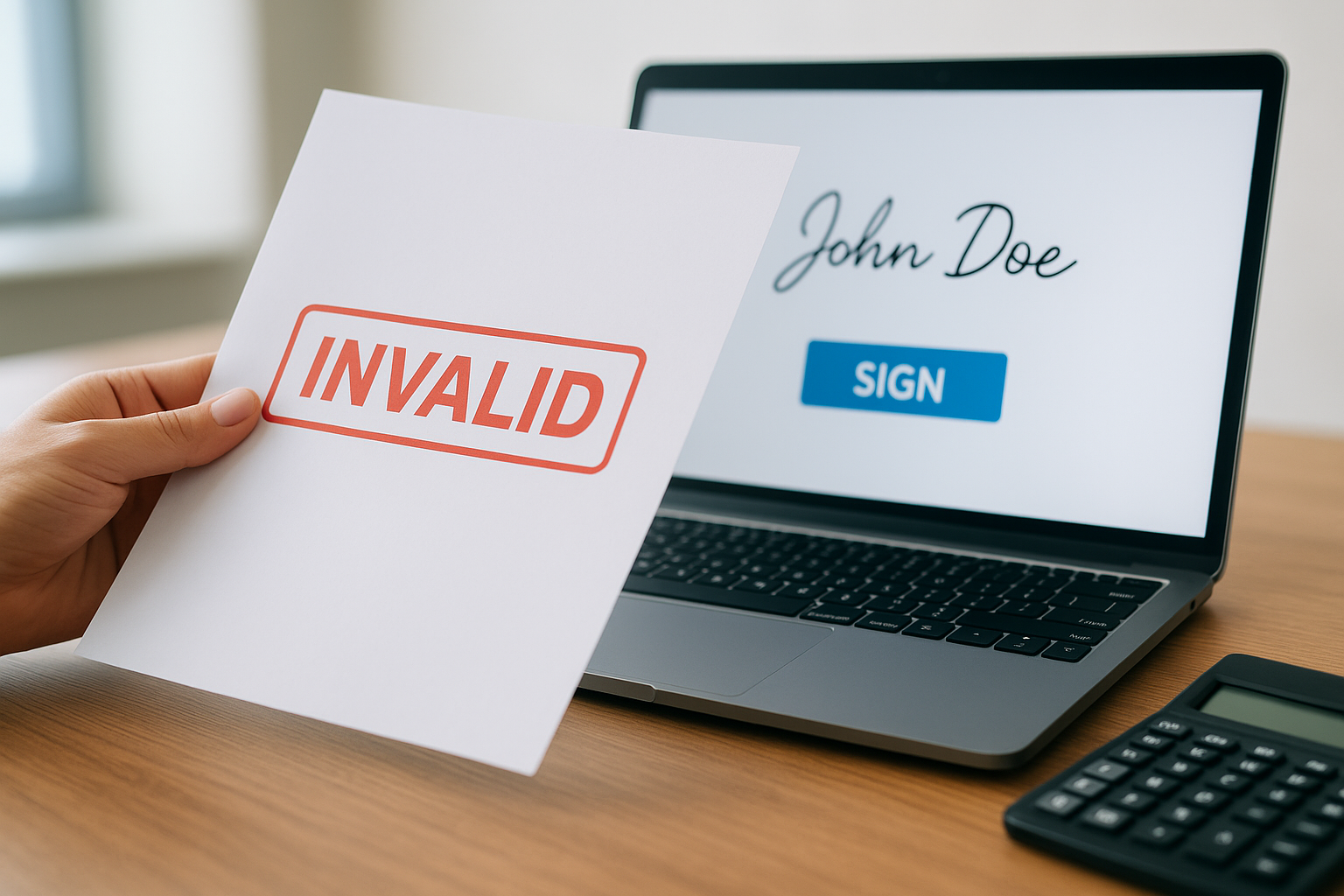
Electronic signatures must meet specific legal requirements to protect your interests in court.
Business efficiency and trust
Valid electronic signatures speed up your operations while maintaining legal protection. You close deals faster than competitors who rely on wet signatures. Clients trust your digital processes when you follow proper validation standards. Your team saves hours on document handling and shipping costs. The right approach combines convenience with legal certainty, giving you both operational benefits and peace of mind.
How to ensure an electronic signature is valid
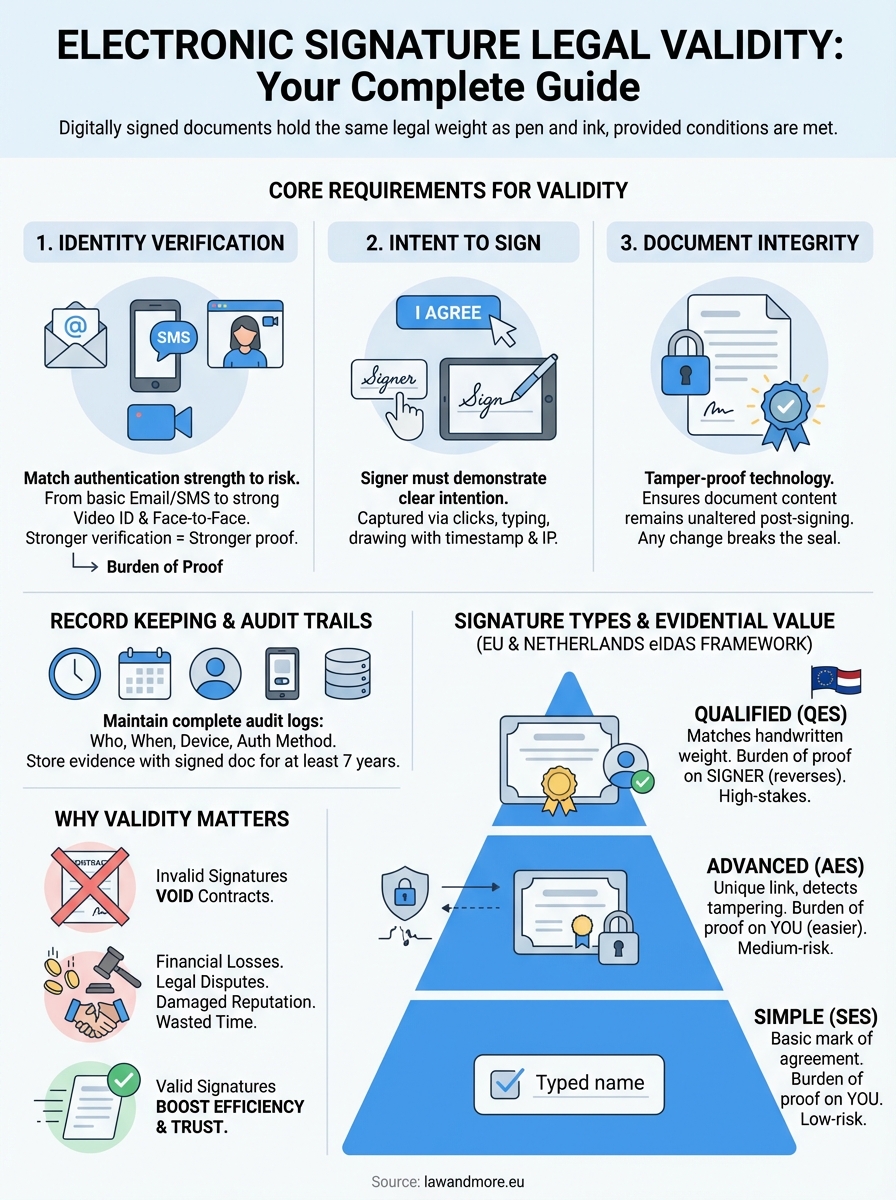
You need to meet three core requirements for electronic signature legal validity: proper identity verification, clear intent to sign, and document integrity. These elements work together to create a legally binding signature that courts will accept. Missing even one requirement can make your signature challengeable in legal proceedings. Your signing process must capture evidence for each element and store that proof securely.
Identity verification requirements
Authentication methods determine how well you can prove the signer’s identity. You can use email verification for basic transactions, but important contracts need stronger methods. Phone number verification, knowledge-based questions, or video identification all provide higher security levels. The weight of your document should match your authentication strength. Real estate agreements require more rigorous identity checks than internal company memos.
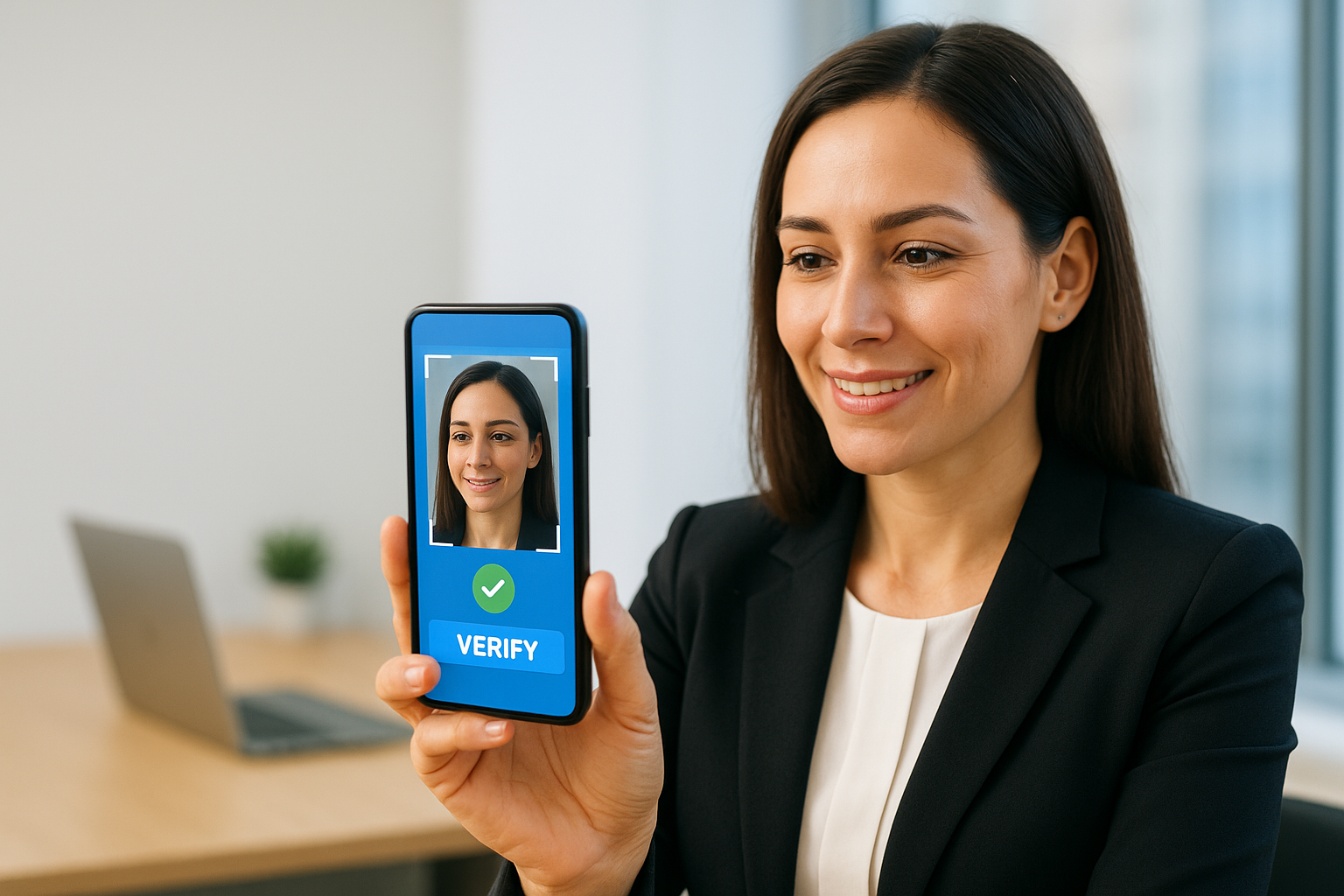
Face-to-face verification gives you the strongest proof when disputes arise. You confirm identity through video calls or in-person meetings before the signing occurs. This approach shifts the burden of proof to the signer if they later claim the signature isn’t theirs. Your legal team can defend the signature’s validity more effectively with this documentation in place.
Intent to sign and document integrity
Your signer must demonstrate clear intention to agree with the document’s terms. This happens through specific actions like clicking an "I agree" button, typing their name in a signature field, or drawing their signature on screen. The signing platform should capture these actions with timestamps and IP addresses.
Tamper-proof technology protects your document after signing and maintains its legal validity.
Document integrity means no one can alter the content after signing without detection. Modern signing systems use cryptographic seals that break if someone changes even a single character. You need this protection to prove the document matches what the signer originally agreed to. Courts reject signatures on documents that show signs of tampering.
Record keeping obligations
You must maintain complete audit trails of every signing transaction. These records include who accessed the document, when they signed it, what device they used, and how they authenticated their identity. Store this evidence alongside the signed document itself. Your records prove you followed proper procedures if someone questions the signature later. Keep these files for at least seven years to match standard business document retention periods.
Legal framework in the EU and Netherlands
Your electronic signatures operate under clear legal standards set by European and Dutch law. The eIDAS Regulation establishes the foundation for electronic signature legal validity across all EU member states. This framework took effect on July 1, 2016, and creates consistent rules for digital signatures throughout Europe. Netherlands law aligns with these European standards while adding specific national requirements through Article 3:15a of the Dutch Civil Code.
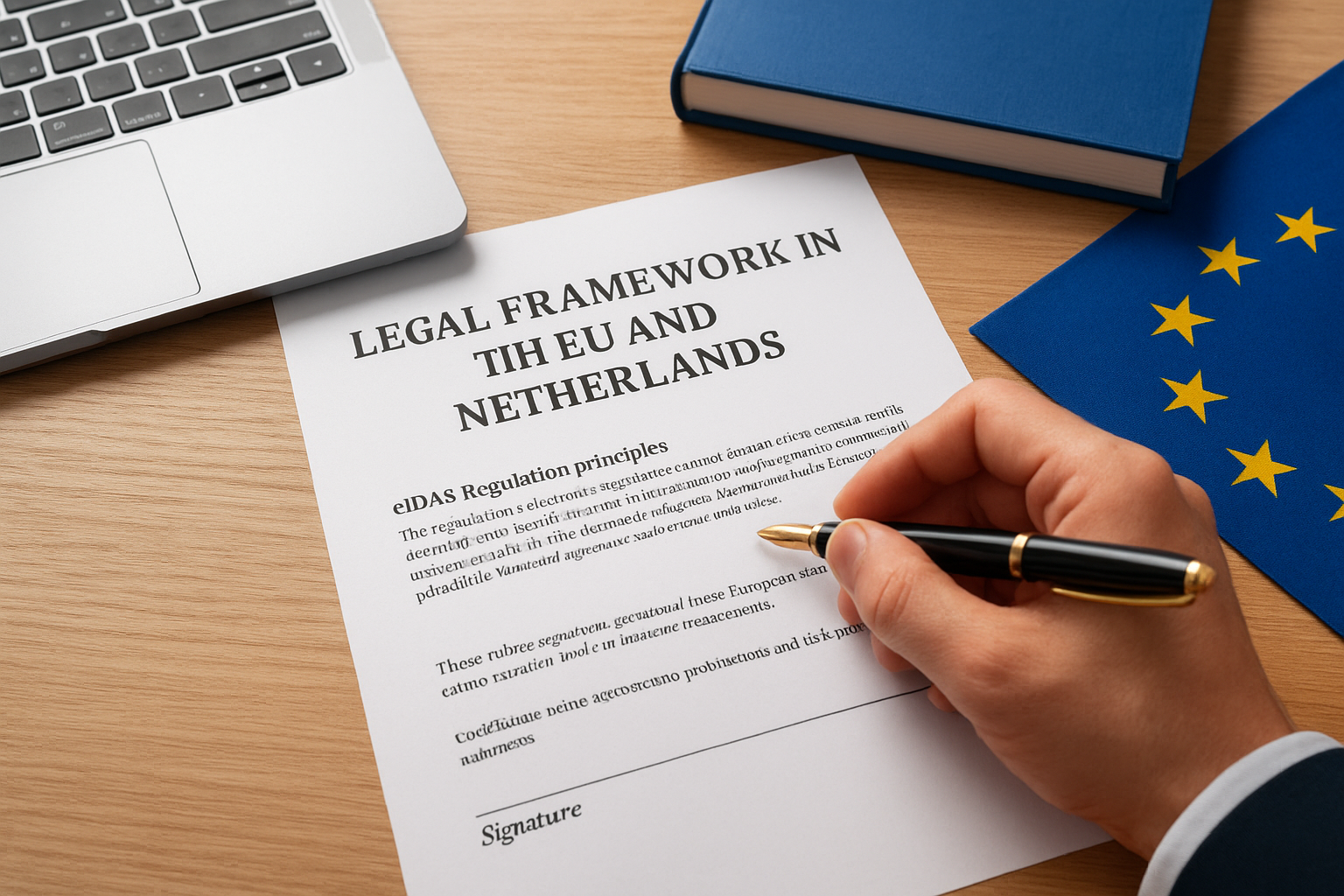
eIDAS Regulation principles
The regulation states that electronic signatures cannot be denied legal effect solely because they exist in digital form. Courts must treat your electronic signature with the same consideration as traditional signatures. This principle protects your digital agreements from automatic dismissal based on format alone. The law recognizes three signature levels with varying security requirements: Simple Electronic Signatures (SES), Advanced Electronic Signatures (AES), and Qualified Electronic Signatures (QES). Each level serves different business needs and risk profiles.
Your choice between signature levels depends on transaction value and potential dispute risk. Simple signatures work for routine business documents. Advanced signatures suit medium-risk contracts. Qualified signatures match the legal weight of handwritten signatures for high-stakes agreements.
The eIDAS framework ensures your electronic signatures maintain legal validity across all EU member states.
Netherlands implementation
Dutch law adds practical guidance through Article 3:15a of the Civil Code, which states your authentication method must match the document’s importance. The law doesn’t mandate specific technology. Instead, it requires sufficient reliability considering your intended purpose and circumstances. This flexible approach lets you adapt your signing processes to different business situations while maintaining legal protection.
Netherlands courts evaluate electronic signatures based on the security measures you implemented during signing. Your authentication strength relative to the contract’s significance determines whether judges accept your signature as valid evidence. Business practice in the Netherlands favors clear documentation of your signing process, including identity checks and security protocols used.
Types of electronic signatures and their evidential value
The three signature types carry different levels of legal protection and require different amounts of proof when disputes arise. Simple Electronic Signatures work for low-risk transactions, Advanced Electronic Signatures add security measures for medium-risk deals, and Qualified Electronic Signatures provide the strongest legal standing. Your burden of proof changes dramatically depending on which type you use. Understanding these differences helps you choose the right signature level for each transaction.
Simple Electronic Signatures (SES)
Simple signatures include any electronic mark that shows agreement, from typing your name to clicking an acceptance button. You don’t need special technology or identity verification beyond basic email confirmation. The electronic signature legal validity of an SES faces more scrutiny in court because you carry the burden of proof when someone disputes the signature. You must demonstrate the signer was who they claimed to be and intended to sign. Email verification records, IP addresses, and access logs become critical evidence.
Advanced Electronic Signatures (AES)
Advanced signatures require unique identification of the signer and detect any changes made after signing. You must use technology that links the signature exclusively to the signer and maintains control over the signing data. The signature needs cryptographic protection that reveals tampering attempts. You still bear the burden of proof in disputes, but your technical safeguards make this easier to establish.
Advanced and Qualified signatures shift evidential burdens and strengthen your legal position when disputes arise.
Qualified Electronic Signatures (QES)
Qualified signatures match handwritten signatures in legal weight under EU law. You create them using qualified certificates issued by approved trust service providers. Face-to-face identity verification happens before certificate issuance. The burden of proof reverses with a QES: the signer must prove the signature isn’t theirs rather than you proving it is. Courts presume QES validity unless the signer provides evidence against it.
Practical scenarios and common pitfalls
Real-world situations reveal where electronic signature legal validity breaks down and how you can avoid these problems. Many businesses make the same mistakes repeatedly, creating vulnerabilities in their contracts. Authentication failures rank as the most common issue, followed by incomplete audit trails and improper certificate usage. Learning from these scenarios helps you protect your agreements before disputes arise.
Contract disputes from weak authentication
A vendor claimed they never signed a purchase order worth €50,000 because the company only used email verification without additional checks. The buyer couldn’t prove the vendor’s employee actually clicked the signature button. Courts sided with the vendor because the authentication method didn’t match the contract’s value. You need stronger verification for high-value transactions. Phone verification, knowledge-based questions, or video calls provide better protection than email alone.
Employment agreements face similar challenges when companies use generic login credentials shared across departments. If an employee denies signing their contract, you can’t prove which person actually completed the signature. Create unique credentials for each signer and maintain detailed access logs.
Match your authentication strength to the transaction value and potential dispute risk.
Technical failures that void signatures
Document tampering occurs when you modify contracts after signatures are applied. Even minor edits like fixing typos can break cryptographic seals and invalidate the signature. Start a new signing round instead of editing signed documents. Certificate expiration creates another common problem. Your qualified signatures lose validity when certificates expire before you verify them. Check certificate status immediately after signing and store verification records with the document.
Bringing it all together
Electronic signature legal validity depends on three core elements you must get right: proper identity verification, clear signing intent, and document integrity protection. Your business needs strong authentication methods that match your contract value and complete audit trails that prove compliance with legal requirements. Courts will uphold your signatures when you follow these standards and maintain proper documentation throughout your entire signing process.
Contact Law & More to implement legally sound electronic signing processes for all your business contracts and agreements.