



Electronic harassment is quietly reshaping the way we think about digital safety. People often picture online abuse as fleeting insults in a comments section, yet studies now show that nearly 40 percent of internet users have experienced some form of electronic harassment. What stands out is that the real danger is not only the words people send, but the relentless ways technology can be hijacked to watch, manipulate, and threaten—often without a single warning sign.
Table of Contents
Quick Summary
| Takeaway | Explanation |
| Electronic harassment is a serious abuse form | It uses digital communication to inflict distress, leveraging technology for repeated unwanted actions. |
| Victims suffer significant psychological impacts | Electronic harassment leads to anxiety, depression, and social isolation due to its pervasive nature. |
| Legal frameworks are adapting to digital threats | The Netherlands is evolving its laws to address the complexities of electronic harassment effectively. |
| Awareness and recognition are key to prevention | Society must identify electronic harassment to safeguard individuals and improve digital safety and support. |
| Technological tools facilitate harassment methods | Perpetrators exploit digital channels and vulnerabilities, employing tactics like spyware and coordinated campaigns. |
What is Electronic Harassment? Defining the Concept
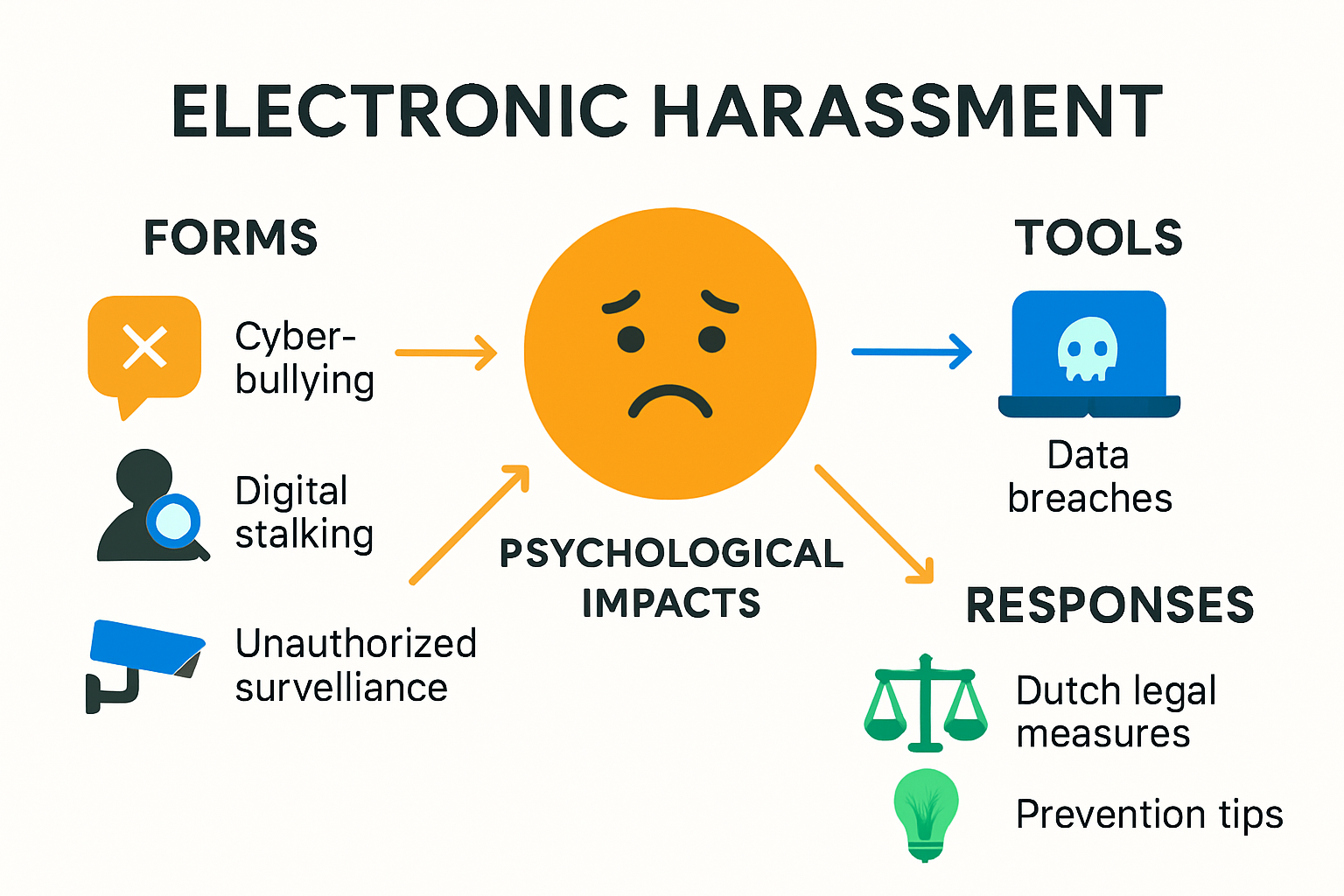
Electronic harassment represents a pervasive and increasingly complex form of abuse that leverages digital technologies to inflict psychological, emotional, and sometimes physical harm on individuals. Unlike traditional harassment methods, electronic harassment exploits digital platforms, communication technologies, and interconnected systems to systematically target and intimidate victims.
The Core Characteristics of Electronic Harassment
At its fundamental level, electronic harassment involves intentional and repeated unwanted digital communications or actions designed to cause distress, fear, or control. These actions can manifest through multiple technological channels, including:
-
Persistent unwanted messages or emails
-
Social media stalking and threatening interactions
-
Cyberbullying through online platforms
-
Unauthorized sharing of personal information
-
Digital surveillance and tracking
The psychological impact of electronic harassment can be profound.
To help clarify the diverse strategies used by perpetrators, the following table outlines common methods of electronic harassment and explains how each is used to target victims.
| Method of Electronic Harassment | Description |
| Persistent unwanted messages or emails | Sending repeated, unsolicited digital messages to cause distress or intimidation |
| Social media stalking and threatening | Monitoring and harassing individuals through social platforms with hostile behaviour |
| Cyberbullying through online platforms | Using digital spaces to bully, humiliate, or attack individuals repeatedly |
| Unauthorised sharing of personal info | Releasing private details online without consent to embarrass or coerce |
| Digital surveillance and tracking | Secretly monitoring digital activities or movements, often via specialised software |
| Creation of fake online profiles | Impersonating someone online to deceive, defame, or manipulate |
| Malware and spyware installation | Installing malicious software to monitor, steal data, or control devices |
Victims often experience significant emotional trauma, anxiety, and a pervasive sense of vulnerability, knowing that the harassment can occur instantaneously and anonymously across digital spaces.
Legal and Technological Dimensions
Modern electronic harassment transcends traditional boundaries, utilising sophisticated technological tools that can include spyware, tracking applications, malicious software, and coordinated online campaigns. Learn more about digital protection strategies to understand the comprehensive legal frameworks addressing these emerging digital threats.
The complexity of electronic harassment lies in its multifaceted nature. Perpetrators might leverage:
-
Anonymous communication platforms
-
Sophisticated hacking techniques
-
Advanced tracking and monitoring technologies
-
Social engineering strategies
Understanding electronic harassment requires recognising it as a dynamic, evolving form of abuse that adapts rapidly with technological advancements. It represents a serious violation of personal boundaries and psychological safety, demanding sophisticated legal, technological, and social responses to effectively protect potential victims.
The Importance of Recognising Electronic Harassment
Recognising electronic harassment is crucial in our increasingly digital world, where technology has become an integral part of personal and professional communication. The ability to identify and understand the nuanced forms of digital abuse is fundamental to protecting individuals from potential psychological, emotional, and professional harm.
Psychological and Emotional Impact
Electronic harassment can cause profound psychological damage that extends far beyond digital interactions. Victims often experience severe emotional distress, including anxiety, depression, social isolation, and a persistent sense of vulnerability. The anonymous and ubiquitous nature of digital platforms makes these attacks particularly insidious, creating an environment where individuals feel constantly threatened and unable to escape their persecutors.
The psychological consequences can manifest through:
-
Increased stress and panic attacks
-
Diminished self-esteem and confidence
-
Chronic anxiety and potential post-traumatic stress
-
Social withdrawal and interpersonal relationship challenges
Professional and Legal Implications
Beyond personal trauma, electronic harassment can significantly impact professional trajectories and legal standing. Learn more about workplace harassment strategies to understand the comprehensive legal protections available for individuals experiencing digital abuse.
Workplace and institutional environments are increasingly recognising the severe implications of electronic harassment. Employers and educational institutions now understand that digital abuse can create hostile environments that compromise professional development, productivity, and overall organisational culture.
Key professional risks include:
-
Career progression interruptions
-
Potential job performance deterioration
-
Professional reputation damage
-
Potential legal liability for organisations failing to address digital harassment
Recognising electronic harassment is not merely an individual responsibility but a collective societal imperative.
The following table presents a concise comparison of the key psychological and professional impacts of electronic harassment on individuals and organisations.
| Impact Type | Effects on Victims | Effects on Organisations |
| Psychological | Anxiety, depression, social isolation, diminished self-esteem | n/a |
| Emotional | Severe distress, chronic stress, sense of vulnerability | n/a |
| Professional | Career interruptions, damaged reputation, poor job performance | Legal liability, hostile work environment |
| Social | Strained relationships, withdrawal from social interactions | Erosion of organisational culture |
| Legal | n/a | Potential breach of duty/obligations |
By developing comprehensive awareness, implementing robust prevention strategies, and creating supportive reporting mechanisms, we can work towards mitigating the harmful effects of digital abuse and fostering safer, more respectful digital environments.
How Electronic Harassment Works: Mechanisms and Methods
Electronic harassment operates through sophisticated and multifaceted technological mechanisms designed to exploit digital communication channels, personal information vulnerabilities, and psychological manipulation techniques. Understanding these intricate methods reveals the complex landscape of digital abuse and its potential devastating impacts.
Digital Communication Exploitation
Digital platforms provide unprecedented opportunities for harassment, enabling perpetrators to leverage multiple communication channels simultaneously. These methods often involve strategic approaches that circumvent traditional protective measures, making detection and prevention challenging.
Key communication exploitation techniques include:
-
Persistent messaging across multiple platforms
-
Creating fake online profiles for impersonation
-
Coordinated harassment through anonymous accounts
-
Weaponising social media algorithms to amplify harmful content
-
Systematic online reputation destruction
Technological Infiltration Methods
Sophisticated electronic harassment frequently employs advanced technological infiltration strategies that go beyond simple communication disruption. Learn more about digital protection strategies to understand the comprehensive technological landscape of digital threats.
Technological infiltration can manifest through:
-
Malware and spyware installation
-
Unauthorized device tracking
-
Remote monitoring of digital activities
-
Systematic data breaches
-
Exploiting security vulnerabilities in personal devices
The psychological underpinnings of electronic harassment involve deliberately creating an environment of constant uncertainty and perceived threat. Perpetrators strategically use technological tools to generate a sense of vulnerability, undermining victims’ sense of digital safety and personal boundaries. By combining technological sophistication with psychological manipulation, electronic harassment represents a complex and evolving form of digital abuse that demands comprehensive understanding and proactive protective strategies.
The Impact of Electronic Harassment on Victims and Society
Electronic harassment extends far beyond individual experiences, creating profound ripple effects that significantly impact psychological well-being, social structures, and broader societal dynamics. The consequences of digital abuse are multifaceted, penetrating personal, professional, and institutional domains with lasting and transformative implications.
Individual Psychological Consequences
Electronic harassment inflicts deep psychological trauma that undermines personal resilience and fundamental sense of safety. Victims frequently experience complex emotional responses that disrupt their mental health, social interactions, and overall quality of life.
Psychological impacts typically manifest through:
-
Chronic anxiety and persistent fear
-
Diminished self-esteem and confidence
-
Increased risk of depression and isolation
-
Potential development of post-traumatic stress symptoms
-
Disrupted interpersonal relationship patterns
Broader Societal and Institutional Implications
Explore legal protections against digital harassment to understand the comprehensive legal frameworks addressing these emerging digital threats.
Institutional responses to electronic harassment reflect growing recognition of its systemic impact. Educational institutions, workplaces, and legal systems are progressively developing more robust frameworks to address and mitigate digital abuse.
Societal consequences include:
-
Erosion of digital trust and online community engagement
-
Increased demand for comprehensive cybersecurity measures
-
Development of more sophisticated legal interventions
-
Greater emphasis on digital literacy and prevention education
-
Transformation of institutional harassment policies
The pervasive nature of electronic harassment represents a significant challenge to individual autonomy and collective social cohesion. By understanding its multidimensional impacts, society can develop more nuanced, empathetic, and effective strategies to protect vulnerable individuals and maintain healthy digital ecosystems.
Legal Considerations Surrounding Electronic Harassment in the Netherlands
The Dutch legal framework addressing electronic harassment represents a sophisticated and evolving approach to protecting individuals from digital abuse. As technological landscapes continue to transform, Dutch legislation adapts to provide comprehensive legal mechanisms that balance individual rights, digital freedoms, and personal safety.
Statutory Framework and Criminal Provisions
Electronic harassment in the Netherlands is considered a serious legal violation, with multiple legislative instruments designed to address various manifestations of digital abuse. The legal system recognises that electronic harassment extends beyond traditional understanding of harassment, encompassing complex technological interactions.
Key legal provisions typically address:
-
Intentional and repeated digital communication intended to cause distress
-
Unauthorized tracking and monitoring of digital activities
-
Creation of fake online profiles for malicious purposes
-
Systematic online reputation destruction
-
Digital stalking and threatening communications
Emerging Legal Protections and Technological Considerations
Explore comprehensive digital protection strategies to understand the nuanced legal landscape of digital harassment prevention.
Netherlands’ legal approaches increasingly recognise the sophisticated nature of electronic harassment, developing multifaceted strategies that consider technological complexity. Recent legislative developments demonstrate a commitment to creating robust legal frameworks that can adapt to rapidly evolving digital communication methods.

Important legal considerations include:
-
Potential criminal and civil legal remedies
-
Burden of proof in digital harassment cases
-
Protection of victim privacy during legal proceedings
-
Cross-platform evidence collection mechanisms
-
Jurisdictional challenges in digital harassment cases
The Netherlands continues to refine its legal approach, recognising that electronic harassment represents a dynamic challenge requiring sophisticated, flexible legal responses that protect individual dignity while respecting technological innovation and digital communication freedoms.
Get Personalised Legal Help Against Electronic Harassment
Are you feeling vulnerable or anxious because of persistent digital abuse, threatening messages, or invasive online behaviour? The article you have just read explains how electronic harassment can deeply affect your mental wellbeing, career, and sense of safety. At Law & More, we understand the stress and uncertainty that comes with being targeted in your digital life. Our legal experts have extensive experience helping people and businesses in the Netherlands address complex issues such as cyberstalking, digital monitoring, and online threats.
Take the first step towards reclaiming your confidence. Visit our legal services platform to connect with a trusted lawyer who speaks your language and understands your situation. Secure prompt, private advice and explore tailored legal protection for every form of electronic harassment. Do not wait until the problem escalates. Reach out now for support you can trust.
Frequently Asked Questions
What is electronic harassment?
Electronic harassment is a form of abuse that uses digital technologies to inflict psychological, emotional, or physical harm on individuals. It typically involves repeated unwanted communications or actions via digital platforms.
What are the common forms of electronic harassment?
Common forms of electronic harassment include persistent unwanted messages, cyberbullying on social media, online stalking, unauthorized sharing of personal information, and digital surveillance or tracking.
What impact can electronic harassment have on victims?
Victims of electronic harassment often experience significant psychological trauma, including anxiety, depression, chronic stress, diminished self-esteem, and social isolation, impacting their overall quality of life.
How does the legal framework address electronic harassment in the Netherlands?
In the Netherlands, electronic harassment is considered a serious legal violation, with specific laws addressing intentional digital communication, digital stalking, and unauthorized tracking. Recent legal developments are focused on adapting to the evolving nature of digital abuse.