


Office romance is no stranger to the Dutch workplace and nearly one in three employees in the Netherlands has either dated or considered dating a colleague. Most people think these relationships are strictly forbidden or lead to instant dismissal. Oddly enough, Dutch law actually protects your right to fall in love at work, as long as you handle it sensibly and play by the rules.
Table of Contents
- Understanding Workplace Romance Laws In The Netherlands
- Company Policies: What Is Permitted And Restricted
- Risks And Responsibilities For Employees And Employers
- Best Practices For Navigating Office Relationships
Quick Summary
| Takeaway | Explanation |
|---|---|
| Workplace romance is permitted | Dutch law allows relationships between colleagues if managed properly. Employers can establish guidelines to prevent conflicts. |
| Disclosure is often required | Many companies require employees to disclose relationships, particularly those involving power differences, to manage potential conflicts effectively. |
| Professional conduct is essential | Maintaining professionalism and clear boundaries is vital to prevent workplace issues and safeguard team dynamics during relationships. |
| Employee responsibilities are high | Employees must ensure their romantic relationships do not negatively affect performance or team cohesion, particularly in cases of hierarchical differences. |
| Companies can enforce policies | Employers reserve the right to take action if relationships lead to breaches in workplace standards, reinforcing the need for compliance with policies. |
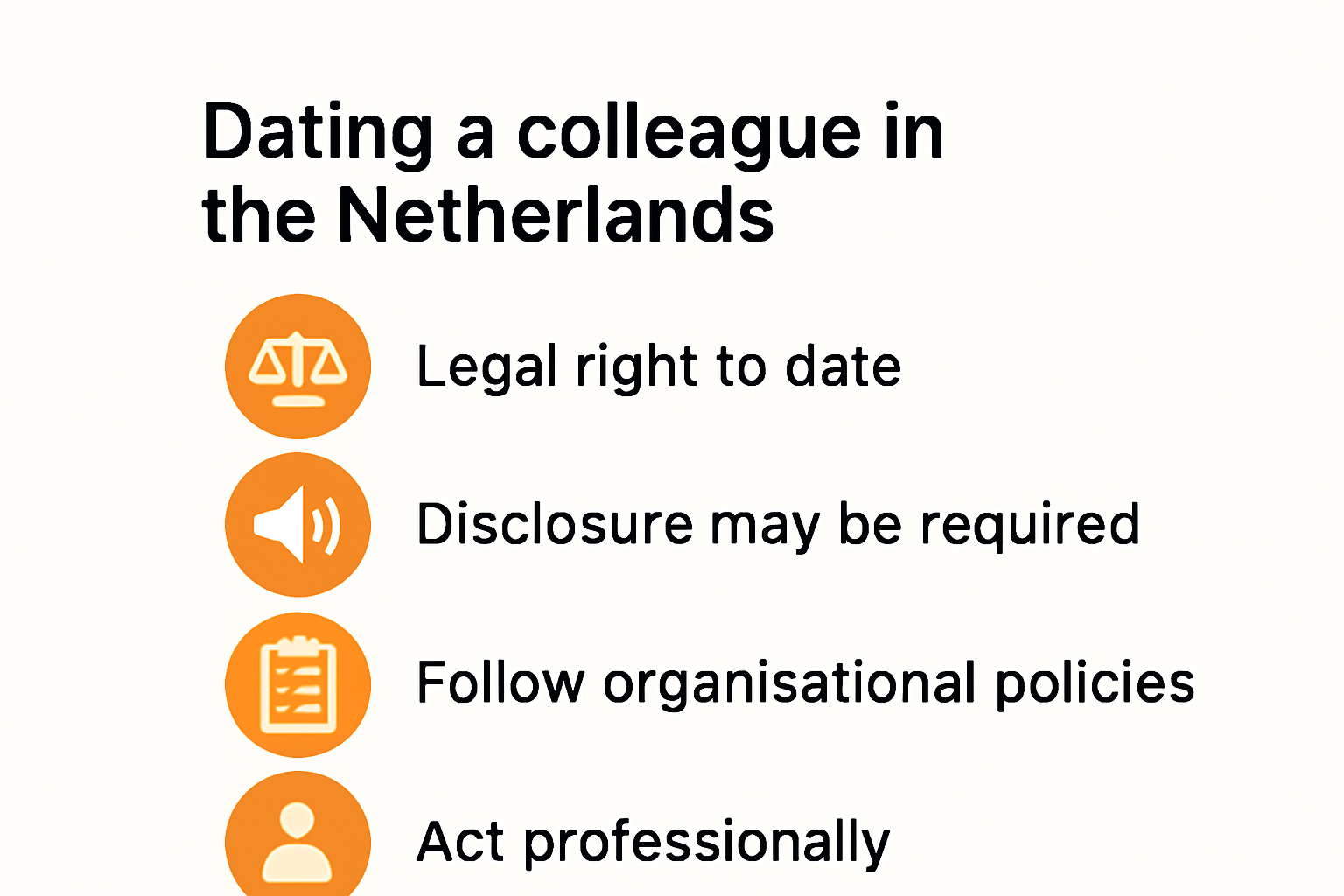
Understanding Workplace Romance Laws in the Netherlands
Workplace romance in the Netherlands presents a complex landscape of legal and professional considerations. While Dutch employment law does not explicitly prohibit relationships between colleagues, employers have significant latitude in establishing guidelines and expectations around interpersonal workplace dynamics.
Legal Framework for Workplace Relationships
The Dutch legal system recognizes employees’ fundamental rights to personal relationships while simultaneously protecting organizational interests. Employers cannot universally ban workplace relationships, but they can implement comprehensive policies that manage potential conflicts of interest and maintain professional boundaries. These policies typically focus on preventing situations that could compromise workplace integrity, such as direct reporting relationships or potential power imbalances.
Key considerations include maintaining professional conduct, avoiding conflicts of interest, and ensuring that romantic relationships do not negatively impact workplace productivity or team dynamics. Employers are particularly concerned with scenarios where romantic involvement might lead to favoritism, reduced objectivity in professional evaluations, or potential sexual harassment claims.
Disclosure and Organizational Expectations
Many Dutch organizations require employees to disclose romantic relationships, especially when they occur between individuals with different hierarchical positions. This disclosure helps management proactively address potential conflicts and maintain transparent workplace environments. Companies often establish clear guidelines about professional behavior, emphasizing that personal relationships should not interfere with work performance or create uncomfortable scenarios for other team members.
The expectation is that employees will handle workplace relationships maturely, maintaining professional boundaries and ensuring that personal dynamics do not compromise team cohesion or organizational effectiveness. explore comprehensive workplace relationship guidelines can provide deeper insights into these complex interactions.

Potential Legal Risks and Protections
While workplace relationships are not inherently prohibited, they can create legal vulnerabilities for both employees and employers. Sexual harassment remains a significant concern, and organizations must implement robust policies to protect all employees. Dutch employment law takes a strong stance on preventing discriminatory behaviors and ensuring safe working environments.
Employees engaged in workplace relationships must be particularly mindful of maintaining consent, respecting professional boundaries, and avoiding behaviors that could be construed as harassment or inappropriate conduct. Employers reserve the right to take disciplinary action if romantic relationships compromise workplace effectiveness or violate established organizational policies.
Ultimately, successful navigation of workplace romance in the Netherlands requires mutual respect, professional maturity, and a clear understanding of organizational expectations. Employees and employers alike must approach such relationships with transparency, discretion, and a commitment to maintaining a respectful, productive work environment.
Company Policies: What Is Permitted and Restricted
Company policies regarding workplace relationships in the Netherlands represent a delicate balance between protecting organizational interests and respecting individual employee rights. Employers must carefully craft guidelines that prevent potential conflicts while maintaining a professional and respectful work environment.
Establishing Clear Relationship Guidelines
Dutch companies typically develop comprehensive policies that outline acceptable boundaries for workplace relationships. These guidelines are not designed to prohibit romantic connections entirely but to manage potential professional risks. Most organizations require employees to disclose relationships, particularly when they involve individuals in different hierarchical positions or within the same direct reporting structure.
Key policy considerations include maintaining professional conduct, preventing conflicts of interest, and ensuring that personal relationships do not compromise workplace dynamics. Employers often implement specific provisions that address potential scenarios such as romantic involvements between colleagues, supervisors and subordinates, and team members working on sensitive projects.
Power Dynamics and Ethical Considerations
Particularly sensitive are relationships involving power imbalances. Companies are increasingly vigilant about preventing situations where romantic connections might lead to perceived or actual favoritism. Policies typically address scenarios where a romantic relationship could potentially influence professional evaluations, job assignments, or career progression.
Most Dutch organizations require employees involved in workplace relationships to:
- Maintain professional behavior at all times
- Avoid public displays of affection in the workplace
- Disclose relationships that might create potential conflicts of interest
- Continue performing job responsibilities without bias or preferential treatment
Consequences and Disciplinary Actions
Companies reserve the right to take disciplinary action if workplace relationships compromise professional standards or organizational effectiveness. Potential consequences may include reassignment, required separation of professional roles, or in extreme cases, termination of employment. The primary goal is to protect the overall workplace environment and maintain professional integrity.
Employees must understand that while romantic relationships are not inherently prohibited, they carry significant professional responsibilities. Organizations expect mature, transparent approaches that prioritize professional conduct and team dynamics. Romantic involvements should never create uncomfortable situations for colleagues or interfere with workplace productivity.
Ultimately, successful navigation of workplace relationships requires mutual respect, clear communication, and a commitment to maintaining professional boundaries. Companies aim to create policies that protect both individual rights and organizational interests, recognizing the complex nature of human interactions in professional settings.
To help clarify common company responses to workplace relationships, the following table summarises typical actions and expectations for employees:
| Scenario | Common Company Policy | Required Employee Action |
|---|---|---|
| Colleagues (same level) begin relationship | Disclosure often encouraged | Maintain professionalism, disclose if asked |
| Supervisor/subordinate relationship | Mandatory disclosure required | Disclose promptly, avoid favouritism |
| Public displays of affection at work | Not permitted | Maintain discretion |
| Relationship affects job performance | Disciplinary action possible | Address performance, separate roles if needed |
| Relationship leads to conflicts of interest | Managed or reassigned roles | Follow guidance, cooperate in mitigation |
Risks and Responsibilities for Employees and Employers
Workplace relationships create a complex web of legal and professional responsibilities that require careful navigation by both employees and employers in the Netherlands. Understanding the potential risks and maintaining clear boundaries becomes crucial to preserving professional integrity and organizational harmony.
Employee Legal and Professional Obligations
Employees engaged in workplace relationships bear significant responsibilities to maintain professional standards and protect both personal and organizational interests. The primary expectation is that romantic connections will not compromise workplace effectiveness, team dynamics, or individual job performance.
Key obligations for employees include transparent communication, maintaining professional boundaries, and ensuring that personal relationships do not create uncomfortable or potentially discriminatory work environments. This means avoiding public displays of affection, preventing conflicts of interest, and continuing to perform job responsibilities with complete objectivity.
Employees must be particularly cautious in relationships involving hierarchical differences. Those in supervisory roles or with potential influence over career progression must exercise extreme discretion to prevent perceptions of favoritism or undue professional advantages.
Employer Risk Management Strategies
Employers face the challenging task of balancing employee personal rights with organizational protection. Companies must develop comprehensive policies that address potential risks without infringing on individual privacy or personal freedoms. This involves creating clear guidelines that outline acceptable behaviors, potential consequences, and mechanisms for addressing workplace relationship complications.
Risk management strategies typically include:
- Mandatory relationship disclosure protocols
- Clear guidelines on maintaining professional conduct
- Mechanisms for addressing potential conflicts of interest
- Procedures for managing situations involving power imbalances
Legal and Professional Consequences
Both employees and employers face potential legal and professional consequences if workplace relationship guidelines are not carefully managed. For employees, this could mean professional reprimands, reassignment, or in extreme cases, termination of employment. Employers risk potential legal challenges related to discrimination, harassment, or unfair treatment if workplace relationship policies are inconsistently or inappropriately applied.
The Dutch legal framework emphasizes the importance of maintaining a professional, respectful work environment. Sexual harassment, coercion, or creating hostile workplace conditions through romantic relationships can result in significant legal and professional penalties. Both parties must approach workplace relationships with maturity, respect, and a clear understanding of their professional responsibilities.
Ultimately, successful management of workplace relationships requires mutual respect, transparent communication, and a commitment to maintaining professional standards. Employees and employers must work collaboratively to create an environment that respects individual rights while protecting organizational integrity and effectiveness.
The table below outlines the main risks for both employees and employers, as well as suggested responses to these risks:
| Risk or Concern | Who Is Affected | Potential Response / Action |
|---|---|---|
| Conflict of interest | Both | Reassess roles, disclosure, policy enforcement |
| Perception of favouritism | Both | Transparency, adjust reporting lines as needed |
| Impact on team dynamics | Both | Communication, monitor team morale |
| Sexual harassment/allegation | Both | Enforce robust anti-harassment policies, training |
| Privacy infringement | Employee | Confidential handling of personal information |
| Legal liability (discrimination, etc.) | Employer | Update policies, consistent policy application |
| Poor workplace performance | Employee | Performance management, separation if needed |
Best Practices for Navigating Office Relationships
Navigating workplace relationships in the Netherlands requires a strategic and professional approach that balances personal connections with organizational expectations. Employees must carefully manage romantic involvements to protect both personal interests and professional integrity.
Professional Conduct and Relationship Management
Successful workplace relationships demand exceptional emotional intelligence and professional maturity. Employees must consistently demonstrate an ability to separate personal dynamics from professional responsibilities. This means maintaining clear boundaries, avoiding behaviors that could compromise workplace effectiveness, and ensuring romantic connections do not interfere with team dynamics or individual job performance.
Key strategies include maintaining discretion, avoiding public displays of affection, and continuing to interact professionally with all colleagues. Employees should be prepared to demonstrate that their personal relationship does not impact their work quality, team collaboration, or organizational objectives. This requires a commitment to transparency, mutual respect, and unwavering professional standards.
Disclosure and Organizational Communication
Most Dutch organizations require employees to disclose romantic relationships, particularly those involving potential conflicts of interest. This disclosure helps management proactively address potential workplace complications and maintain organizational transparency. Employees should approach this process professionally, providing necessary information while respecting personal privacy boundaries.
Effective disclosure typically involves:
- Informing human resources about the relationship
- Documenting the professional connection between involved parties
- Discussing potential strategies to mitigate workplace conflicts
- Maintaining confidentiality and professional discretion
discover comprehensive guidance on workplace relationship protocols offers additional insights into navigating these delicate professional interactions.
Protecting Professional Reputation and Organizational Interests
Employees must recognize that workplace relationships carry significant professional implications. Personal romantic connections should never compromise individual credibility or organizational effectiveness. This means consistently demonstrating professional competence, maintaining objectivity in work interactions, and preventing any perception of favoritism or inappropriate workplace behavior.
Particularly critical are relationships involving hierarchical differences or potential conflicts of interest. Employees in such situations must exercise extraordinary discretion, ensuring that personal connections do not influence professional decision making or create uncomfortable workplace dynamics.
Ultimately, successful workplace relationships require a mature, strategic approach that prioritizes professional integrity. Employees must view their romantic connection as a personal matter that should not impact workplace performance, team dynamics, or organizational objectives. By maintaining clear boundaries, communicating transparently, and demonstrating unwavering professionalism, individuals can successfully navigate the complex landscape of workplace romance in the Netherlands.
Frequently Asked Questions
What is the legal framework for workplace relationships in the Netherlands?
Dutch law does not prohibit employees from dating colleagues, but it allows employers to implement policies that manage potential conflicts of interest and maintain professional boundaries.
Are employees required to disclose their workplace relationships?
Many companies in the Netherlands require employees to disclose relationships, especially if there is a power imbalance, to address potential conflicts and ensure transparency within the workplace.
What are the consequences of workplace relationships that violate company policies?
If a workplace relationship compromises professional standards, employers may take disciplinary action, including reassignment, separation of roles, or even termination of employment.
How should employees navigate workplace relationships to avoid complications?
Employees should maintain professionalism, avoid public displays of affection, clearly communicate their relationship, and ensure that personal dynamics do not affect work performance or team cohesion.
Safeguard Your Workplace Romance and Your Career
Navigating an office relationship in the Netherlands can be stressful. Questions about company policies, disclosure requirements and legal risks often create uncertainty for both employees and employers. This article highlights the importance of understanding professional boundaries, legal requirements and company rules, especially when relationships may involve power differences or potential conflicts of interest. If you are concerned about protecting your reputation, ensuring compliance with Dutch law, or avoiding disciplinary action, you do not have to handle it alone.
Law & More is here to provide sensitive, practical legal advice tailored to your situation. Our experienced team can explain employment law, help you respond to company policies and advise on workplace relationship disclosures. For confidential and multilingual support, visit Law & More employment law services or explore our main legal services platform today. Resolve uncertainty and protect your rights. Contact us now to schedule a consultation with one of our experts.