


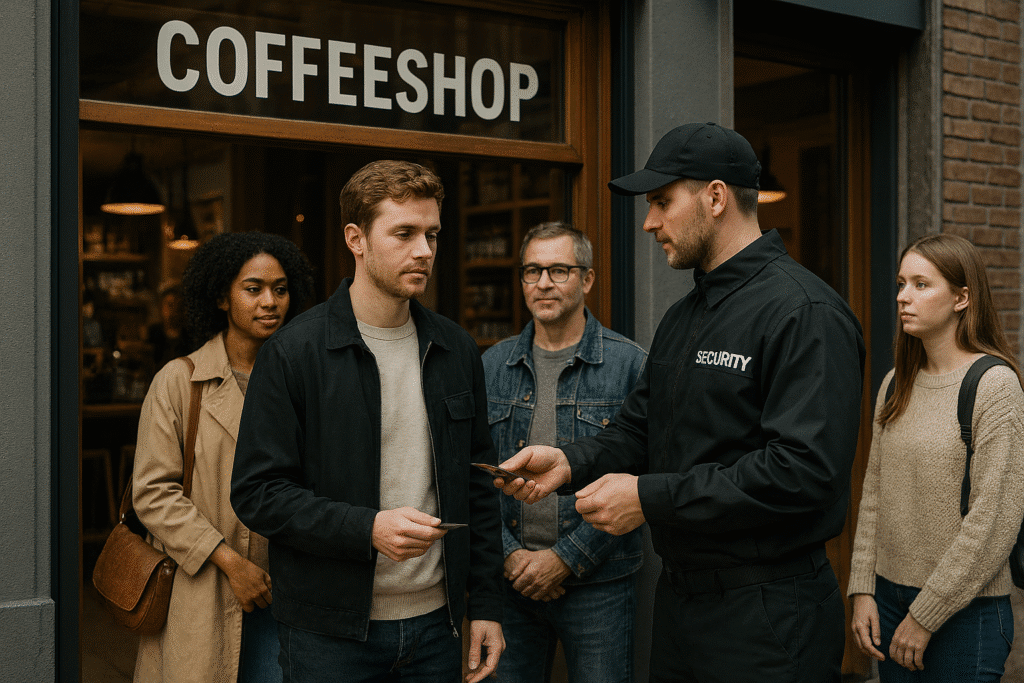
In the Netherlands, a coffeeshop is a licensed venue where adults can buy and often consume cannabis under a national toleration policy (gedoogbeleid). Cannabis remains illegal under the Opium Act, but authorities generally do not prosecute small-scale sales and possession when strict rules are followed. That means age checks (18+), ID verification, limits on amounts, and no alcohol or hard drugs. How these rules are enforced can differ by municipality, which is why Amsterdam and border towns can feel quite different.
This guide explains the rules that matter—what is allowed and what is not for both visitors and operators. We cover the toleration framework, soft vs. hard drugs, customer limits and ID requirements, the residency (i-criterium) rule, the AHOJGI criteria for operators, permits and municipal policies, inspections and penalties, the supply “backdoor” and the new closed chain experiment, local differences, lawful use in practice, and when to seek legal help.
Dutch toleration policy (gedoogbeleid) explained
Gedoogbeleid means certain conduct remains illegal in principle but is tolerated in practice if strict conditions are met. Under the Dutch Opium Act, possessing, selling, or producing drugs is prohibited. However, the Public Prosecution Service generally does not prosecute coffeeshops that follow the national rules and does not prosecute individuals for possession of small amounts: up to 5 grams of cannabis or 5 cannabis plants (plants are typically seized).
The policy’s aim is to protect public health, keep soft drugs separate from hard drugs, and limit nuisance and crime. Toleration is conditional and local: municipalities decide whether coffeeshops may operate, how many, and can impose additional rules or enforcement priorities.
Soft drugs versus hard drugs under the Opium Act
The Dutch Opium Act distinguishes between two categories: soft drugs and hard drugs. Cannabis (marijuana/hash) is a soft drug on List II; sale and possession remain illegal but are tolerated in coffeeshops under strict conditions. Hard drugs on List I are strictly prohibited—coffeeshops may not sell them and violations can lead to enforcement action. For individuals, toleration applies only to small amounts of cannabis (up to 5 grams); there is no comparable leniency for hard drugs. This distinction underpins coffeeshop regulations in the Netherlands.
Rules for customers: age, ID, purchase and possession limits
If you’re buying cannabis under the coffeeshop regulations in the Netherlands, the basics are simple: you must be 18 or older, show valid ID on request, and stick to small amounts. Toleration applies only to personal use quantities. Enforcement details can differ by city, so expect strict checks in some municipalities and plan to purchase in person.
- 18+ only: Bring a valid ID (passport, EU ID card, or residence permit). Staff must verify age and, in some cities, residency.
- Purchase cap: Maximum 5 grams per person per day; never more than 5 grams in a single transaction.
- Possession limit: Up to 5 grams is generally tolerated; more can lead to confiscation and prosecution.
- Minors barred: Under-18s are not allowed inside coffeeshops.
- No alcohol or hard drugs: Don’t request or consume them; sales are prohibited.
- In-person only: No online orders or deliveries are allowed.
Residency requirement for coffeeshops (i-criterium)
The residency requirement (i-criterium) limits coffeeshop entry and sales to residents of the Netherlands. Since 1 January 2013, only people registered in a Dutch municipality may buy inside. Operators must verify age (18+) and residency, usually with a valid ID or residence permit plus a BRP extract. Enforcement varies by municipality; some apply the rule strictly, others less so. Not checking can trigger enforcement against the coffeeshop.
Rules for coffeeshop operators: AHOJGI criteria, stock and sales
Operating a coffeeshop means complying every day with the national toleration rules, known by the acronym AHOJGI, plus several strict sales and stock limits. Authorities can act if any condition is breached, so operators must build compliance into door policy, staffing, and daily operations.
- A — Advertising ban: No promotion or advertising of drugs or the coffeeshop.
- H — Hard drugs: Absolutely no hard drugs on the premises or in sales.
- O — Nuisance (overlast): Prevent public disturbances and neighborhood nuisance.
- J — Youth (jeugdigen): No entry for minors and no sales to anyone under 18.
- G — Large quantities: No sale over 5 grams per person in a single transaction/day.
- I — Residents (ingezetenen): Admit and sell only to residents of the Netherlands; check ID/BRP.
- Stock cap: Keep a maximum of 500 grams of soft drugs on-site.
- No alcohol: Do not serve or allow alcohol sales/consumption.
- In-person only: No online offers and no delivery to customers.
Permits and municipal rules for opening or taking over a coffeeshop
Whether you can open a coffeeshop depends entirely on municipal policy. Municipalities decide if coffeeshops are permitted, how many may operate, and under what conditions. Where allowed, operators typically need an operating permit for a catering establishment and must comply with national AHOJGI rules. Many city councils prohibit new coffeeshops and only allow you to take over an existing licensed business.
- Municipal policy first: Cities set allowances, numbers, and extra local conditions.
- Operating permit: An operating/catering permit is usually required before opening.
- Bibob screening: Probity checks may refuse or withdraw permits for criminal risks.
- Door and sales rules: Verify 18+ and residency; max 5 g per person; no minors.
- Operational limits: No alcohol, no advertising, no online sales/delivery; max 500 g stock.
- Early engagement: Speak to the municipality early to confirm feasibility and process.
Inspections and penalties for non-compliance
Coffeeshops are checked by municipal authorities and police—often unannounced—for compliance with AHOJGI, the i-criterium (residency), age/ID verification, the 5-gram sales limit, the 500-gram stock cap, no advertising, and no alcohol. Inspections also respond to nuisance complaints. Enforcement under the Opium Act and municipal permit conditions varies by city, but owners remain responsible for door checks and operations under the coffeeshop regulations in the Netherlands.
- Warning/report: Written notice and increased monitoring after minor breaches.
- Seizure/confiscation: Tainted stock or excess quantities can be seized.
- Closure orders: Temporary shutdowns for serious or repeated violations.
- Permit action: Suspension or withdrawal; Bibob screening can block or revoke.
- Prosecution: Especially for hard drugs or large-scale offenses; individuals with over 5 grams risk confiscation and prosecution.
The supply ‘backdoor’ and the closed coffeeshop chain experiment
For decades, coffeeshop sales have been tolerated at the “front door,” while supply at the “back door” remained illegal. Cultivation and wholesale are prohibited, and even small-scale growing is subject to seizure; meanwhile, coffeeshops must comply with retail rules and a 500-gram on‑site stock cap. This mismatch—tolerated retail versus illegal supply—has fueled gray-market logistics and associated nuisance and crime despite otherwise clear coffeeshop regulations in the Netherlands.
To address this, the government launched the Closed Coffeeshop Chain Experiment (“weed experiment”). Its experimental phase began in April 2025. In participating municipalities, coffeeshops are supplied exclusively by licensed growers under strict controls to test a fully regulated chain and improve public safety and quality oversight.
- What changes: Legal, licensed supply to participating coffeeshops only.
- What stays: 18+, ID/residency checks, 5 g per person/day, no alcohol/hard drugs, no online sales/delivery.
- Where it applies: Only in pilot municipalities; elsewhere, the backdoor remains illegal.
City-by-city differences: Amsterdam, Maastricht and border towns
While national rules set the baseline, municipalities decide whether coffeeshops may operate, how many are allowed, and how strictly to enforce specific criteria. This means the day-to-day experience under the coffeeshop regulations in the Netherlands can differ: all cities apply 18+, 5‑gram limits, and no hard drugs, but residency checks and nuisance controls vary.
- Amsterdam: Fewer coffeeshops in recent years and strong focus on limiting nuisance. Enforcement of the residency rule is a municipal choice and can differ over time.
- Maastricht: The i‑criterium is applied strictly; only residents (with ID and often BRP proof) can enter and buy.
- Border towns: Many southern border municipalities actively enforce the residents-only rule to curb drug tourism; expect rigorous ID checks.
Using cannabis lawfully: smoking in public, driving, housing and travel
Using cannabis lawfully in the Netherlands means staying within the toleration rules and local by-laws. Public consumption is primarily governed by nuisance rules; municipalities may add their own restrictions, so always follow posted signs and local guidance. Inside venues, remember tobacco is banned, so tobacco–cannabis mixes cannot be smoked indoors. Keep your possession to small, personal-use amounts (up to 5 grams) and buy in person—online sales and deliveries are not allowed.
- Smoking in public: Respect municipal rules and avoid nuisance; cities can impose additional restrictions and enforce them locally.
- Driving: Do not drive under the influence of drugs—put safety first.
- Housing: Growing cannabis is illegal; even up to 5 plants will be seized, and tenants who grow risk eviction.
- Travel: Toleration applies within the Netherlands; do not assume cannabis is permitted outside the country or under foreign laws.
Practical tips for visitors and residents
To stay within coffeeshop regulations in the Netherlands, plan your visit and keep it simple: bring proper identification, check local rules, buy small amounts, and consume responsibly. The basics below help visitors and residents avoid common mistakes that trigger enforcement or complaints.
- ID and residency: Carry valid ID; residents may need a BRP extract.
- 5-gram limit: Stick to 5 grams max per day and possession.
- Licensed only: Buy only from licensed coffeeshops; never street dealers.
- Use rules: No tobacco mixes indoors; don’t drive; no online orders/delivery.
When to get legal help
Consult a Dutch lawyer early if you face enforcement under the coffeeshop regulations in the Netherlands or plan to open or acquire a coffeeshop. Early advice clarifies Opium Act rules, municipal permits, and strict filing deadlines.
- Police action for over-limit possession, cultivation, or DUI.
- Closure order, seizure, or fines for AHOJGI/i-criterium issues.
- Permit refusal, renewal problems, or Bibob screening risks.
- Landlord eviction or insurance disputes over suspected growing.
- Compliance questions in the closed coffeeshop chain experiment.
Conclusion
In short, coffeeshop regulations in the Netherlands balance public health and safety with tightly controlled access: 18+ only, ID (and often residency) checks, 5‑gram limits, no alcohol or hard drugs, and strict operator duties under municipal oversight. Enforcement and day‑to‑day practice can differ by city, while the closed chain experiment tests regulated supply without changing retail rules.
Have a compliance question, face an inspection or closure risk, or planning to open or acquire a coffeeshop? Get clear, practical legal guidance from our multilingual team at Law & More.