


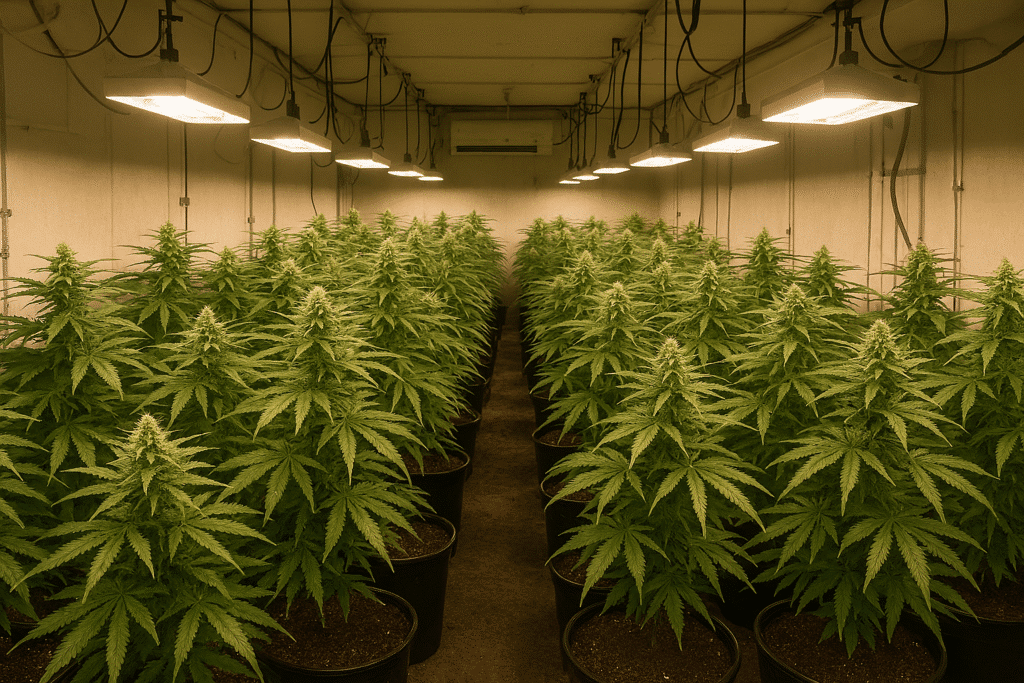
Cannabis cultivation and criminal law, in simple terms, is about what counts as “growing” cannabis and when that activity becomes a criminal offense in the Netherlands. Cultivation covers the whole process: germinating seeds, tending plants, using grow equipment, and harvesting. While the Netherlands tolerates limited possession and regulated sales by licensed coffee shops under strict conditions, growing cannabis at home is still illegal. The well-known “five plants” practice is not a right or a license; it’s a prosecutorial guideline that can still trigger police action, plant seizure, and other consequences—especially if hazards or commercial intent are suspected.
This article explains how Dutch criminal law defines cultivation, what is tolerated versus what is illegal, and why coffee shop rules don’t legalize growing. You’ll learn the realities of the “five plants” practice, when penalties escalate for commercial or organized production, and which aggravating factors matter most. We’ll also cover administrative and civil fallout (such as eviction, energy theft claims, tax issues, and asset seizure), the limited licensing exceptions (medical, research, industrial hemp, and the closed-chain experiment), how investigations typically proceed, what to do if you’re questioned or charged, common misconceptions, and key developments to watch. Let’s clarify the rules so you can make informed decisions.
How Dutch criminal law defines cannabis cultivation
Under Dutch criminal law, cultivating cannabis is treated as illegal drug production. In practice, that means any act of growing cannabis plants—whether at home or on a larger site—is prohibited. The government is explicit: it is against the law to possess, sell, or produce drugs, and growing marijuana or cannabis plants falls within that ban. This is the legal baseline for cannabis cultivation and criminal law: what you need to know before touching seeds, soil, or equipment.
There is a narrow enforcement practice for very small amounts. If no more than five cannabis plants are found for personal consumption, the police will generally seize the plants. If more than five plants are found, the Public Prosecution Service will prosecute. Separately, possession of small quantities is also defined: no more than 5 grams of cannabis.
What is tolerated and what is illegal in the Netherlands
The baseline is simple: possession, sale, and production of drugs are illegal. Toleration (“gedoogbeleid”) creates narrow exceptions that limit prosecution—primarily small personal possession and retail sales by coffee shops that meet strict rules. Possession of up to 5 grams is generally not prosecuted, but cultivation remains illegal at any scale. Even the familiar “five plants” practice can lead to seizure and further action if there are risks or signs of commercial intent. In the context of cannabis cultivation and criminal law: what you need to know is that toleration is not legalization, and it can vary in enforcement by municipality.
- Coffee shops only: Sale is a criminal offense but tolerated if rules are met.
- Key criteria: no nuisance, no hard drugs, no minors, no advertising, and max 5 g per transaction.
- Residents-only rule: Since 2013, only residents 18+ may purchase; owners must check IDs/registration.
- Local control: Municipalities decide if shops operate and can add rules.
Personal possession and coffee shop rules: why they don’t legalize growing
Buying up to 5 grams in a coffee shop or possessing small amounts does not create any right to cultivate. Under the Dutch toleration policy, retail sales by compliant coffee shops and possession of up to 5 grams are criminal offenses that are generally not prosecuted, but production remains illegal. Coffee shops must follow strict criteria and admit only adult residents, yet none of these rules authorize cultivation. Enforcement intensity may vary by municipality, but the nationwide baseline is clear: growing cannabis remains prohibited.
Home growing for personal use: the “five plants” practice, risks, and limits
In the Netherlands, home growing for personal use remains illegal. The “five plants” practice is only an enforcement guideline: with no more than five plants for personal consumption, police will generally seize them; above five, the Public Prosecution Service prosecutes. This is not a license, and enforcement varies by municipality. Even small grows can trigger collateral problems if authorities uncover related issues.
- Up to five plants: police generally seize; no immunity from other action.
- More than five plants: the Public Prosecution Service will prosecute.
- Housing/energy risks: tenants can be evicted; illegal electricity tapping triggers retrospective bills.
- Wider fallout: police coordinate with the Tax and Customs Administration and housing associations, leading to administrative or tax issues.
Commercial cultivation and organized production: when penalties escalate
Dutch authorities draw a hard line once cultivation moves beyond the personal-use guideline. Growing cannabis is illegal at any scale, but as soon as numbers rise above five plants—or there are signs the crop is intended for sale—cases shift into “production” and often “dealing,” both criminal offenses. Enforcement focuses on reducing nuisance and crime; larger or organized operations are investigated and prosecuted, and they frequently trigger parallel actions by housing associations, the Tax and Customs Administration, and energy companies.
- More than five plants: the Public Prosecution Service will prosecute for production.
- Supply indicators: evidence that cannabis is being grown for sale (including to coffee shops) points to dealing, which is not tolerated.
- Organized aspects: coordinated activity or links to other offenses (e.g., illegal electricity tapping) intensify criminal exposure and collateral fallout.
Aggravating factors, sentencing ranges, and how prosecutors assess cases
Prosecutors start from a clear baseline: cultivating cannabis is illegal; under about five plants for personal consumption police will generally seize, above five the Public Prosecution Service will prosecute. Sentencing outcomes in cannabis cultivation and criminal law cases turn on the exact charge (production, dealing) and the facts. Penalties escalate with scale, commercial intent, organization, and public-safety risks tied to nuisance and crime the government aims to combat.
- Quantity and yield: more than five plants, multiple harvest cycles, or high-yield setups.
- Professionalization: grow tents, powerful lighting, irrigation, timers—evidence of production.
- Evidence of supply: packaging, cash, order lists, or links to retail channels.
- Energy theft and hazards: illegally tapped electricity, fire risk, and unsafe installations.
- Nuisance and crime indicators: complaints, associated offenses, or broader criminal links.
- Repeat behavior: prior warnings or convictions for drug offenses.
- Organization: multiple participants or coordinated roles suggest an organized operation.
Mitigating indicators can include very small scale, clear personal-use context, and immediate cooperation, but they do not legalize cultivation and outcomes vary by municipality and case.
Administrative and civil fallout: eviction, energy theft, tax and asset seizure
Even when a case doesn’t start in court, the knock‑on effects can be severe. In cannabis cultivation and criminal law cases, authorities don’t act alone: police coordinate with housing associations, the Tax and Customs Administration, and energy companies. Plants are generally seized, and related actors pursue their own remedies that can hit harder than a fine.
- Eviction risk: Housing associations can evict tenants found growing cannabis.
- Energy back‑billing: If electricity is illegally tapped, expect a retrospective assessment from the energy company.
- Tax scrutiny: Collaboration with the Tax and Customs Administration can trigger inquiries or assessments related to undeclared income or costs.
- Seizure of plants/evidence: Police generally seize plants; with larger grows, prosecution and broader evidence seizure become likely.
Licensing exceptions: medical cannabis, research, hemp, and the closed-chain experiment
There are narrow, highly regulated exceptions to the general ban on cultivation. Without an explicit Dutch government license, growing cannabis remains illegal and subject to seizure and prosecution. Licenses are typically limited to medical or scientific purposes, and separate rules apply to industrial hemp. In addition, a closed supply-chain pilot operates in selected municipalities with designated growers; it is not general legalization.
- Medical/research: Only licensed parties may cultivate; private grows remain illegal.
- Industrial hemp: Different regime; authorization is required.
- Closed-chain pilot: Designated growers supply participating coffee shops; no rights for individuals.
How investigations and enforcement typically unfold
Enforcement is pragmatic and multi‑agency. Police work with housing associations, the Tax and Customs Administration, and energy companies. Municipalities may differ in emphasis, but once identified, cultivation triggers both criminal and administrative follow‑up.
- Information trigger: police discovery or referrals from partner organizations.
- On‑site: plants are seized; up to five plants generally leads to seizure, more than five is forwarded to the Public Prosecution Service for prosecution.
- Parallel measures: eviction steps, retrospective assessments for illegally tapped electricity, and potential tax inquiries.
- Case build‑up: quantity, grow setup, and signs of supply guide charging decisions.
If you are questioned or charged: immediate steps to protect yourself
Moments after a visit, summons, or arrest, your choices shape the case. Stay calm, avoid on‑the‑spot explanations, and focus on preserving your position. In cannabis cultivation and criminal law matters, multiple agencies may get involved, so early, disciplined steps make a real difference.
- Get a lawyer immediately: Do not discuss facts until you’ve had legal advice.
- Keep it brief and polite: Provide ID details; avoid volunteering explanations or theories.
- Document everything: Note times, officers’ names, and what was searched or seized; ask for a seizure list.
- Don’t sign blindly: Read any statement or form carefully; sign only after counsel reviews it.
- Preserve evidence: Do not delete messages or move items; destruction can worsen your position.
- Prepare paperwork: Gather tenancy, utility, and financial records; these often matter in parallel actions.
- Expect knock‑on steps: Housing associations, energy companies, and tax authorities may contact you—forward all letters to your lawyer.
- Attend all appointments: Comply with summonses and conditions; missed dates quickly escalate problems.
Frequently misunderstood points about cannabis cultivation in the Netherlands
Because the Netherlands relies on toleration rather than legalization, several rules are easy to misread. Enforcement can differ by municipality, but national baselines do not change. If you’re weighing risks around cannabis cultivation and criminal law, focus on what is enforced in practice—not myths repeated in forums or hearsay.
- Five plants ≠ legal: Police generally seize; >5 plants are prosecuted.
- Coffee shop rules ≠ grow license: Sales/possession are tolerated; production isn’t.
- “It’s minor” ≠ no fallout: Eviction, energy back‑billing, and tax checks are common.
Developments to watch in 2025 and beyond
Expect continued emphasis on curbing nuisance and crime. Municipalities can tighten or adjust local coffee shop rules and how strictly they enforce the residents‑only rule. Practice around “five plants” (seizure vs. prosecution beyond five) remains the baseline, alongside ongoing multi‑agency crackdowns on illegal setups, evictions, and energy‑theft back‑billing.
Key takeaways
Growing cannabis in the Netherlands remains illegal; toleration narrows prosecution, it does not grant rights. Understanding where enforcement lines are drawn helps you avoid criminal exposure and costly fallout. If cultivation is alleged, treat it as a legal matter from the first knock on the door.
- Growing is illegal: cultivation at any scale is prohibited.
- Five plants ≠ license: up to five plants are usually seized; above five prosecuted.
- Coffee shop toleration ≠ production rights: possession/sales rules don’t legalize growing.
- Aggravators drive penalties: scale, professional setups, supply evidence, energy theft, nuisance.
- Collateral fallout is real: eviction, energy back‑billing, tax scrutiny, asset seizure.
- Licenses are narrow: medical/research, industrial hemp, and closed‑chain pilots only.
For timely, practical defense or prevention advice, contact Law & More.