



Family law shapes the rules that govern our closest bonds, from how we marry to how we care for our children. Most people do not realise just how far its reach extends. Today, family law addresses everything from digital inheritance battles to complex non-traditional families, with the legal framework constantly evolving to meet new social realities. What is surprising is that these laws do not only affect our homes but can also decide the fate of massive family businesses or even set the groundwork for future technology disputes.
Table of Contents
- What Is Family Law And Its Core Components?
- The Importance Of Family Law In Personal Relationships
- How Family Law Protects Rights And Responsibilities
- The Role Of Family Law In Business And Corporate Contexts
- Significant Trends And Changes In Family Law Today
Quick Summary
| Takeaway | Explanation |
|---|---|
| Family law protects individual rights. | It establishes legal frameworks that safeguard personal autonomy and ensure protection for vulnerable family members. |
| Legal mechanisms manage familial dynamics. | Family law provides structured pathways for resolving conflicts and setting clear expectations within personal relationships. |
| Contemporary family law is evolving. | Legal frameworks now recognise diverse family structures and adapt to changing societal norms, including non-traditional partnerships. |
| Family law impacts business contexts. | It affects inheritance, governance, and ownership transitions in business, intertwining personal and professional legal matters. |
| Emotional complexities are legally addressed. | The law acknowledges emotional nuances in personal relationships, balancing legal needs with individual well-being. |
What is Family Law and Its Core Components?
Family law represents a sophisticated legal domain addressing the intricate relationships, rights, and responsibilities within familial structures. At its core, family law encompasses a comprehensive framework of regulations and legal principles governing personal and interpersonal dynamics between individuals connected through marriage, partnerships, parenthood, and kinship.
Defining the Scope of Family Law
Family law goes beyond simple legal documentation. It serves as a critical mechanism for protecting individual rights, managing complex interpersonal relationships, and ensuring the welfare of vulnerable family members. The discipline covers a wide range of critical areas that significantly impact personal and societal interactions.
The following table summarises the main domains of family law and their primary functions, providing a concise overview for easy reference.
| Domain | Primary Function |
|---|---|
| Marriage and Partnership | Defines legal status, rights, and obligations in marital relationships |
| Divorce and Separation | Outlines procedures for dissolving relationships and dividing assets |
| Child Custody and Support | Ensures children’s welfare through care and financial protection |
| Adoption and Guardianship | Establishes legal parental roles outside biological relationships |
| Inheritance and Succession | Manages transfer of assets, ownership, and business succession |
| Domestic Protection | Provides safety mechanisms against domestic conflicts and violence |
Key areas within family law include:
- Marriage and Partnership Regulations: Legal frameworks defining marital contracts, rights, and obligations
- Divorce and Separation Proceedings: Comprehensive guidelines for dissolving marital relationships
- Child Custody and Support: Mechanisms ensuring children’s welfare and financial protection
- Adoption and Guardianship: Legal processes for establishing parental relationships outside biological connections
The Social Significance of Family Law
Family law plays a pivotal role in maintaining social stability and individual protection. It provides structured legal pathways for resolving conflicts, protecting rights, and establishing clear guidelines for familial interactions. Why family law matters extends far beyond legal technicalities it represents a fundamental societal mechanism for maintaining justice, equity, and human dignity within personal relationships.
The legal framework addresses complex scenarios such as domestic violence, inheritance disputes, property division, and child welfare. By establishing clear guidelines and protective measures, family law ensures that individual rights are safeguarded while maintaining a balanced approach to resolving interpersonal challenges.
Understanding family law requires recognising its dynamic nature. Legal principles continually evolve to reflect changing societal norms, technological advancements, and increasingly complex family structures. This adaptability ensures that legal frameworks remain relevant and responsive to emerging social realities.
The Importance of Family Law in Personal Relationships
Personal relationships represent complex emotional and legal ecosystems where individual rights, mutual responsibilities, and societal expectations intersect. Family law emerges as a critical framework that navigates these intricate dynamics, providing essential structure and protection for individuals across various relationship configurations.
Safeguarding Individual Rights and Welfare
Within personal relationships, family law serves as a fundamental mechanism for protecting vulnerable parties and establishing clear boundaries. Why family law matters becomes evident when examining its role in preventing potential exploitation, ensuring fair treatment, and maintaining individual autonomy.
Key protective functions include:
- Legal Recognition: Establishing formal acknowledgment of relationship status
- Financial Protection: Defining economic rights and responsibilities
- Personal Safety: Creating mechanisms to address potential domestic conflicts
- Emotional Welfare: Providing legal pathways for conflict resolution
Balancing Emotional and Legal Considerations
Family law transcends mere legal documentation by recognising the profound emotional complexities inherent in personal relationships. It provides structured frameworks that balance emotional nuances with legal precision, ensuring that individual human experiences are respected while maintaining objective standards of fairness.
The legal approach acknowledges that relationships are dynamic systems requiring flexible yet principled guidelines. For instance, relationship dissolution processes consider not just financial arrangements but also psychological impacts on all involved parties, particularly when children are concerned.
Moreover, contemporary family law increasingly recognises diverse relationship structures. This includes acknowledging non-traditional partnerships, protecting rights of unmarried couples, and creating inclusive frameworks that reflect evolving societal understanding of personal connections.
Understanding family law requires recognising its fundamental role as a compassionate yet structured mechanism for maintaining human dignity. It provides a balanced approach that protects individual rights while fostering healthy, respectful interpersonal interactions.
How Family Law Protects Rights and Responsibilities
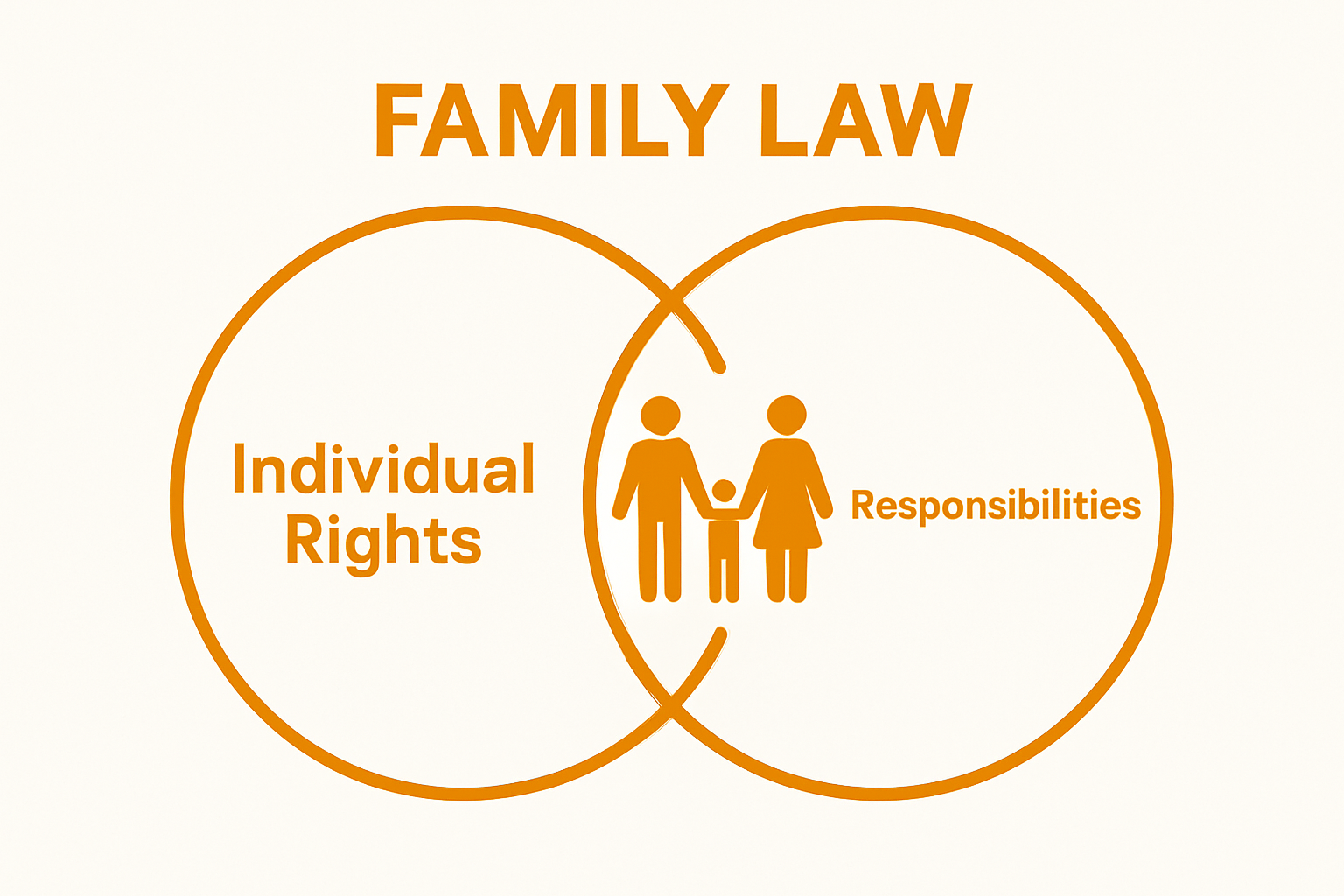
Family law operates as a sophisticated legal mechanism designed to safeguard individual rights and establish clear responsibilities within familial relationships. It provides a comprehensive framework that balances personal autonomy with collective welfare, ensuring that each family member’s fundamental rights are protected while maintaining accountability.
Legal Frameworks for Individual Protection
The core objective of family law is to create structured environments where individual rights are respected and protected. Why family law matters becomes particularly evident in scenarios involving power dynamics, potential vulnerabilities, and complex interpersonal relationships.
Key protective mechanisms include:
- Consent and Autonomy: Establishing legal boundaries for personal decision making
- Financial Security: Defining economic rights and obligations
Establishing Reciprocal Responsibilities
Family law goes beyond mere protection by establishing reciprocal responsibilities that create balanced relationship dynamics. These legal frameworks define expectations and obligations for all parties, ensuring that rights are accompanied by corresponding duties.
For instance, parental responsibilities extend beyond biological connections. The legal system recognises various family structures and mandates specific obligations such as financial support, emotional care, and ensuring children’s comprehensive welfare. This approach recognises that responsibilities are not just legal technicalities but fundamental social commitments.
Moreover, the legal framework addresses potential conflicts by providing structured mechanisms for resolution. Whether dealing with divorce proceedings, child custody arrangements, or property divisions, family law creates transparent pathways that prioritise fairness and mutual respect.
Understanding these legal protections requires recognising family law as a dynamic system that adapts to changing societal norms. It represents a sophisticated balance between individual rights and collective responsibilities, ensuring that personal relationships are both legally sound and emotionally supportive.
The Role of Family Law in Business and Corporate Contexts
Family law intersects with business and corporate environments in surprisingly complex and nuanced ways. Far from being isolated legal domains, family law principles profoundly influence corporate structures, ownership transitions, and interpersonal dynamics within professional settings.
Inheritance and Business Succession
Business continuity often hinges on intricate family law mechanisms that govern inheritance, ownership transfer, and strategic succession planning. Why family law matters becomes critically apparent when examining how legal frameworks protect business interests across generational transitions.
Key intersection points include:
- Inheritance Regulations: Defining ownership transfer mechanisms
- Shareholder Agreements: Establishing family member participation rules
- Corporate Governance: Managing potential familial conflicts
- Estate Planning: Structuring long term business sustainability
Protecting Corporate Relationships
Family law provides essential frameworks for managing potential conflicts that emerge when personal relationships intersect with professional environments. These legal mechanisms address complex scenarios such as marital property divisions, business ownership during divorce proceedings, and maintaining professional boundaries within family owned enterprises.
The legal approach recognises that family dynamics can significantly impact corporate performance. Businesses must navigate intricate personal relationships while maintaining professional standards. Family law offers structured guidelines that help organisations balance emotional complexities with corporate objectives.
Moreover, contemporary legal frameworks increasingly acknowledge diverse family structures and their implications for corporate governance. This includes recognising non traditional partnerships, protecting individual rights, and creating flexible mechanisms that accommodate evolving societal relationship models.

Understanding these intersections requires recognising family law as a dynamic system that extends far beyond personal relationships. It represents a sophisticated legal infrastructure that supports business continuity, protects individual rights, and maintains professional integrity across complex organisational landscapes.
Significant Trends and Changes in Family Law Today
Family law stands at a critical intersection of societal transformation, rapidly evolving to reflect changing social dynamics, technological advancements, and increasingly complex human relationships. Contemporary legal frameworks are experiencing profound shifts that challenge traditional interpretations and expand protections for diverse family structures.
Expanding Definitions of Family
Traditional family law models are undergoing substantial reconstruction, moving beyond narrow biological and marital definitions. Why family law matters becomes especially evident as legal systems increasingly recognise diverse relationship configurations, including same sex partnerships, blended families, and non traditional parental arrangements.
Key transformative trends include:
- Inclusive Legal Recognition: Extending rights to non traditional family units
- Technological Impact: Addressing legal challenges from reproductive technologies
- Gender Neutrality: Creating frameworks that transcend historical gender limitations
- Multicultural Considerations: Developing adaptable legal approaches
Judicial and Legislative Adaptations
Contemporary family law demonstrates remarkable flexibility in responding to societal changes. Judicial interpretations are becoming more nuanced, recognising that family structures no longer conform to historical stereotypes. Courts are increasingly prioritising individual welfare, children’s best interests, and equitable treatment across diverse relationship models.
The legal landscape now emphasises personal autonomy, emotional welfare, and comprehensive protection. This approach moves beyond rigid procedural frameworks, creating more responsive mechanisms that can address complex human experiences.
Moreover, technological advancements are fundamentally reshaping legal considerations. Emerging scenarios involving digital inheritance, online relationship dynamics, and cross border family formations require increasingly sophisticated legal interpretations.
Understanding these transformations requires recognising family law as a dynamic, living system that continuously adapts to reflect human complexity.
This table compares traditional and evolving approaches within family law, helping to illustrate how the legal landscape is adapting to modern realities.
| Aspect | Traditional Approach | Evolving Approach |
|---|---|---|
| Definition of Family | Based on marriage and blood relations | Inclusive of non-traditional and blended families |
| Gender Roles | Gender-specific legal responsibilities | Gender-neutral frameworks |
| Technology Impact | Limited consideration | Addresses digital inheritance and reproductive tech |
| Relationship Recognition | Focused on legal marriage | Recognises cohabitation, partnerships, and diverse ties |
| Child Welfare Focus | Parental rights emphasised | Child’s best interests prioritised |
Take Control of Your Family Law Challenges with Expert Guidance
When faced with the emotional and legal complexities outlined in “Understanding Why Family Law Matters in Today’s Society”, it is easy to feel overwhelmed. Whether you are dealing with the uncertainty of divorce, the pressures of child custody issues, or concerns about safeguarding your rights and responsibilities, the need for clear guidance and protection has never been greater. Our team at Law & More understands the powerful impact that well-structured family law solutions can bring to your life. We draw on the same legal principles and updated frameworks discussed in the article, ensuring your interests and well-being are treated with care and respect.
Do not let doubt or delay jeopardise your rights or those of your loved ones. Visit Law & More – Family Law for accessible, personalised legal support, or explore our lawyer profiles to connect with a specialist who matches your needs. For immediate help and to protect what matters most, start your journey to clarity and peace of mind at Law & More today.
Frequently Asked Questions
What are the key areas covered by family law?
Family law primarily addresses marriage and partnership regulations, divorce and separation proceedings, child custody and support, as well as adoption and guardianship.
How does family law protect individual rights?
Family law serves to safeguard individuals by establishing legal recognition of relationships, defining economic rights and responsibilities, ensuring personal safety, and promoting emotional welfare through structured conflict resolution mechanisms.
Why is family law important in personal relationships?
Family law is crucial as it provides a framework that protects vulnerable parties, balances emotional needs with legal considerations, and establishes clear boundaries and responsibilities within various types of personal relationships.
How does family law interact with business and corporate contexts?
Family law intersects with business environments by influencing inheritance and business succession planning, addressing potential conflicts arising from personal relationships within corporate settings, and providing guidelines for maintaining professional standards amid familial dynamics.