Stay informed with insights from Law & More on legal trends, the Dutch legal system, and developments in our practice.
- Home
- Insights

Stalking under Dutch law is a criminal offence known as belaging, set out in Article
- Reading time: 13 min

Fraud in the Netherlands is punishable as oplichting under article 326 of the Wetboek van
- Reading time: 11 min

Filing a police report in the Netherlands, an aangifte, means formally notifying the police of
- Reading time: 13 min

Money laundering is the process of giving criminal proceeds the appearance of a lawful origin,
- Reading time: 14 min

Money laundering carries a maximum of six years’ imprisonment in the Netherlands under article 420bis
- Reading time: 11 min

A preliminary hearing in criminal cases, known in Dutch practice as a regiezitting, is a
- Reading time: 8 min

A pro forma hearing is a court session in a criminal case at which the
- Reading time: 7 min

A victim advocate (slachtofferadvocaat) is a lawyer who acts for the victim in Dutch criminal
- Reading time: 10 min

Murder (moord) is defined in article 289 of the Dutch Criminal Code as intentionally taking
- Reading time: 11 min

A community service order (taakstraf) is unpaid work imposed as a principal sentence in Dutch
- Reading time: 10 min

Grounds for exclusion of criminal liability (strafuitsluitingsgronden) are circumstances that make a proven criminal act
- Reading time: 11 min
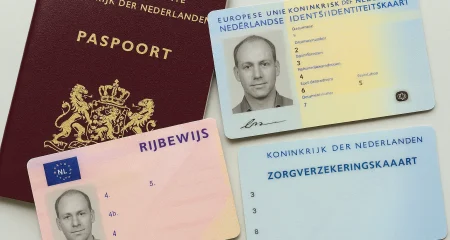
Identity fraud in the Netherlands is punishable under article 231b of the Dutch Criminal Code,
- Reading time: 10 min
A penalty order (strafbeschikking) is a punishment imposed by the Public Prosecution Service (Openbaar Ministerie)
- Reading time: 9 min

An unconditional sentence (onvoorwaardelijke straf) is a penalty that must actually be served once the
- Reading time: 12 min

When the public prosecutor decides not to prosecute, or drops a case, that decision is
- Reading time: 10 min

Dutch drug legislation rests chiefly on the Opium Act, supplemented by the Medicines Act and
- Reading time: 7 min

You are a suspect in Dutch criminal law as soon as facts and circumstances give
- Reading time: 9 min

- Reading time: 11 min

Suspension of pre-trial detention (schorsing van de voorlopige hechtenis) is a conditional release from custody
- Reading time: 13 min

A decision not to prosecute, known in Dutch as a sepot, means the Openbaar Ministerie
- Reading time: 13 min