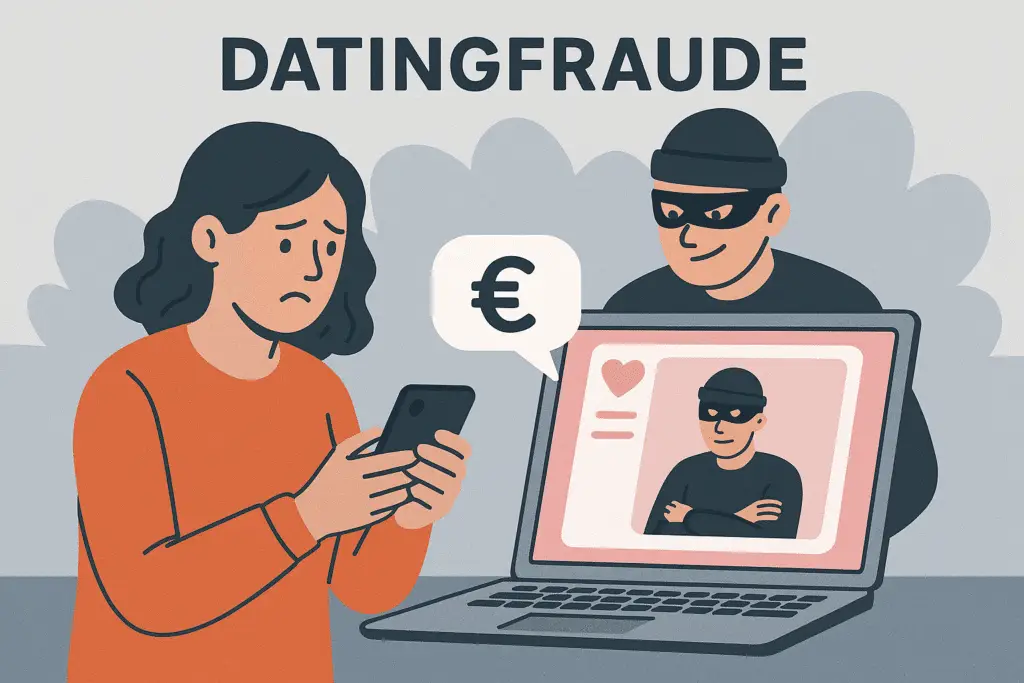
Fraud (oplichting) is a criminal offence under Article 326 of the Dutch Criminal Code (Wetboek van Strafrecht, Sr): persuading someone to hand over money or goods, provide a service or take on a debt by using a false name or capacity, cunning tricks or a web of lies, with the aim of unlawful gain. The maximum penalty is four years’ imprisonment or a fine of the fifth category; a victim can also reclaim the money through the bank, the criminal case or the civil court.
Whether you get your money back depends mainly on one question: did you authorise the payment yourself? If not, your bank must in principle refund it. If you were tricked into making it, there is no statutory refund right and you will usually need a civil claim against the person who received the money.
Table of contents
What counts as fraud under Dutch law?
Fraud requires deception by one of the means listed in Article 326 Sr that actually moved the victim to act, with intent to gain unlawfully. A broken promise or a bad bargain is not enough.
The list of means is exhaustive: a false name, a false capacity (posing as a bank employee or police officer, for example), cunning tricks (listige kunstgrepen) and a web of lies (samenweefsel van verdichtsels). A single lie is generally not enough; a fake website, a forged screenshot or a scripted phone call usually is. The deception must have caused the payment. If nothing was handed over, attempted fraud may still be punishable.
Which related offences often appear in a fraud case?
The same conduct often falls under several provisions of the Criminal Code at once. The most common are:
- embezzlement (verduistering): keeping money or goods that were lawfully received, for example by a contractor or intermediary;
- forgery (valsheid in geschrifte): fake invoices, contracts, payslips or ID documents;
- money laundering (witwassen): moving or holding the proceeds, which is also the charge against money mules;
- computer intrusion and identity fraud: accessing accounts or misusing someone else’s identifying data.
Making your bank account available to others “for a fee” is prosecuted as money laundering. Banks also close such accounts and register the holder in their internal incident registers, which can make opening a new account difficult for years. Our article on crypto and criminal law covers the digital-asset version.

Which forms of fraud are most common in the Netherlands?
The pattern is the same each time: contact through a trusted channel, a false identity, pressure to act now and a payment route that is hard to reverse. The Fraudehelpdesk registers reports and publishes warnings about current methods.
- Bank helpdesk fraud (spoofing): a caller shows the bank’s real number and asks you to move savings to a “safe account”.
- WhatsApp or text fraud: a “family member” with a new number asks for an urgent payment.
- Phishing: a fake message from a bank, parcel service or government body leads to a page that captures your login details.
- Investment fraud: a platform shows a rising balance that you cannot withdraw, often in crypto.
- Invoice and CEO fraud: changed bank details on a genuine invoice, or an urgent payment order in a director’s name.
What should you do in the first hours?
Call your bank immediately, on the number on your own card or in the app, and ask it to stop or recall the payment and block the account. A transfer that has not yet been credited or moved on can sometimes still be stopped.
- Change passwords and codes, and check whether a new device or authorisation was added to your banking app.
- Save the evidence: screenshots of the conversation, the phone number, the recipient’s name and IBAN, payment confirmations and the advertisement or website.
- Report the offence to the police, online for common internet fraud or at any police station. Our guide on filing a police report in the Netherlands explains what to include.
- Report it to the Fraudehelpdesk as well, so the method and account number are registered.
Do not delete messages and do not pay a “release fee” to recover an earlier payment. In investment and marketplace fraud that second request is simply a second loss.
When does your bank have to refund you?
If money left your account without your consent, the bank must refund it immediately and no later than the end of the next business day (Article 7:528 of the Dutch Civil Code, BW). The exception is narrow: you bear the loss only if you acted fraudulently, intentionally or with gross negligence, for example by handing over your codes.
The bank must prove that the transaction was authenticated and correctly recorded. Gross negligence is a high threshold, assessed on the facts of each case. A typical unauthorised payment is a transfer made by a fraudster who obtained your login details.
If you made the payment yourself after being deceived, it is an authorised transaction and there is no statutory refund right. That covers most bank helpdesk, WhatsApp and investment fraud. For bank helpdesk fraud, the Dutch banks apply a voluntary compensation scheme of the Dutch Banking Association (NVB); it is not an entitlement. If your bank refuses, use its complaints procedure first and then go to Kifid, the financial services complaints institute, or to the civil court. Our article on proving digital deception in the Netherlands sets out which evidence carries weight.

How do you recover the money through the courts?
You can claim the money in the criminal case or start a separate civil claim. The civil route does not depend on a conviction and is often faster.
In the criminal case you can join as an injured party (benadeelde partij) and ask for compensation; the court can then impose a compensation order that the State collects. This only works if the offender is identified, prosecuted and convicted, which in online fraud often takes long or does not happen.
In civil proceedings you claim against whoever received the money, on the basis of a wrongful act (onrechtmatige daad) or unjust enrichment. A Dutch bank account is held in a name, so the recipient is often traceable even if the organiser is not. Two tools matter most:
- prejudgment attachment (conservatoir beslag): with leave from the court, given without hearing the other side, the amount is frozen in the recipient’s account before the case is decided. See our article on asset freezing and prejudgment attachment;
- summary proceedings (kort geding): an order for repayment within weeks if the facts are clear.
What should a business check after invoice or CEO fraud?
If a payment went to a fraudster’s account after an invoice was manipulated, the supplier will usually still demand payment. Whether the debt was discharged is a civil dispute between two innocent parties, decided largely on who could more reasonably have prevented the error.
- Was the change of bank details verified through a number or address you already had?
- Was your internal approval procedure for payments followed, and can you show it?
- Has the receiving bank been asked to recall the payment, and has a police report been filed?
- Was the supplier’s or your own mailbox compromised, and has that been documented?
- If an employee is involved, is the internal investigation set up in line with the privacy rules before the first interview?
What if you are suspected of fraud?
You have the right to remain silent and the right to consult a lawyer before the police interview and to have a lawyer present during it. Account holders, intermediaries and people who were themselves misled are regularly questioned as suspects.
A conviction or penalty order for fraud or money laundering is recorded in the judicial documentation. That can block a Certificate of Conduct (VOG) and professional registrations, and for foreign nationals it can affect a residence application with the IND. What you say in the first interview is very hard to correct later.
What can we do for you with fraud?
Our criminal lawyers and litigators act for victims, businesses and suspects in fraud cases.
- We take up the refund dispute with your bank and, if needed, the complaint to Kifid.
- We apply for leave for prejudgment attachment on the recipient’s account while the money can still be traced.
- We bring the civil claim against the recipient and the injured-party claim in the criminal case.
- We advise businesses on invoice and CEO fraud, internal investigations and the employment consequences.
- We assist suspects from the first police interview onwards.
Summary
- Fraud is punishable under Article 326 Sr with up to four years’ imprisonment or a fifth-category fine.
- For an unauthorised payment the bank must refund you by the end of the next business day, unless you were grossly negligent.
- For a payment you made yourself after being deceived there is no statutory refund; the NVB scheme for bank helpdesk fraud is voluntary.
- Recovery runs through Kifid, an injured-party claim in the criminal case or a civil claim with prejudgment attachment.
- Act within hours: call your bank, secure evidence and report to the police.
Frequently asked questions
Can I get my money back after being scammed?
That depends on how the money left your account. If the payment was made without your consent, the bank must refund it unless you acted fraudulently, intentionally or with gross negligence (Article 7:528 BW). If you made the transfer yourself after being deceived, there is no statutory refund right, but a civil claim against the recipient remains possible.
Where do I report fraud in the Netherlands?
Report it to the police, online for common internet fraud or at a police station, and to the Fraudehelpdesk. Call your bank first, on the number on your own card or in the app, to stop or recall the payment.
What legally counts as fraud under Dutch law?
Article 326 of the Criminal Code requires that you were persuaded to hand over money, goods or data, or to take on a debt, by a false name or capacity, cunning tricks or a web of lies, with the aim of unlawful gain. A single lie or a broken promise is generally not enough.
Does it matter that I was careless?
Not for the criminal offence: carelessness by a victim does not make the conduct lawful. For a bank refund it can matter, because gross negligence with your codes can shift the loss of an unauthorised payment to you.