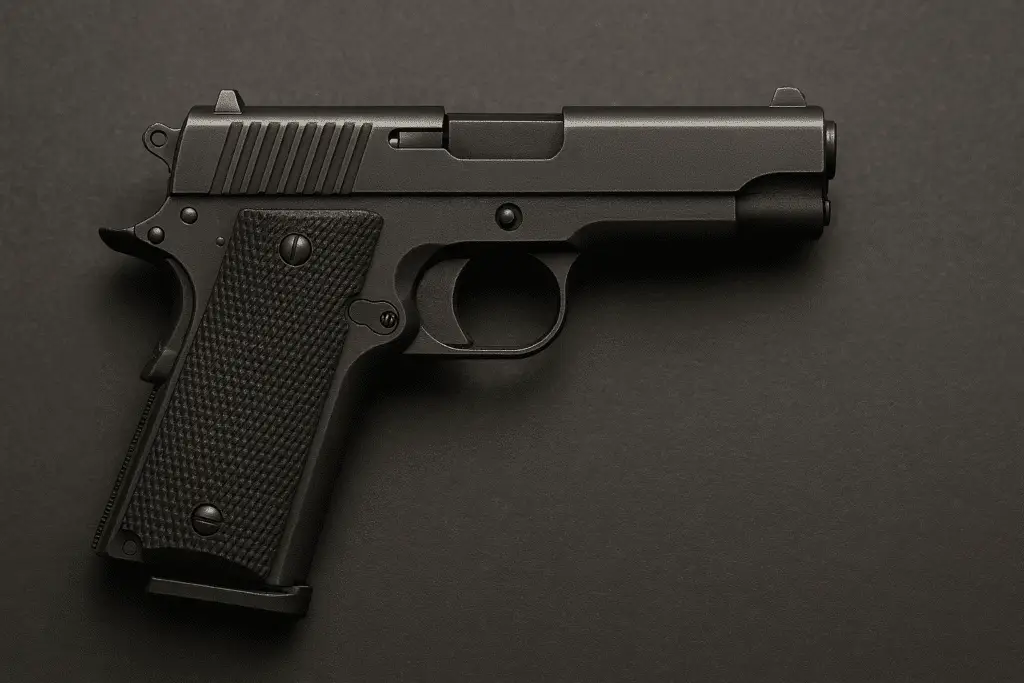
Murder (moord) is defined in article 289 of the Dutch Criminal Code as intentionally taking the life of another person with premeditation, and it carries life imprisonment or a determinate sentence of up to thirty years. Manslaughter (doodslag) under article 287 is the same intentional killing without premeditation and carries a maximum of twenty five years, raised from fifteen years with effect from 1 July 2023. Premeditation is therefore the single element that separates the two offences, and it is the element that is contested in almost every case.
The offences against life and their maximum sentences
Title XIX of the second book of the Criminal Code groups the offences against life. Four provisions carry the heaviest maxima. Article 287 covers manslaughter: intentionally taking the life of another, punishable by up to twenty five years imprisonment or a fifth category fine. Article 288 covers manslaughter that is followed by, accompanied by or preceded by another criminal offence and committed in order to prepare or facilitate that offence, or to secure possession of what was unlawfully obtained, or to ensure impunity; the maximum is life imprisonment or thirty years. Article 288a covers manslaughter committed with a terrorist intent, with the same maximum. Article 289 covers murder, punishable by life imprisonment or thirty years.
Two things follow from that structure. The first is that Dutch law knows no degrees of murder and no categories based on motive. Terms such as contract killing, liquidation, honour killing, robbery homicide or femicide describe circumstances and are used in investigation, research and reporting, but they are not offences and they do not appear in the Criminal Code. The circumstances they describe are relevant, but they enter the case through sentencing and through the qualified form in article 288, not through a separate charge.
The second is that the gap between the two main offences narrowed considerably in 2023. Before 1 July 2023 the maximum for manslaughter was fifteen years while murder carried thirty, which meant that a finding on premeditation could double the ceiling. The increase to twenty five years was made precisely to reduce that cliff edge. Any text that still quotes fifteen or twenty years for manslaughter is out of date.
At the other end of the scale sits causing death by negligence, which is not an offence against life in the sense used above because there is no intent at all. It is punishable by up to two years imprisonment, rising to four years where the negligence amounts to recklessness. Where the death is caused in traffic, the specific provisions of the Road Traffic Act 1994 apply instead and carry their own, higher maxima.
What premeditation actually requires
Premeditation, voorbedachte raad, is not the same as intent and it is not a synonym for planning in the everyday sense. The Supreme Court has framed the test as whether the accused had sufficient time to reflect on the decision he was about to take or had taken, so that there was an opportunity to consider the meaning and the consequences of the intended act and to account for it to himself. What matters is the opportunity for calm deliberation, not its length and not whether the accused was calm in an emotional sense.
Three consequences of that test are worth stating precisely, because they are widely misunderstood. There is no minimum period. A few minutes can be enough where the circumstances show that the accused had the chance to think, and hours are not enough where the evidence shows a decision taken in a single continuous impulse. Strong emotion does not exclude premeditation: someone who leaves an argument, fetches a weapon and returns has had the opportunity to reflect, however agitated he was. And premeditation must be established from the evidence about the actual course of events; the court may not infer it merely from the fact that the killing was efficient or that a weapon was carried.
Because the standard is demanding, the court must give specific reasons when it finds premeditation, and contra-indications must be addressed. Evidence that the decision was taken in a sudden fit, that the accused acted under acute stress, that the confrontation escalated in seconds, or that the conduct was inconsistent with a considered plan, all pull towards manslaughter. In practice the defence in a killing case is frequently not a denial of the killing but an argument that the case is manslaughter and not murder.

Attempt
An attempt is punishable under article 45 of the Criminal Code once the intention of the accused has manifested itself in a beginning of execution. Preparatory conduct that has not reached that stage is not an attempt, and the line between the two is drawn by asking whether the conduct, viewed objectively, was already directed at completing the offence.
The maximum for an attempt is reduced by a third, and where the completed offence carries life imprisonment the maximum for the attempt is twenty years. Attempted murder therefore carries up to twenty years and attempted manslaughter a proportionally lower maximum. The intent element can be satisfied by conditional intent, which means knowingly accepting a substantial chance that the victim will die, but premeditation must still be proved separately for the charge to be attempted murder rather than attempted manslaughter.
Where the accused voluntarily abandons the attempt before the offence is completed, there is no punishable attempt at all. That defence fails where completion was prevented by circumstances beyond the control of the accused, such as the intervention of a third party or the failure of the weapon. Where intent to kill cannot be proved, the charge usually falls back to grievous bodily harm; our article on serious bodily injury in Dutch criminal law sets out where that boundary runs.
Participation: who else can be convicted
The Criminal Code distinguishes several forms of participation, and the difference is worth a decade of imprisonment. A co-perpetrator under article 47 is punished as a principal offender and faces the full maximum; co-perpetration requires a close and deliberate cooperation with the person who carried out the killing, and the case law requires a material contribution of sufficient weight, so that mere presence or knowledge is not enough. The same full maximum applies to a person who incites another to commit the offence by means such as a gift, a promise, abuse of authority, violence or the provision of means.
An accessory under article 48, who is intentionally helpful in the commission of the offence or provides the opportunity, means or information for it, is punished under a reduced ceiling: the maximum is lowered by a third, and where the principal offence carries life imprisonment the accessory faces a maximum of twenty years. Conspiracy, the mere agreement between two or more persons to commit the offence, is punishable in this area only where the offence is committed with a terrorist intent. Preparatory acts, such as acquiring the means, are punishable under a separate provision for offences carrying eight years or more, again under a reduced maximum.
The sentence in the abstract
The figures above are statutory ceilings. Dutch criminal law sets no minimum sentence for these offences beyond the general minimum of one day of imprisonment, and there are no binding sentencing guidelines. The court determines the sentence within the statutory maximum on the facts of the case, guided by the sentences imposed in comparable cases, and it must give reasons where it departs substantially from what the prosecution demanded or from the ordinary range.
A determinate prison sentence may not exceed thirty years. Life imprisonment is a separate sentence rather than the top of that scale, and it is reserved for the most serious cases; where it is imposed the court cannot combine it with a determinate sentence. Since 2017 a person serving a life sentence is subject to a review procedure: an advisory board assesses, after twenty five years have been served, whether activities directed at possible reintegration should begin, and that assessment is repeated periodically. Release remains a matter for the Crown, but the sentence is no longer without any prospect of review.
Two measures frequently accompany or replace punishment. Where a mental disorder was present at the time of the offence, the court can reduce responsibility and impose a hospital order with compulsory treatment alongside a prison sentence, and where the accused cannot be held responsible at all he is acquitted of blame but the measure can still be imposed if the statutory conditions are met. For a suspect who was under eighteen at the time of the offence juvenile criminal law applies, under which juvenile detention is capped at twenty four months for a sixteen or seventeen year old, with the option of a treatment measure; for young adults up to twenty three the court may apply juvenile law where the personality of the accused or the circumstances give reason to.
Defences
The Criminal Code recognises grounds that exclude criminal liability, and they apply to offences against life in the same way as to any other charge. Self defence requires a necessary defence of one own or another person, of chastity or of property, against an immediate unlawful attack, and the response must satisfy the requirements of subsidiarity and proportionality. Where those limits are exceeded as an immediate result of a severe emotional state caused by the attack, the excess of self defence provision can still exclude liability. Duress in the sense of an irresistible psychological pressure is a separate ground, as is the absence of any responsibility due to a mental disorder or defective development.
Whether a killing is lawful is therefore not answered by the outcome alone. Each of these defences turns on facts that have to be reconstructed from the evidence, which is why the forensic investigation and the reconstruction of the sequence of events matter as much for the defence as for the prosecution.
Limitation
Prosecution for murder and for manslaughter is not subject to any limitation period. Since the legislature abolished limitation for offences carrying a maximum of twelve years or more, the right to prosecute these offences does not lapse with the passage of time, which is the legal basis on which cold case investigations can lead to a prosecution decades after the event. Where an offence had already become time-barred under the law as it stood before that change, it remains time-barred; the abolition did not revive expired cases.
The civil claim of surviving relatives follows a different regime. A claim in damages is subject to the ordinary limitation period of five years running from the day after the relatives became aware of both the damage and the liable person, with an outer limit of twenty years from the event, although where the damage results from a criminal offence for which prosecution is still possible the civil claim does not lapse before the right to prosecute does.
How a case runs through the courts
Offences against life are tried by a full chamber of three judges of the district court; there is no jury in the Netherlands and no plea bargaining that binds the court. A suspect is normally held in pre-trial detention, which requires serious suspicions and a statutory ground and is reviewed at intervals, and while the investigation continues the case is listed at procedural hearings roughly every three months so that the detention can be extended and the progress of the investigation examined.
At the trial itself the court examines the file, hears the accused, any witnesses and experts, and receives the demand of the prosecution and the plea of the defence. Both the prosecution and the defence can appeal to the court of appeal, which retries the case in full, and after that an appeal in cassation to the Supreme Court is available on points of law and on the adequacy of the reasoning. Our article on the summons and the hearing in a Dutch criminal case describes the stages in more detail.
The position of surviving relatives
Relatives are not bystanders in the Dutch procedure. A defined circle of next of kin has the right to speak at the hearing, and that right is not limited to the consequences of the offence: they may address the court on the evidence, the charge and the sentence as well. Relatives can also join the criminal proceedings as an injured party to claim their loss, and where the claim is awarded the court will normally impose a compensation order in addition, with the state advancing the awarded sum to a private victim if the convicted person does not pay within the statutory period.
Since 1 January 2019 Dutch law also recognises compensation for grief, known as affectieschade, for a statutory circle of close relatives of a person who dies as a result of an event for which another is liable. The amounts are fixed by order in council. Separately from the criminal case, relatives may apply to the Violent Offences Compensation Fund, which pays a one off sum where a person has died as a result of a violent offence committed in the Netherlands, without requiring a conviction. Victim Support Netherlands provides free assistance throughout the process, including case support at the hearing. The civil route after a criminal case is set out in our guide to victims rights in Dutch civil law.

The boundary with lawful medical practice
One statutory exception to the offences against life deserves mention because it is frequently misunderstood abroad. Terminating life on request is a separate offence under article 293 of the Criminal Code, but the same article exempts a physician who complies with the statutory due care criteria and reports the death to the municipal pathologist. Those criteria, set out in the Termination of Life on Request and Assisted Suicide Review Procedures Act, include a voluntary and well considered request, unbearable suffering without prospect of improvement, consultation of an independent second physician and medically careful execution. Every case is reviewed afterwards by a regional review committee, which refers the file to the prosecution service if the criteria were not met. Assisted suicide is dealt with in the following article under a comparable structure. Conduct outside that framework is judged under the ordinary provisions on offences against life.
Four persistent misunderstandings
The first is that murder and manslaughter are interchangeable words for the same thing. They are separate offences and the difference is premeditation, which has to be proved to the same standard as every other element. The second is that a murder conviction means a life sentence. It does not: life imprisonment is one of two possible sentences under article 289 and the determinate sentence of up to thirty years is imposed far more often.
The third is that a killing committed in anger can never be murder. Emotion and premeditation are not opposites; what matters is whether there was an opportunity to reflect between the decision and the act. The fourth is that categories such as contract killing or liquidation are legal classifications with their own penalties. They are not. They are descriptions of circumstances, and the law reaches them through the general provisions on murder, manslaughter and participation.
Frequently asked questions about murder under Dutch criminal law
What is the difference between murder and manslaughter?
The difference lies in premeditation. Murder involves planning and consultation in advance, while manslaughter involves the intentional killing of someone without prior planning.
What is the penalty for murder?
The maximum penalty for murder under article 289 of the Criminal Code is life imprisonment or a determinate sentence of up to thirty years. The court sets the sentence on the circumstances of the case.
Can minors be convicted of murder?
Yes, but juvenile criminal law applies to persons under the age of 18. The penalties are different and there is more emphasis on rehabilitation than for adults.
What help is available for relatives?
Victim Support Netherlands offers free support. Relatives can also claim compensation through the Violent Crimes Compensation Fund.
What distinguishes murder from manslaughter under Dutch law?
The crucial difference is premeditation: both involve the intentional killing of another person, but murder involves planning, while manslaughter happens on impulse without that element of premeditation.
What is the maximum sentence for murder in the Netherlands?
Murder carries life imprisonment or up to thirty years. Manslaughter carries up to twenty five years, raised from fifteen on 1 July 2023. Causing death by negligence, which involves no intent, carries up to two years, or four where the negligence amounts to recklessness.
Are there different recognised categories of murder?
No. Dutch law knows no degrees of murder and no categories based on motive. Terms such as robbery homicide, contract killing or liquidation describe circumstances and are used in investigation and reporting, but the charge remains murder or manslaughter and the circumstances are weighed in sentencing.
Why does the distinction between murder, manslaughter and death by negligence matter so much?
It reflects the different degrees of intent and punishability involved, and it determines the sentence imposed as well as how the judge assesses the seriousness of the offence.
How Law and More can help
Our criminal lawyers act in cases concerning offences against life, both for suspects and for surviving relatives who wish to exercise their rights in the proceedings. For the defence that means testing the evidence on intent and on premeditation, on the form of participation alleged and on the availability of a ground excluding liability. For relatives it means the right to speak, the claim as an injured party and the recovery that follows. If you are involved in such a case, contact our criminal law team at an early stage, because decisions taken in the first weeks of an investigation shape the file that the court will eventually read.