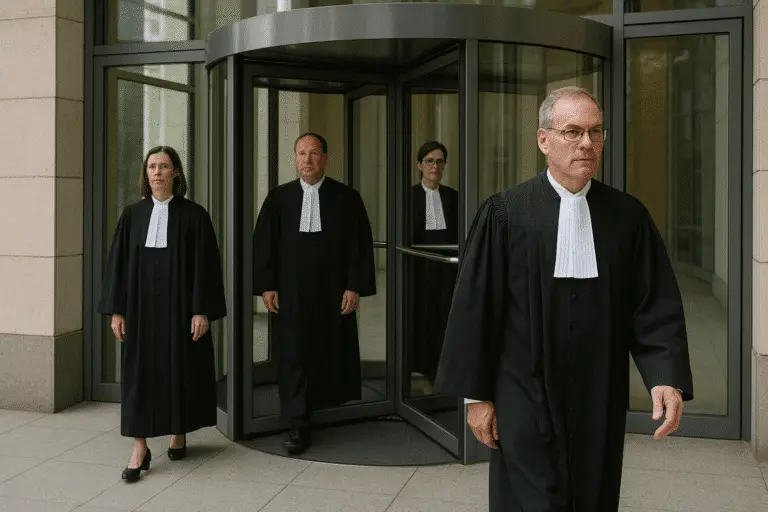
Yes, most disputes in the Netherlands can be resolved without a court judgment: through a demand letter and notice of default, mediation, binding advice (bindend advies) or arbitration. The main exception is when something has to stop immediately or the other party simply does not respond; then summary proceedings (kort geding) before the court are usually the faster route.
Table of contents
What makes a demand letter effective?
Most disputes end in correspondence, not in court. A letter that works is specific: what was agreed, what has not been performed, what you demand, and by when.
Where a payment or performance is overdue, a notice of default (ingebrekestelling) sets a final deadline and creates the legal position from which you can later claim damages or dissolve the agreement (Article 6:82 of the Dutch Civil Code, BW). It is the cheapest step in the whole process, and the one most often skipped.
When does mediation work?
In mediation, an impartial mediator helps you and the other party reach your own settlement. Nothing is imposed; what you agree is recorded in a settlement agreement, which then binds as a contract.
Mediation works well where you have a relationship worth preserving – commercial partners, employer and employee, co-parents – and where each side is able to state and defend its own interests. It works less well where there is a serious imbalance of power, where one party has no insight into the facts, or where you need a precedent rather than a settlement. Confidentiality is part of the appeal: in the mediation agreement both parties undertake that what is said in mediation stays there. A settlement reached in mediation is usually laid down in a settlement agreement (vaststellingsovereenkomst) under Article 7:900 BW.
What is binding advice (bindend advies)?
Under a binding advice, you and the other party ask a third party to decide the dispute and agree in advance to be bound by that decision. It is contractual rather than judicial: the outcome binds because you agreed it would, and under Article 7:904 BW a court will set it aside only where being bound would be unacceptable by standards of reasonableness and fairness, for example because the procedure was seriously defective.
It is fast and informal, and it suits technical valuation disputes and the consumer complaints boards of De Geschillencommissie. It does not itself produce a title you can enforce directly; enforcement still requires the court.
Why do contracts include an arbitration clause?
Arbitration is a private tribunal that issues a binding award; Dutch arbitration is governed by Book 4 of the Code of Civil Procedure (Rv), starting with the arbitration agreement in Article 1020 Rv. Parties choose it where they want a specialist decision-maker, confidentiality, or an award that is enforceable across borders under the New York Convention – the last being the main reason most international contracts contain an arbitration clause.
The trade-offs are real: arbitration is usually more expensive than a first-instance court case, and there is no appeal on the merits unless the parties agreed on arbitral appeal (Articles 1061a-1061l Rv). The state court can only set an award aside on limited grounds (Articles 1064-1068 Rv). An arbitration clause is a choice made when the contract is signed, so it is worth reading before it is needed rather than after.
When do summary proceedings (kort geding) help?
Where something has to stop now – a continuing breach, an unlawful publication, an unpaid invoice threatening your business – summary proceedings under Articles 254-260 Rv can produce an enforceable order from the preliminary relief judge (voorzieningenrechter) within weeks, sometimes days.
You must show an urgent interest, and the judgment is provisional: either party can still start proceedings on the merits. It is still court litigation, but it is fast, and the pressure it creates frequently produces a settlement before judgment is even given.
How do you choose the right route?
Three questions settle it, and the third comes first in practice. Do you need speed, a preserved relationship, or a precedent? Is the dispute about facts and figures, or about the interpretation of a contract? And what does the contract already say – an arbitration clause or a designated complaints board may have made the choice for you.
What can we do for you with resolving a dispute?
Our civil lawyers help you pick the route that fits your dispute and then take it.
- We read your contract for an arbitration clause, binding-advice clause or complaints board before you take any step.
- We draft the demand letter and the notice of default with a clear final deadline.
- We prepare you for mediation and draft the settlement agreement that records the outcome.
- We conduct arbitration and binding-advice proceedings, or challenge an award or advice that is unacceptable.
- We start summary proceedings when something has to stop immediately.
Summary
- A precise demand letter, including a notice of default where performance is overdue, resolves most disputes and costs the least.
- Mediation suits disputes where the relationship is worth preserving and both sides can state their own interests.
- Binding advice gives a fast, informal, contractual outcome, but does not itself create an enforceable title.
- Arbitration gives a specialist, confidential and cross-border enforceable award, at a higher cost and usually without an appeal on the merits.
- Summary proceedings are the route where something needs to stop immediately, and often lead to settlement before judgment.
Frequently asked questions
Is a mediation agreement binding?
The settlement you reach in mediation binds you as a contract once both parties sign it, usually as a settlement agreement under Article 7:900 BW. Until then, either party can walk away.
Can I still go to court if my contract has an arbitration clause?
In principle no: the state court must declare itself without jurisdiction if the other party relies on the arbitration agreement before putting forward any other defence (Article 1022 Rv). Summary proceedings for urgent measures often remain possible.
How quickly can summary proceedings produce a decision?
Usually within a few weeks of the summons, and in very urgent cases within days. The judgment is provisional, so a case on the merits can follow.