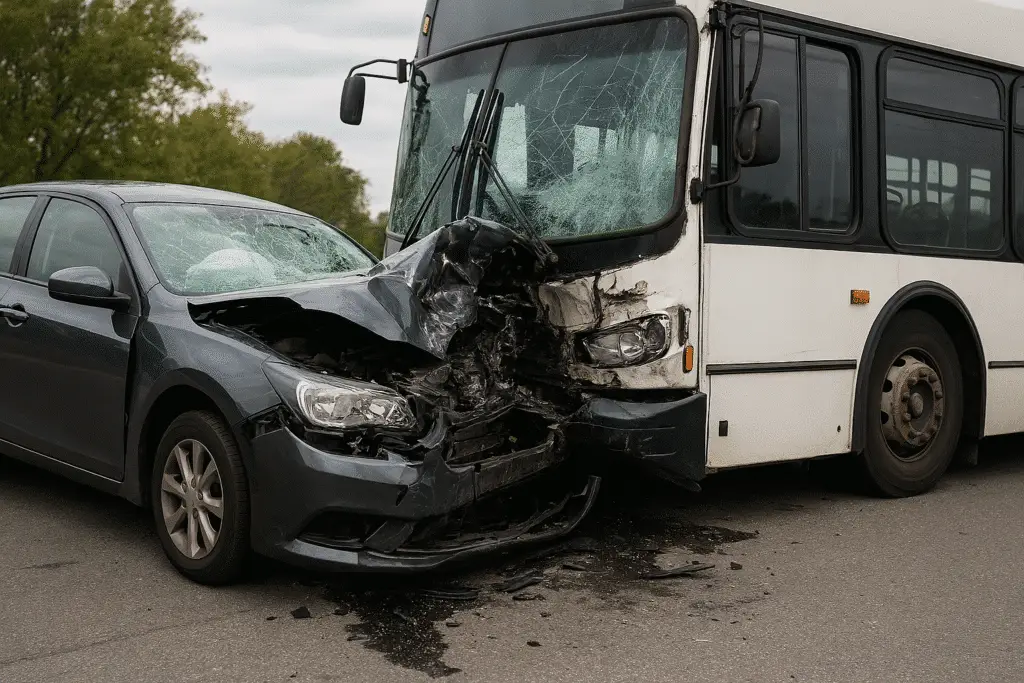
Under Dutch law you are liable for someone else’s loss only where the law says so: for a breach of contract under Article 6:74 of the Dutch Civil Code (BW), or for an unlawful act (onrechtmatige daad) under Article 6:162 BW. In addition, Book 6 BW makes parents, employers, owners of buildings and animals, and producers liable because of their position, even without personal fault.
The starting point is that everyone bears their own loss. A claim for damages generally becomes time-barred five years after the injured party knew of both the damage and the liable person, and in any event twenty years after the event (Article 3:310 BW).
Table of contents
When is an act unlawful under Article 6:162 BW?
A claim based on an unlawful act succeeds only if five conditions are all met: an unlawful act, attributability, loss, causation and relativity. If one is missing, there is no liability.
An act is unlawful under Article 6:162(2) BW if it infringes someone’s right, breaches a statutory duty or conflicts with what unwritten law regards as proper social conduct. That last category does most of the work: it is why a shop must clean a slippery floor and a contractor must fence off a trench, although no statute says so in those words.
The act must be attributable to the person who committed it, because of fault or because the law or generally accepted views place it at their risk (Article 6:162(3) BW). Fault is an objective test: did the conduct fall short of what could reasonably be expected? Without loss, there is no liability, however careless the conduct.
Causation is limited by Article 6:98 BW: only loss that can reasonably be attributed to the liable person, given the nature of the liability and of the damage, is recoverable. Relativity (Article 6:163 BW) adds that no compensation is owed if the breached rule does not aim to protect against the loss the injured party suffered.

When are you liable under a contract?
Under Article 6:74 BW every failure to perform an obligation obliges the debtor to compensate the resulting loss, unless the failure cannot be attributed to the debtor. A failure is attributable if it is due to the debtor’s fault or falls within its risk under the contract, the law or generally accepted views.
That is why a supplier is usually answerable for defects in what it delivers, even if it was not careless itself. Before you can claim damages, the debtor must usually be in default (verzuim). Under Article 6:82 BW default arises after a written notice of default (ingebrekestelling) that sets a reasonable period for performance, once that period has expired.
Under Article 6:83 BW no notice is needed where a fixed deadline for performance has passed, where the obligation arises from an unlawful act, or where the debtor has stated that it will not perform. Where performance is permanently impossible, default is not required either (Article 6:74(2) BW). Sending a proper notice of default early costs little and protects the claim.
Contracts often limit liability. Between businesses, exclusion and limitation clauses are generally valid, but a court can set them aside where relying on them would be unacceptable under standards of reasonableness and fairness (Article 6:248(2) BW). In general terms and conditions used towards consumers, a clause that frees the user from a statutory duty to pay damages is presumed unreasonably onerous under Article 6:237(f) BW.
Who is liable without personal fault?
Book 6 BW places liability on people because of their position, so that a victim does not have to prove carelessness that is almost impossible to show. These are the qualitative or strict liabilities of Articles 6:169 to 6:185 BW.
Parents and guardians are liable for the conduct of a child under fourteen without any defence based on supervision (Article 6:169(1) BW). For a child of fourteen or fifteen, they are liable unless they cannot be blamed for not preventing the conduct (Article 6:169(2) BW). From sixteen, the child is liable itself.
An employer is liable for harm a subordinate causes to a third party, if the task increased the chance of the mistake and the employer had authority over the conduct (Article 6:170 BW). A business is also liable for mistakes of non-subordinate contractors working for it in the conduct of its business (Article 6:171 BW).
The possessor of a movable thing that creates a special danger if it does not meet the required standards is liable when that danger materialises (Article 6:173 BW). The possessor of a defective building or structure is liable on the same basis (Article 6:174 BW); for public roads that liability rests with the road authority, such as the municipality or the province. The possessor of an animal is liable for the damage it causes (Article 6:179 BW), and where these things, buildings or animals are used in a business, liability moves to the business (Article 6:181 BW).
Producers are liable for damage caused by a defect in their product (Article 6:185 BW), and that liability cannot be excluded or limited towards the injured party (Article 6:192 BW). We cover this in our article on product liability in the Netherlands.
Is an employer liable for accidents at work?
Yes, unless the employer proves that it met its duty of care or that the damage is largely due to the employee’s intent or deliberate recklessness (Article 7:658(2) BW). The burden of proof lies with the employer, and the standard is what was reasonably necessary, not what was usual in the sector.
Under Article 7:658(1) BW the employer must arrange and maintain the workplace, tools and equipment, take measures and give instructions as reasonably necessary to prevent harm. Article 7:658(4) BW extends this to people who work for a business without an employment contract, such as agency workers and some self-employed contractors. The kantonrechter (subdistrict court) hears these claims.
Next to this duty of care, the employer must act as a good employer under Article 7:611 BW. On that basis employers have been held responsible for not arranging adequate insurance for employees who drive or cycle for work. We advise on the employment-law side of these questions; see our employment law guides. The personal-injury claim itself is handled by a personal-injury specialist.
Who is liable in a road traffic accident?
If a motor vehicle on the road is involved in an accident that damages people or property not carried in it, the owner or keeper must compensate the damage, unless force majeure is plausible (Article 185 of the Road Traffic Act 1994, WVW). This mainly protects pedestrians and cyclists.

Force majeure is rarely accepted: the driver must have made no error at all, and the other road user’s conduct must have been so unlikely that the driver did not need to take it into account. Settled case law of the Supreme Court (Hoge Raad) adds that a motorist bears the full damage of a child under fourteen, and at least half of an adult’s damage. The victim can claim directly against the motor insurer; between two motorists the ordinary rules apply.
Which defences reduce or exclude liability?
Liability is rarely all or nothing. Under Article 6:101 BW compensation is reduced where the loss is partly due to circumstances attributable to the injured party, in proportion to each side’s contribution; the court may correct that split for reasons of fairness.
A ground of justification, such as a statutory authorisation or necessity, removes unlawfulness altogether (Article 6:162(2) BW). In sport and play, the threshold for careless conduct is higher: conduct that is careless in daily life is not necessarily careless within the rules of a game.
The injured party must also limit the loss. Avoidable damage that is allowed to grow is not recoverable, while the reasonable costs of preventing or limiting damage are (Article 6:96(2)(a) BW). Act promptly: secure the property and obtain a repair estimate.
What can be recovered, and within which deadline?
Financial loss covers both loss suffered and lost profit (Article 6:96(1) BW). It also includes reasonable costs of preventing or limiting damage, of establishing liability and the amount of damage, and of collecting payment out of court (Article 6:96(2) BW).
Non-financial loss is only recoverable in the cases listed in Article 6:106 BW, such as physical injury or damage to honour or reputation. Personal-injury compensation is outside our practice; for those claims you need a personal-injury specialist.
The five-year limitation period of Article 3:310 BW starts on the day after the injured party knew both the damage and the liable person, with an absolute limit of twenty years. Longer periods apply to pollution and certain environmental damage. Under Article 3:317 BW a written demand or a written notice in which the creditor clearly reserves its right interrupts the limitation period, and a new period starts.
Insurance sits alongside this. Motor insurance is compulsory; private liability insurance is not, but is widely held. Report an incident to your insurer within the period in the policy, even if you dispute liability, because late notification can itself be a ground to refuse cover.
When is a company liable, and when are its directors?
A BV, NV, association or foundation is liable for its own unlawful acts and breaches of contract, and its own assets answer for them. The separation between the company and its directors holds in most cases.
A director who performs improperly is liable to the company itself under Article 2:9 BW, which requires a serious personal reproach. Towards creditors, a director can be personally liable in tort, for example for entering into obligations on the company’s behalf while knowing it could not pay and offered no recourse. More on the wider framework is on our civil law pages.
In bankruptcy of a BV, each director is jointly and severally liable for the deficit if the board manifestly performed its duties improperly and this is plausibly an important cause of the bankruptcy (Article 2:248(1) BW). If the board did not keep proper accounts (Article 2:10 BW) or did not publish the annual accounts on time (Article 2:394 BW), improper performance is established and presumed to be an important cause (Article 2:248(2) BW).
What should you check if you suffered loss?
- Check whether your claim is based on a contract (Article 6:74 BW) or an unlawful act (Article 6:162 BW), or on a strict liability.
- Check whether you need to send a written notice of default first (Articles 6:82 and 6:83 BW).
- Check that you have documents for every item of loss: invoices, quotes, payroll data, expert reports.
- Check the five-year limitation period and interrupt it in writing if needed (Articles 3:310 and 3:317 BW).
- Check whether you can claim directly from an insurer, such as the motor insurer.
What should you check if you are held liable?
- Do not admit liability in writing before the facts are clear; record the facts, photographs and witnesses the same day.
- Report the claim to your liability insurer within the period in your policy.
- Check whether all five conditions of Article 6:162 BW or the contractual conditions are met.
- Check whether a limitation clause in your contract or general terms applies and holds up.
- Check whether the claimant contributed to the loss (Article 6:101 BW) and whether the claim is time-barred.
What can we do for you with liability?
Our corporate lawyer and litigation team advise businesses and individuals in the Netherlands on liability claims, apart from personal-injury claims.
- We assess whether a claim against you or by you has a legal basis and what it is worth.
- We draft a notice of default, a letter holding a party liable (aansprakelijkstelling) or a letter interrupting the limitation period.
- We respond to a claim on your behalf and check exclusion and limitation clauses.
- We deal with your insurer on cover disputes.
- We advise directors on personal liability risks and represent you in proceedings before the civil court.
Summary
- Liability arises from breach of contract (Article 6:74 BW), an unlawful act (Article 6:162 BW) or a strict liability attached to a position.
- In contract cases, a written notice of default is usually needed before damages are owed (Article 6:82 BW).
- Compensation is reduced if the injured party contributed to the loss (Article 6:101 BW).
- Damages claims are time-barred five years after you knew of the damage and the liable person, and at the latest after twenty years (Article 3:310 BW); a written notice interrupts this.
- Directors are personally liable only in specific cases, such as a manifestly improper performance of duties before a bankruptcy (Article 2:248 BW).
Frequently asked questions
What is the difference between contractual liability and an unlawful act?
Contractual liability arises when a party fails to perform an obligation under a contract (Article 6:74 BW). An unlawful act under Article 6:162 BW applies outside a contract, for example when someone infringes your right or acts carelessly towards you. Both can apply to the same facts.
How long do I have to claim damages in the Netherlands?
In general five years from the day after you knew of both the damage and the liable person, and at the latest twenty years after the event (Article 3:310 BW). A written notice in which you clearly reserve your right interrupts that period (Article 3:317 BW).
Are parents liable for damage caused by their children?
For a child under fourteen, the parent or guardian is liable without a defence based on supervision. For a child of fourteen or fifteen, they are liable unless they cannot be blamed for not preventing the conduct. From sixteen, the child is liable itself (Article 6:169 BW).