


Introduction: What is Identity Fraud Punishment and Why is it Important
Identity fraud penalties in the Netherlands can be up to 5 years in prison and a €103,000 fine according to Article 231b of the Criminal Code. These severe penalties reflect the seriousness with which the justice system punishes identity theft and the misuse of other people’s personal data.
In this comprehensive guide, we cover all aspects of identity fraud penalties: from legal frameworks and fines to sentencing, legal procedures and defence options. Whether you are suspected of identity fraud, have been a victim, or simply want to understand the consequences of this criminal offence, you will find concrete answers here. In the Netherlands, identity fraud can also lead to concurrent offences, which can increase the penalty.
We discuss the exact penalties according to the Criminal Code, factors that determine the penalty, real court cases with judgments, and practical tips for both suspects and victims. Identity fraud is severely punished because it undermines trust in our digital society and the Dutch identity system. Identity fraud can be committed in various ways, for example through the use of false documents, phishing, or physical theft of data.
Understanding Identity Fraud Penalties: Legal Frameworks and Definitions
Article 231b of the Criminal Code
Article 231b of the Criminal Code makes it a criminal offence to use personal data for identification purposes unlawfully. The exact wording of the law is: “Anyone who intentionally and unlawfully uses another person’s identifying personal data with the intention of concealing their own identity or that of a third party or misusing another person’s identity shall be punished with imprisonment of up to five years or a fifth category fine.
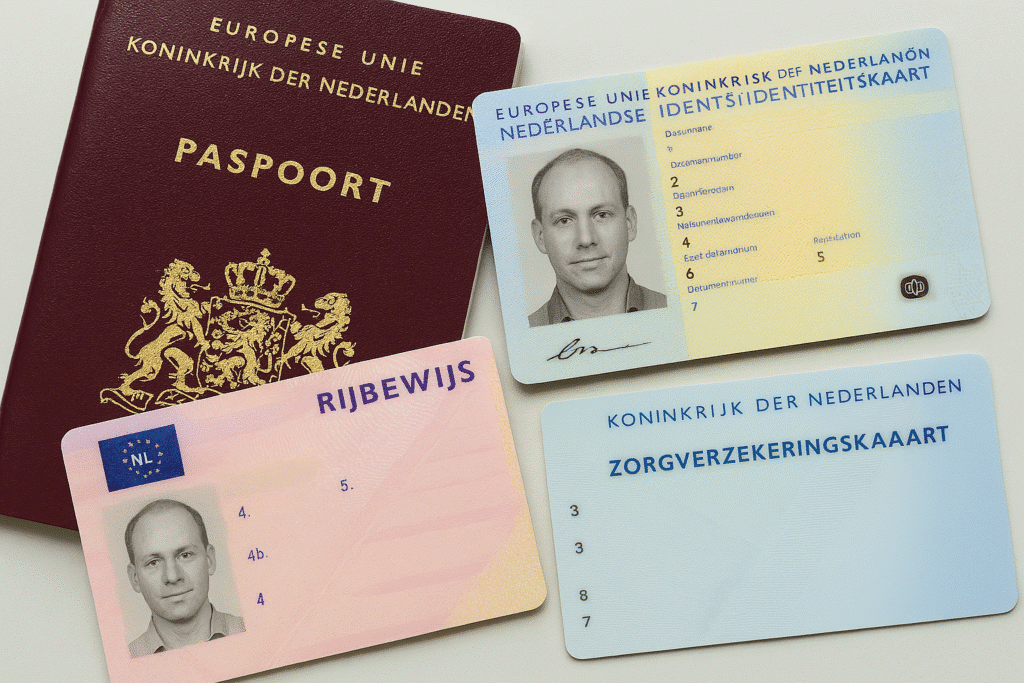
This means that the deliberate use of another person’s identity data without permission is a criminal offence. Examples include misusing someone’s name, date of birth, citizen service number, or using stolen documents such as a Dutch passport or identity card.
Penalty categories
The maximum penalties for identity fraud are:
- Prison sentence: Maximum 5 years (6 years for biometric personal data)
- Fifth category fine: € 103,000 (2024 amounts)
- Alternative penalties: Community service, suspended prison sentence, compensation
Depending on the seriousness of the offence, you may also be fined for breaking the rules.
Simply assuming a false identity is not a criminal offence – there must be a criminal offence involving the misuse of someone else’s identity. The judge determines the exact penalty based on various circumstances and the seriousness of the offence committed.
Why Identity Fraud Is Punished So Severely
Identity fraud undermines trust in the digital economy and the Dutch identity system. Criminals who misuse identity data not only cause financial damage to victims, but also damage public trust in passports, identity cards and digital services. Victims of identity fraud may also have difficulty finding a job. Young people sometimes use false identity documents to buy cigarettes, for example, which also constitutes identity fraud. Use strong and unique passwords for your online accounts.
Statistics show the seriousness of the problem:
- Every year, thousands of people report identity fraud to the central identity fraud reporting centre
- Victims suffer an average loss of € 3,000-€ 15,000 per incident
- Victims can lose a lot of money through loans or credit cards taken out in their name
- Restoring your identity after fraud often takes months or years
- Regularly check your bank statements and credit reports for suspicious activity
The severe penalties serve to protect the Dutch travel document system and to deter perpetrators. When criminals lose a passport due to theft or deliberately cause it to disappear, this can lead to misuse in the passport alert register. Being included in the passport alert register may result in you being unable to apply for a new passport. Keep your personal information in a safe place.

Penalty comparison table
| Scenario | Imprisonment | Fine | Details |
|---|---|---|---|
| First offence, minor damage (€ 1,000) | 0-6 months suspended sentence | € 500- € 5,000 | Community service often possible |
| Multiple victims, damage €1,000¬€10,000 | 6 months – 2 years | € 5,000- € 25,000 | Partially suspended |
| Large-scale fraud, professional approach | 2-4 years | € 25,000 ¬ € 75,000 | Often unconditional |
| Repeat offender, serious damage (€ 25,000) | 3-5 years | € 50,000 – € 103,000 | Maximum penalties |
| Biometric data/passport forgery | Up to 6 years | € 103,000 | Most serious form of identity fraud |
This table shows realistic penalties based on case law. First-time offenders with limited damage often receive lighter penalties, while repeat offenders and perpetrators of large-scale fraud risk the maximum penalties.
Factors that determine the penalty: Step-by-step explanation
Step 1: Determining the Severity of the Offence
The judge first assesses the severity of the offences committed:
- Amount of damage caused: Financial loss to victims, costs of restoring identity
- Number of victims: Individual fraud versus large-scale operations
- Duration of fraudulent activities: One-off incident or long-term abuse
- Type of stolen data: Basic personal data versus biometric data
The use of biometric personal data such as fingerprints is punished more severely because it is more difficult to recover than, for example, applying for a new ID card.
Step 2: Assessing personal circumstances
The judge then looks at the offender:
- Criminal record: First-time offenders versus repeat offenders receive different treatment
- Personal situation: Financial hardship, addiction, or other mitigating circumstances
- Degree of preparation: Impulsive act versus professionally organised fraud
- Cooperation with the authorities: Confession, cooperation with the investigation, compensation
Young people under the age of 18 fall under juvenile criminal law, which imposes lighter penalties and focuses more on rehabilitation than retribution.
Step 3: Sentencing by the judge
The judge applies the sentencing guidelines:
- Use of sentencing guidelines: Fixed frameworks for comparable offences
- Suspended sentences: Part of sentence suspended for good behaviour
- Compensation: Obligation to compensate victims
- Combination of sentences: Prison sentence plus fine plus compensation
Contacting a specialist criminal lawyer can significantly influence the outcome through effective defence and sentencing arguments. Awareness of phishing attempts helps you avoid sharing personal information.
Common Mistakes That Lead to Heavier Sentences
Mistake 1: Denying while evidence is overwhelming
When the police have gathered extensive evidence (bank statements, digital traces, witness statements), but the suspect continues to deny the charges, the judge interprets this as a lack of insight. This leads to heavier penalties than if you confess and consent to an investigation.
Mistake 2: Not seeking legal assistance during questioning
Many suspects think that a solicitor makes them look suspicious. The opposite is true – a solicitor protects your rights and prevents you from unintentionally making incriminating statements that can later be used against you.
Mistake 3: Not cooperating with compensation for victims
Refusing to compensate victims is considered an aggravating factor by judges. Actively cooperating in redress shows remorse and can lead to a reduced sentence.
Pro Tip: If you suspect identity fraud, engage a specialist solicitor immediately. Early legal assistance can prevent minor offences from escalating into serious criminal prosecution.
Protecting Your Identity: Practical Tips to Prevent Victimisation
Identity fraud is a serious criminal offence that can have major consequences for victims. Not only can you suffer financial damage, but you can also face long-term problems surrounding your identity, such as the wrongful taking out of loans or the misuse of your personal data by criminals. Fortunately, there is a lot you can do yourself to reduce the risk of identity theft and misuse. Below are some practical tips to protect your identity, your ID card and your passport against theft and fraud.
- Always keep your ID card and passport safe Makesure you keep your ID card, passport and other important documents in a safe place. Never leave them unattended, especially in public places. If your passport or ID card is lost or stolen, there is an immediate risk of identity fraud.
- Use strong and unique passwordsIt is important to use strong, unique passwordsforall your online accounts. Avoid simple combinations and use a password manager where possible. This reduces the chance of criminals gaining access to your personal data.
- Be cautious when sharing personal data.Only share your personal data with reliable parties. Always check whether a website or organisation is genuine before sharing sensitive information. Be extra vigilant when asked to provide copies of your identity documents.
- Check your bank statements regularly. Keep a close eye on your bank statements. If you see any unknown or suspicious transactions, contact your bank immediately and report it to the police. This will allow you to take swift action in the event of misuse of your data.
- Use two-factor authentication Protectyour online accounts by enabling two-factor authentication. This makes it much more difficult for criminals to access your accounts, even if they know your password.
- Keep copies of important documents in a safe placeMakesecure copies of your passport, ID card and other important documents. Keep these copies in a secure place so that you can act quickly and request new documents in the event of loss or theft.
- Be alert to scams and phishing Criminalstry to obtain your personal data via email, telephone or text message. Always be critical of messages that ask for personal information or copies of your ID. If you are in doubt, contact the organisation directly.
- Report it immediately to the police and the reporting centre Ifyou become a victim of identity fraud or suspect misuse of your personal data, report it immediately to the police and the Central Identity Fraud Reporting Centre. The sooner you act, the greater the chance that the damage will be limited and the perpetrator will be tracked down.
By applying these tips, you reduce the chance of becoming a victim of identity fraud and protect yourself against the unpleasant consequences of stolen or misused personal data. Stay alert, take good care of your documents and, if in doubt, always contact the police or the reporting centre. This way, you remain in control of your own identity.
Real court cases and judgments
Case Study: Amsterdam District Court 2023 – 3 years’ imprisonment for large-scale identity fraud
Case: A 32-year-old man from Amsterdam was sentenced to 3 years in prison for systematically misusing stolen identity data from 150 victims.
The perpetrator’s method:
- Hacked databases of online shops and insurers
- Personal data used to take out loans and subscriptions
- Copies made of identity documents with own photo
- Opened bank accounts in the names of victims
Many young people commit identity fraud by lending their identity documents or borrowing someone else’s ID. One in five schoolchildren under the age of 18 has used a borrowed or forged identity document at some point. Many young people are unaware of the consequences of identity fraud.
- Hacked databases of online shops and insurers
- Used personal data to take out loans and subscriptions
- Had copies made of identity documents with his own photo
- Opened bank accounts in the names of victims
- Borrowing an identity document is a criminal offence, regardless of whether it was done with parental consent
Sentencing factors applied:
- Severity: Very high damage (€ 200,000 in total)
- Victims: 150 victims
- Professionalism: Well-organised criminal operation
- Recidivism: Previous convictions for fraud
| Situation | Before conviction | After conviction |
|---|---|---|
| Freedom | Free on bail | 3 years’ imprisonment |
| Finances | € 45,000 criminal profits | Compensation € 200,000 |
| Future | Unknown criminal status | Criminal record, difficulties finding work |
The court emphasised that the unpleasant consequences for the victims were a major consideration. Many were unable to obtain loans, had problems renting accommodation, or had to spend months restoring their identity.
Frequently asked questions about identity fraud penalties
Q1: Do you always get a prison sentence for identity fraud?
A1: No, first-time offenders with limited damage often receive community service or a suspended prison sentence. The judge considers the seriousness of the offence and personal circumstances.
Q2: Can I get community service instead of a prison sentence?
A2: Yes, for minor forms of identity fraud (damage under £5,000, no repeat offences), community service of 40-240 hours is possible. This mainly happens with young offenders without a criminal record. The use of a copy of an identity document for fraudulent purposes is also punishable.
Q3: What happens if I am a minor?
A3: Young people under the age of 18 are subject to juvenile criminal law, with a maximum of one year’s detention for identity fraud. The focus is on guidance and prevention of recurrence rather than punishment alone.
Q4: How long does a court case for identity fraud take?
A4: On average, 6-12 months from the report to the verdict. Complex cases with many victims or international aspects can take 1-2 years. It is important to collect evidence, as this is necessary to prove identity fraud during the trial.
Q5: Will I get my passport back if I am convicted?
A5: You can apply for a new British passport after a conviction, unless the judge has explicitly imposed a passport ban as an additional penalty.
Conclusion: Key Points about Identity Fraud Penalties
Identity fraud is severely punished in the Netherlands with a maximum of 5 years’ imprisonment and a € 103,000 fine. If biometric personal data or passport forgery is used, the penalty can be up to 6 years. The exact penalty depends on factors such as the amount of damage, the number of victims, and whether you are a repeat offender.
Key points to note:
- Early legal assistance can significantly influence the severity of the sentence
- Cooperation with the investigation and compensation leads to a reduced sentence
- First-time offenders with limited damage often receive alternative penalties
- Victims can report identity fraud via the central reporting centre
- When reporting a crime, bring as many supporting documents as possible to the police
- Only use reliable websites for online purchases
For suspects: Never report the crime on your own, immediately engage a specialist criminal lawyer from Law & More. For victims: Report the crime to the police and contact the identity fraud reporting centre. Without a report, the police cannot investigate identity fraud. You must immediately inform your bank if you suspect that you are a victim of identity fraud.
If you suspect identity fraud, swift action is crucial. Contact an experienced solicitor from Law & More who specialises in criminal law immediately to protect your rights and mount the best defence.