
When international families face separation or divorce in the Netherlands, determining which court handles matters involving Dutch children can feel overwhelming.
The Dutch court that has jurisdiction over your children depends primarily on where the children habitually reside at the time you file your case with the court. This principle applies whether you are dealing with custody arrangements, parental authority, or other child-related decisions.
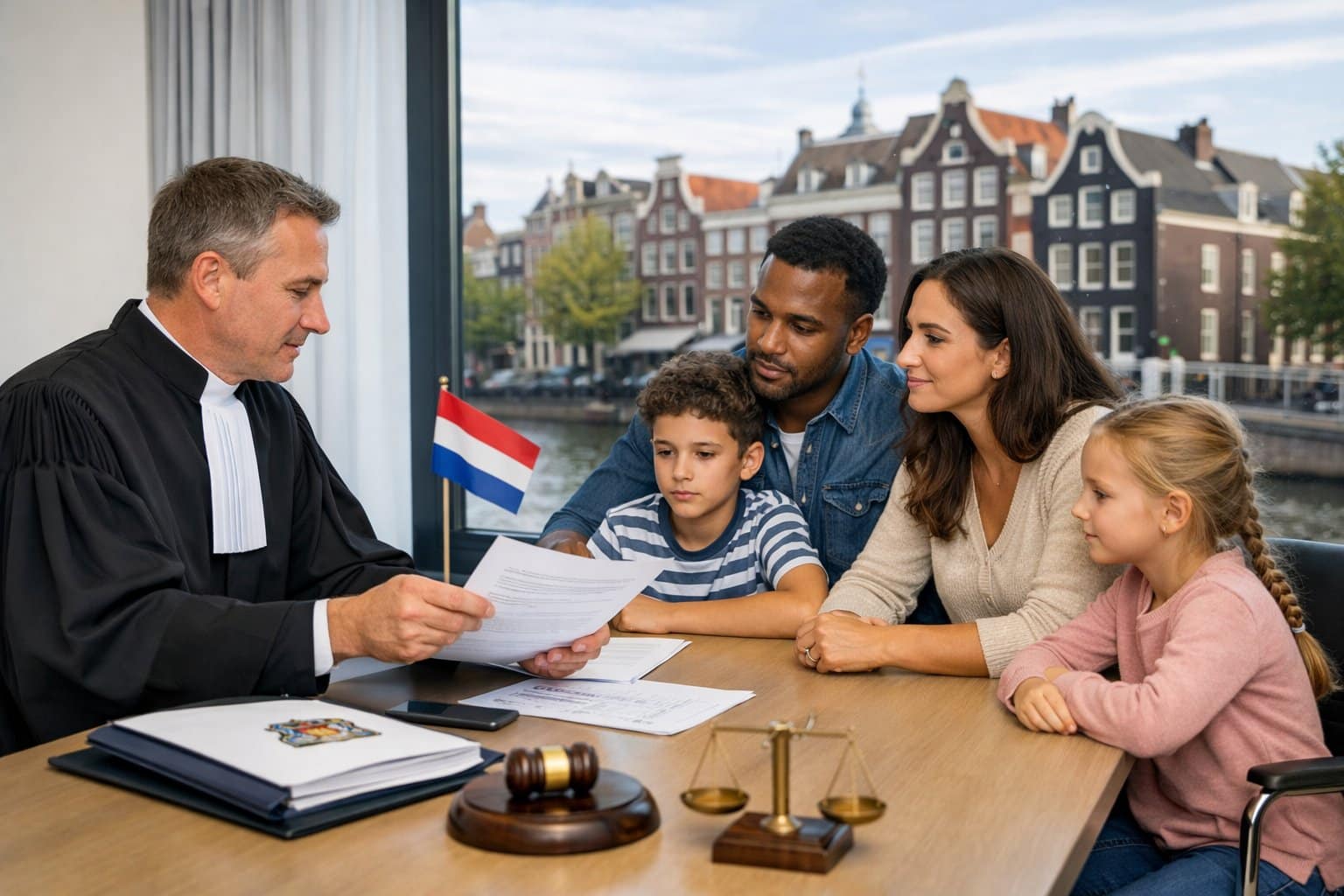
Understanding court jurisdiction matters because filing in the wrong court can result in your case being dismissed entirely, regardless of its merits.
The rules governing which Dutch court handles your family matter involve both European regulations and Dutch law.
These rules consider factors such as where your children live, how long they have been there, and their connections to the Netherlands or other countries.
Establishing Dutch Court Jurisdiction Over Dutch Children
The Dutch judicial system determines jurisdiction over children primarily through habitual residence, though exceptions exist when circumstances warrant involvement of Dutch courts.
Parents can also influence jurisdiction through mutual agreements under specific conditions.
Habitual Residence as a Primary Factor
Habitual residence serves as the fundamental principle in Dutch family law for establishing which court has jurisdiction over children.
When you file an application with a Dutch court, the court examines where your child was habitually residing at that specific moment.
The Dutch courts assess habitual residence by reviewing all relevant circumstances.
They consider how long your child has lived in a country, the regularity of their stay, and the reasons for being there.
The courts also examine where your child attends school, which languages they speak, and their family and social connections.
If your child’s habitual residence is in the Netherlands when you lodge your application, the Dutch court has jurisdiction.
When your child lives in another country at that time, that country’s court typically has jurisdiction instead.
The determination focuses on where your child’s permanent centre of interests is located.
Courts look at whether you intended to establish a stable, long-term living situation in the Netherlands.
Temporary stays with relatives or short visits generally do not create habitual residence, even if your child holds Dutch nationality.
Exceptions to the Jurisdiction Rule
Dutch courts can assume jurisdiction over children even when habitual residence lies elsewhere under certain circumstances.
The Hague Child Protection Convention and Brussels regulations allow flexibility when the best interest of the child requires Dutch court involvement.
Provisional relief proceedings represent one important exception.
A Dutch provisional relief judge may issue interim measures regarding parental responsibility when urgent protection is needed, regardless of where your child habitually resides.
Courts can also transfer jurisdiction between countries when appropriate.
If your child moves to another country during proceedings, the Dutch court may ask that country’s court to assume jurisdiction under specific provisions.
This ensures decisions are made by courts closest to your child’s current situation.
Mutual Parental Agreement and Its Impact
You and the other parent can influence jurisdiction through written agreements in some situations.
However, this option has strict limitations under Dutch family law and international regulations.
Dutch courts maintain primary focus on your child’s habitual residence rather than parental preferences.
Your agreement about which court should decide cannot override jurisdiction rules based on where your child actually lives.
The courts prioritise the best interest of the child above parental convenience.
Any agreement between parents must align with existing jurisdiction rules to be valid.
You cannot simply choose Dutch courts when your child’s habitual residence is clearly established elsewhere through an ordinary parenting arrangement.
The Role of International Family Law in Jurisdiction

International family law determines which court can hear your case and which country’s laws apply to your family matter.
The Dutch court system follows specific private international law rules and international treaties to decide jurisdiction in cases involving foreign elements.
Private International Law Principles
Private international law provides the foundation for determining jurisdiction in cross-border family cases.
The core principle requires that both the court and the applicable law must have a close connection to your specific situation.
Dutch courts examine several factors when determining jurisdiction.
These include where you and your children normally live, your Dutch nationality, and your family’s ties to the Netherlands.
The court must establish a genuine link between your case and the Dutch legal system before accepting jurisdiction.
When you file a case with a Dutch court, the judge will first assess whether the Netherlands is the appropriate place to hear your matter.
This assessment happens before the court considers the actual details of your family dispute.
Relevant Treaties and Conventions
The Brussels II bis Regulation governs jurisdiction for most European family law cases.
This regulation establishes clear rules about which court has authority over divorce, parental responsibility, and child custody matters within the EU.
The Hague Child Protection Convention applies when children move between countries or when international child abduction occurs.
This convention protects children’s interests by ensuring that the court in the country of habitual residence makes decisions about parental authority.
Dutch nationals living abroad may encounter situations where multiple treaties apply.
The following treaties commonly affect international family cases:
- Brussels II bis Regulation (EU member states)
- Hague Convention on International Child Abduction
- Hague Child Protection Convention
- Bilateral treaties between the Netherlands and specific countries
These treaties work together to prevent conflicting court decisions and ensure that only one court handles your family matter.
Interaction Between Dutch and Foreign Law
Dutch courts must decide which law applies to your case alongside determining jurisdiction.
Foreign law may apply even when a Dutch court has jurisdiction over your matter.
The court considers your nationality, where you married, and where you established your family life.
If you hold Dutch nationality but lived abroad for years, foreign law might govern parts of your divorce or custody case.
Dutch judges can apply foreign law directly in their decisions.
The court may request expert opinions to understand how foreign legal systems treat specific family law issues.
You bear responsibility for providing information about relevant foreign law provisions when you rely on them in your case.
When Dutch and foreign law conflict, the court follows international private law rules to resolve the inconsistency.
These rules prioritise the child’s welfare and habitual residence in most custody and parental responsibility cases.
Determining the Competent Dutch Court
Once jurisdiction lies with the Dutch courts, you need to identify which specific court will handle your case.
The Dutch legal system assigns cases based on geographic location, subject matter, and the type of legal proceeding.
District Courts and Their Local Competence
The district court in the area where your child lives typically handles family law cases.
The Netherlands has eleven district courts, each covering specific regions.
If your child resides in Amsterdam, the District Court of Amsterdam has local competence.
Dutch procedural law determines which district court has jurisdiction based on the defendant’s place of residence or actual stay.
For child-related matters, this usually means the court in the district where the child habitually resides at the time you file your application.
You must submit your case to the correct district court from the start.
Filing with the wrong court can delay your proceedings.
Each district court maintains its own registry and procedures for accepting family law cases.
Specialised Courts and Appeals
Some district courts have specialised family law chambers that handle complex international custody matters.
These chambers have judges with specific expertise in cross-border family disputes.
If you disagree with a district court’s decision, you can appeal to the court of appeal.
The Netherlands has four courts of appeal that review decisions from district courts in their regions.
The court of appeal examines both facts and legal reasoning.
Beyond the court of appeal, you may submit cases to the Supreme Court of the Netherlands only on points of law, not factual disputes.
The Supreme Court ensures uniform application of Dutch law across all courts.
The Process of Assigning Jurisdiction
The court determines its own competence before addressing the substance of your case.
You must provide documentation showing your child’s habitual residence when you file your application.
The court examines residence duration, school attendance, and family ties.
If the court finds it lacks jurisdiction, it will decline to hear your case.
You cannot choose any court you prefer; the Dutch legal system assigns jurisdiction based on established rules.
Both parents can agree in writing to submit their case to a specific Dutch court, but only if certain conditions are met and the child’s interests are protected.
Impact of Jurisdiction on Divorce and Family Proceedings
Which court has jurisdiction affects how your divorce proceeds, what laws apply to your parenting plan, and how financial support gets determined.
The Dutch court‘s authority extends to different aspects of your case, including divorce, parental authority, and maintenance obligations.
International Divorce and Separation Cases
When you file for divorce in the Netherlands, the Dutch court handles the legal end of your marriage according to specific rules.
Dutch citizens living abroad can always use Dutch courts for divorce proceedings based on their nationality.
Non-Dutch citizens must be registered in the Netherlands for at least one year, whilst Dutch citizens need only six months of registration.
The court that receives your divorce petition first usually gets authority over your case.
This creates a “race to the court” situation when multiple countries have jurisdiction.
Filing quickly in the Netherlands can prevent a foreign court from taking control of your divorce proceedings.
Dutch family law might apply to your divorce, but jurisdiction doesn’t automatically determine which country’s laws govern your case.
A Dutch court may handle your divorce whilst a foreign court decides spousal maintenance.
The specific countries involved and your circumstances determine this split in authority.
Parental Authority and Parenting Plans
The Dutch court’s jurisdiction over parenting matters often differs from its authority over divorce.
You might find that Dutch courts decide your divorce and care arrangements whilst another country’s court rules on spousal support.
Your parenting plan must meet Dutch requirements when the Dutch court has jurisdiction.
This plan outlines how you and your ex-partner will share responsibilities for your children.
Joint parental authority typically continues after divorce unless the court decides otherwise.
Care and contact arrangements form a key part of your parenting plan.
These arrangements specify where your children live and when they spend time with each parent.
The Dutch court considers your children’s best interests when reviewing these plans, regardless of your nationality.
Child Support and Maintenance Orders
Child support calculations follow specific rules based on which court has jurisdiction.
Dutch courts use Dutch guidelines to determine support amounts when they have authority over maintenance matters.
Your income, your ex-partner’s income, and your children’s needs all factor into these calculations.
Spousal maintenance works separately from child support in Dutch family law.
One court might handle your divorce proceedings whilst another determines spousal support obligations.
This split jurisdiction happens when different countries have authority over various aspects of your case.
The enforcement of maintenance orders depends on where you and your ex-partner live.
Support orders from Dutch courts can be enforced in other countries through international agreements.
You need to understand which court’s orders apply to your situation to ensure proper payment and enforcement.
Cross-Border Disputes and Enforcement
When families span multiple countries, enforcing custody decisions and resolving disputes becomes more complex.
Dutch courts must work within international frameworks to recognise foreign judgments, whilst parents need to understand how decisions made in the Netherlands will be enforced abroad.
Recognition of Foreign Judgments in the Netherlands
Dutch courts recognise foreign custody judgments under specific conditions. If the decision comes from an EU member state, the Brussels II bis Regulation (now Brussels II ter) applies automatically.
This means custody orders from other EU countries are generally recognised without special procedures. For judgments from non-EU countries, the Netherlands examines several factors.
The foreign court must have had proper jurisdiction. The judgment cannot conflict with Dutch public policy.
You must also show that the other party had a fair opportunity to defend themselves. The Hague Convention on the Civil Aspects of International Child Abduction covers cases where a child is wrongfully removed from their country of habitual residence.
Dutch courts prioritise the child’s prompt return in international child abduction cases. Exceptions exist if return would expose the child to harm or place them in an intolerable situation.
Dispute Resolution Mechanisms
Dispute resolution options extend beyond traditional court litigation. Mediation allows parents to reach agreements with a neutral third party’s help.
This approach often works well for division of assets and parenting arrangements when both parties maintain communication. Collaborative divorce involves both parents working with specially trained lawyers to resolve issues cooperatively.
Each party commits to avoiding court proceedings. If the process fails, both lawyers must withdraw, and new legal representation is required.
Dutch courts encourage alternative dispute resolution in cross-border cases. These methods often prove faster and less costly than international litigation.
They also give parents more control over outcomes whilst considering cultural differences and commercial matters that might affect the family.
Enforcement Across Jurisdictions
Enforcing Dutch custody decisions abroad depends on bilateral treaties and international conventions. EU regulations ensure that Dutch judgments are enforced in other member states with minimal bureaucratic hurdles.
You typically need only a certificate from the Dutch court proving the judgment is enforceable. Outside the EU, enforcement becomes more challenging.
Countries that signed The Hague Convention must recognise and enforce Dutch custody orders. Some nations require local court proceedings to validate foreign judgments.
You should verify enforcement mechanisms before proceeding with litigation in Dutch courts. Some countries maintain reservations about certain convention provisions.
Working with legal professionals in both jurisdictions helps ensure your Dutch custody order will be recognised where your child resides.
Practical Considerations for International Families
International families dealing with Dutch custody matters must prepare specific documents, seek professional guidance, and understand the unique obstacles that arise when children live outside the Netherlands. Dutch nationals living abroad face particular restrictions when attempting to use Dutch courts for custody decisions.
Documentation and Legal Requirements
You need to gather several key documents when dealing with international custody cases involving Dutch children. Birth certificates, proof of habitual residence, and evidence of your connection to the Netherlands are essential starting points.
Courts require documentation that proves where your child normally lives. This includes school enrolment records, medical registrations, and utility bills showing your residential address.
You must provide these documents in the correct legal format, often with certified translations. If you’re an expat, you’ll need to demonstrate both parents’ nationalities and any existing custody agreements.
The court also requires proof of your child’s Dutch nationality if you’re claiming this as grounds for jurisdiction. Marriage certificates and divorce decrees must be legalised or apostilled depending on which country issued them.
Mediation and Legal Advice
Legal specialists can help you determine which court has jurisdiction before you file any applications. You should consult with lawyers experienced in international family law rather than general practitioners.
Mediation offers a practical alternative when both parents disagree about which country’s court should hear the case. A mediator can help you reach an agreement on jurisdiction, which is one of the few exceptions allowing Dutch courts to hear cases involving children living abroad.
Professional legal advice becomes crucial when dealing with countries outside the European Union or those not party to The Hague Child Protection Convention. The rules differ significantly depending on where your child lives.
Challenges for Dutch Nationals Living Abroad
Dutch nationals living abroad cannot typically request Dutch court involvement for custody arrangements if their children’s habitual residence is outside the Netherlands. The court in your country of residence holds jurisdiction in most cases.
This creates significant difficulties when you live in countries with less developed family law systems. You must navigate unfamiliar legal frameworks and potentially face language barriers.
The laws governing custody vary dramatically between countries, and Dutch nationality alone doesn’t create sufficient connection for Dutch court jurisdiction. Even when both parents are Dutch, the court where your child habitually resides maintains jurisdiction.
You cannot bypass this rule unless both parents explicitly agree to Dutch court competency and meet specific conditions.
Frequently Asked Questions
Dutch courts follow specific rules to decide if they can hear international family law cases. The location where children live and the parents’ nationality play major roles in these decisions.
How is jurisdiction determined for family law cases involving international elements in the Netherlands?
Dutch courts look at where the children live when the application is filed. If your children are living in the Netherlands at the time you submit your case to court, the Dutch court has jurisdiction to make decisions about them.
The children’s habitual residence matters most in these cases. This means the place where your children normally live and have their main connections.
The court examines when exactly you lodged your application because that date determines which country’s rules apply.
What factors influence the choice of Dutch courts in child custody disputes with an international dimension?
The main factor is where your children live. Dutch courts will handle custody matters if your children reside in the Netherlands, even if your divorce or separation falls under a different country’s jurisdiction.
Your nationality can also affect jurisdiction. Sometimes both Dutch courts and foreign courts can hear your case.
This means you might have a choice about where to file. The choice of country affects how long your case takes, how much it costs, and whether other countries will recognise the court’s decision.
The court where you first file (called forum choice) has important consequences for your case.
In cases of international divorce, under what conditions are Dutch courts authorised to preside?
Dutch courts can hear divorce cases when both spouses have Dutch nationality. This applies even if you live abroad at the time you want to file.
The Dutch court is considered officially involved when you lodge your divorce petition with the Family Court. The date you file matters because it sets the starting point for jurisdiction rules.
If your children live in the Netherlands, Dutch courts will make decisions about child care and contact arrangements regardless of where your divorce proceedings take place. The children’s location creates separate jurisdiction from the divorce itself.
Which regulations apply when deciding on child relocation in the context of international families within Dutch jurisdiction?
Dutch courts use the child’s habitual residence as the key factor. If your child lives in the Netherlands when you file your case, Dutch law governs decisions about relocation.
The court focuses on your child’s emotional wellbeing and long-term development. Dutch legal professionals take a holistic approach rather than an adversarial one.
When parents disagree about living arrangements and where the child should live, the Dutch court with jurisdiction will make the final decision. This includes cases where one parent wants to move the child to another country.
How does The Hague Convention on International Child Abduction impact jurisdictional decisions in Dutch family law?
The Hague Convention affects cases where a child has been wrongfully taken from one country to another. It works alongside regular jurisdiction rules to protect children from abduction by a parent.
The Convention looks at where the child was habitually living before any wrongful removal. This helps determine which country’s courts should handle custody matters.
Dutch courts must consider whether a child was brought to or kept in the Netherlands in a way that breaks custody rights in another country. The Convention provides a framework for returning children to their home country quickly.
What is the process for appealing against a jurisdictional decision made by a Dutch court in international family law matters?
You can challenge a Dutch court’s decision about whether it has jurisdiction. The first question any court must answer is whether it can hear your case at all.
If a Dutch court decides it does not have jurisdiction, it can dismiss your case entirely. This happens regardless of the strength of your arguments about custody or divorce.
You need legal advice about appeal procedures because they involve specific time limits and requirements. The appeals process differs from regular family law appeals since it questions the court’s power to decide rather than the decision itself.