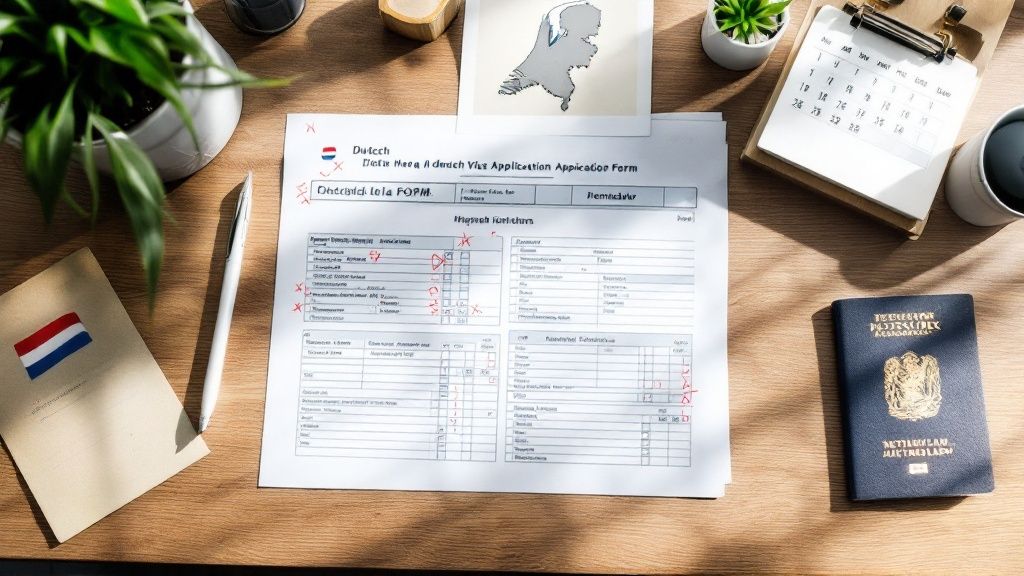
Embarking on the journey to secure a Dutch visa can feel like a complex puzzle. While the Netherlands welcomes visitors, students, and professionals, the application process is rigorous and leaves little room for error. A single misplaced document or a minor oversight can lead to frustrating delays, financial loss, and even outright rejection. Understanding the potential pitfalls is the first and most crucial step towards a successful application.
This guide is designed to illuminate the most frequent yet avoidable errors that applicants make. By dissecting these common mistakes when applying for a Dutch visa, you can significantly increase your chances of a smooth and timely approval, turning your Dutch ambitions into a reality. We will provide actionable advice and specific insights to help you prepare a flawless application package, covering everything from documentation and financial proof to timing and insurance.
Navigating the intricacies of Dutch immigration law can be challenging, especially for complex cases involving business, family, or employment. While this listicle provides a comprehensive overview of pitfalls to avoid, applicants facing unique circumstances often benefit from professional legal support. Specialised firms offer expert guidance to ensure every detail is meticulously managed, providing clarity and confidence throughout the process. Let's delve into the specific errors that can derail an otherwise strong application.
1. Submitting Incomplete or Incorrect Documentation
One of the most immediate and preventable common mistakes when applying for a Dutch visa is the submission of an application package with incomplete or incorrect documents. The Dutch Immigration and Naturalisation Service (IND) operates with meticulous precision. Any deviation from their stipulated requirements, no matter how minor it may seem, can lead to a straightforward rejection, causing significant delays and potential financial loss. This error is not just about forgetting a document, but also about the specifics of each paper you provide.
Each document must be current, correctly formatted, and officially recognised. For instance, a tourist visa applicant might submit bank statements that are four months old, when the requirement is strictly within the last three months. Similarly, a prospective student could neglect to include the specific proof of Dutch health insurance, a non-negotiable requirement for their stay. These small oversights can bring the entire application process to a halt.
Common Documentation Pitfalls
Here are specific examples of where applicants often go wrong:
-
Expired Documents: Submitting a passport with less than the required six months' validity or an expired birth certificate.
-
Incorrect Financial Proof: Providing bank statements that do not show a consistent income or sufficient funds as per the Dutch standard. For example, a large, recent deposit without explanation can raise red flags.
-
Missing Official Translations: Submitting documents like marriage or birth certificates in their original language without a certified translation into Dutch, English, French, or German, as required.
-
Inadequate Invitation Letters: A business visa applicant might present an invitation letter from a Dutch company that lacks crucial details, such as the purpose of the visit, duration of stay, or who is financially responsible for the trip.
How to Ensure Your Documentation is Flawless
To avoid this common pitfall, adopt a systematic and organised approach. Start by downloading the official, most current checklist from the IND website or the relevant Dutch embassy for your specific visa category.
Pro Tip: Create your own master checklist and physically tick off each item as you gather and verify it. Double-check validity dates, signature requirements, and whether originals or photocopies are needed. For complex applications, such as for entrepreneurs or highly skilled migrants, seeking advice from an immigration lawyer can be a crucial step to ensure every document perfectly aligns with the stringent Dutch legal standards.
2. Insufficient Financial Proof or Unclear Financial Documentation
Another frequent reason for visa refusal, and one of the most scrutinised common mistakes when applying for a Dutch visa, is the failure to provide clear and sufficient proof of financial means. The Dutch government needs unequivocal evidence that you can support yourself financially throughout your stay without becoming a burden on public funds. Simply having the required amount is not enough; the source and stability of these funds are equally important to immigration authorities.
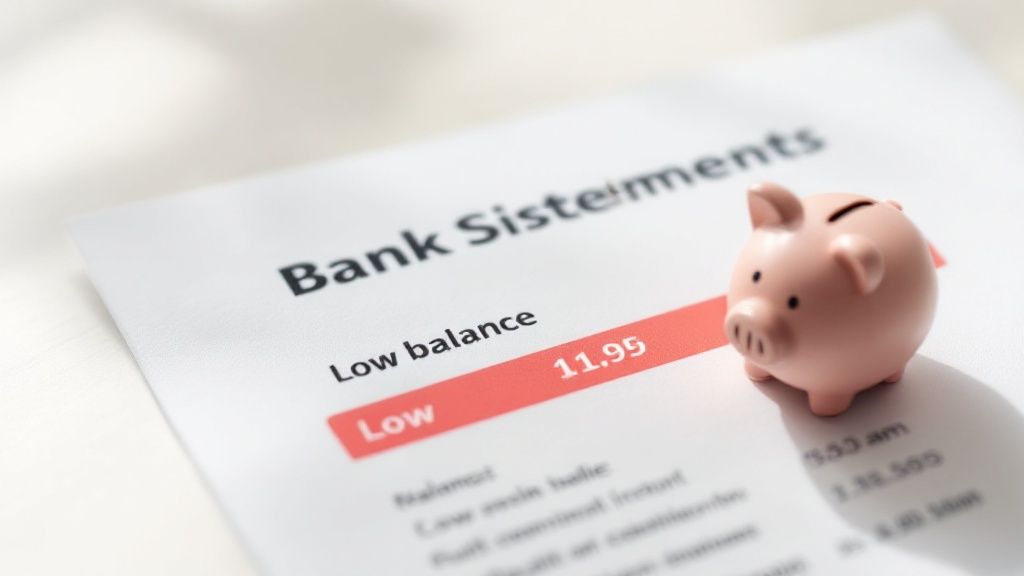
The IND assesses your financial situation to gauge its plausibility and consistency. A sudden, large deposit into your account just days before applying, for instance, raises immediate red flags about the legitimacy of the funds. They are looking for a stable financial pattern that logically supports your ability to cover your expenses, which include a minimum daily amount for living costs, accommodation, and a return ticket.
Common Financial Documentation Pitfalls
Here are specific financial errors that often lead to application rejection:
-
Sudden Large Deposits: A student visa applicant showing a bank account with a low balance for months, then a sudden deposit of €12,000 the week before applying, without any explanation.
-
Inconsistent Income: A tourist applicant providing bank statements that show erratic and irregular income, failing to demonstrate a stable financial situation that can support a holiday.
-
Insufficient Funds: Not meeting the specific minimum financial requirement. For short-stay visas, this is currently set at €55 per person per day.
-
Lack of Sponsor Clarity: If sponsored, failing to provide a clear, legally binding sponsorship declaration along with the sponsor's comprehensive financial documents.
How to Ensure Your Financial Proof is Solid
To avoid this mistake, transparency and consistency are key. Begin preparing your financial documents well in advance of your application to demonstrate stability over time.
Pro Tip: Maintain a stable and sufficient balance in your bank account for at least three to six months prior to your application. If you have any large, unusual deposits, attach a signed letter explaining their source, supported by evidence like a gift deed, loan agreement, or proof of asset sale. For a deeper dive into financial legalities, you can explore information about understanding financing and securities laws in the Netherlands. This ensures the case officer has a complete and credible picture of your financial standing.
3. Applying Too Late or Poor Timing Management
Underestimating the official processing timeline is another one of the most critical common mistakes when applying for a Dutch visa. Many applicants fail to realise that visa processing is not instantaneous. The Dutch authorities, including the IND and various embassies, have stipulated timeframes that can range from 15 calendar days for a standard Schengen visa to several months for long-stay permits. Applying too close to your intended travel date creates unnecessary stress and a high risk of having to cancel your plans.

This error is often compounded by external factors that can extend processing times, such as peak travel seasons (like summer or Christmas holidays), Dutch national holidays when administrative offices are closed, or an unexpected surge in applications. Forgetting to account for these variables can easily derail a well-planned trip or relocation, leading to forfeited flight tickets and accommodation bookings. The key is to treat the visa application as the very first step in your travel planning, not the last.
Common Timing Pitfalls
Here are specific scenarios where poor timing management leads to visa issues:
-
Last-Minute Tourist Applications: A tourist applying for a Schengen visa just two weeks before their planned summer holiday in August, failing to account for the high volume of applications and potential delays.
-
Ignoring Public Holidays: A business traveller submitting their application right before King's Day (27 April) or during the Christmas period, not realising that embassy and consulate closures will pause their application's progress.
-
Delayed Student Submissions: A prospective student waiting until late August to apply for their study visa, even though their university programme starts in the first week of September, leaving no buffer for processing.
-
Unrealistic Business Timelines: An entrepreneur planning to attend a conference in Amsterdam and applying only three weeks prior, underestimating the time needed for the authorities to verify the business invitation and purpose of the visit.
How to Ensure Your Application is Timely
To avoid the stress of a last-minute application, proactive planning is essential. As a rule of thumb, you should start the application process well in advance of your departure date. Check the official website of the Dutch embassy or consulate in your country for the most current processing time estimates for your specific visa type.
Pro Tip: Begin your application at least six to eight weeks before your intended travel date. Never book non-refundable flights or accommodation until your visa has been officially approved and is in your passport. For complex cases involving long-term residency or work permits, engaging with a professional can provide clarity on realistic timelines; find out how an immigration lawyer in Amsterdam can assist with strategic planning.
4. Inadequate Travel Insurance Coverage
A frequently overlooked yet critical error is providing travel insurance that fails to meet the strict Schengen Area requirements. This is one of the more subtle common mistakes when applying for a Dutch visa because applicants often assume any travel insurance policy will suffice. However, the Netherlands, as part of the Schengen zone, has non-negotiable criteria for insurance coverage that, if not met, will result in an automatic visa refusal. The issue isn't just about having insurance, but about the specific details and scope of the policy.

The policy must provide a minimum of €30,000 in medical coverage, be valid for the entire duration of the stay, and cover all Schengen member states. Furthermore, it must explicitly include costs for emergency medical repatriation, urgent medical attention, emergency hospital treatment, and repatriation of mortal remains. A standard policy from a home country provider might not include these specific clauses or meet the minimum financial threshold, leading to an immediate application problem.
Common Insurance Coverage Pitfalls
Here are specific examples of where applicants often get their insurance wrong:
-
Insufficient Coverage Amount: Purchasing a policy with only €20,000 of medical coverage when the mandatory minimum is €30,000.
-
Limited Geographical Scope: Submitting a policy that only covers the Netherlands but not the other 28 Schengen countries, even if the travel plan is limited to one country.
-
Missing Specific Benefits: Presenting insurance that lacks explicit clauses for emergency medical evacuation or repatriation of remains, both of which are mandatory.
-
Incorrect Validity Period: Buying insurance that expires on the exact day of the planned departure, rather than having a buffer period as is often recommended.
How to Ensure Your Insurance is Compliant
To avoid this mistake, you must obtain a policy letter or certificate that explicitly states it meets all Schengen visa requirements. Do not simply rely on a general policy summary. Carefully read the fine print before purchasing and ensure the document you submit clearly outlines all necessary coverage details.
Pro Tip: Many insurance companies offer plans specifically designed for Schengen visa applications. Opting for one of these is the safest route. When you receive the insurance certificate, highlight the sections that confirm the €30,000 coverage, Schengen-wide validity, and repatriation benefits to make it easy for the consular officer to verify compliance.
5. Poorly Written or Inconsistent Cover Letter/Purpose Statement
Your cover letter, or statement of purpose, is your direct communication with the visa officer. A poorly written or inconsistent letter is one of the more subjective but highly impactful common mistakes when applying for a Dutch visa. This document provides the narrative for your application, explaining why you wish to visit the Netherlands and why you will return home. If it is vague, contradictory, or unconvincing, it can cast serious doubt on your entire application, even if all other documents are in order.
The IND uses this letter to gauge your intentions and credibility. A tourist applicant who simply states "for tourism" without mentioning any specific destinations or planned activities appears disingenuous. Similarly, a business visitor whose letter fails to align with the details in the official invitation from a Dutch company creates immediate suspicion. The letter must be a clear, logical, and truthful summary of your trip that is perfectly consistent with all supporting evidence.
Common Cover Letter Pitfalls
Here are specific examples of how applicants' purpose statements can fail:
-
Vague Itineraries: A tourist visa applicant writing "I want to see the Netherlands" instead of providing a day-by-day plan, including booked accommodations and cities they will visit.
-
Contradictory Information: A student's purpose statement claims they will be funded by their parents, but the submitted bank statements belong to an uncle without a formal sponsorship letter.
-
Weak Ties to Home Country: Failing to convincingly explain your social, economic, or familial reasons for returning home, such as a stable job, property ownership, or close family dependents.
-
Mismatched Business Aims: A business visa letter that mentions exploring general market opportunities, while the invitation letter specifies attendance at a particular conference on fixed dates.
How to Ensure Your Cover Letter is Flawless
To write a compelling and effective cover letter, be specific, honest, and organised. Your goal is to paint a clear and trustworthy picture of your visit. Start by outlining your trip's purpose, followed by a logical itinerary and a clear explanation of your financial arrangements.
Pro Tip: Structure your letter chronologically. Start with your intended arrival and departure dates, detail your planned activities or meetings for each day or week, explain how your trip is financed, and conclude by strongly stating your reasons for returning to your home country. Always proofread to ensure it aligns perfectly with your flight bookings, hotel reservations, and financial documents.
6. Incorrect Visa Type Selection
A fundamental yet surprisingly frequent error is choosing the wrong visa category for your intended purpose of travel. This is one of the most critical common mistakes when applying for a Dutch visa because it indicates a misunderstanding of immigration regulations and can lead to an immediate rejection. The Dutch government offers a diverse range of visas, each tailored to a specific activity, from tourism and business to study and family reunification. Applying for the wrong one suggests your stated intentions may not align with your actual plans.
This mistake often stems from a superficial assessment of the application requirements. For example, an applicant planning to attend a series of client meetings and negotiate contracts might incorrectly apply for a tourist visa, believing it's simpler. However, this constitutes business activity, requiring a specific Schengen business visa. This misalignment will almost certainly be flagged by consular officers, causing your application to be denied on fundamental grounds.
Common Visa Category Pitfalls
Here are specific examples of how applicants select the incorrect visa type:
-
Business vs. Tourism: Applying for a tourist visa when the primary purpose is to attend business meetings, sign contracts, or undertake work-related training.
-
Study vs. Short-Stay: Choosing a short-stay Schengen visa for a study programme that lasts longer than 90 days, instead of applying for the required long-stay visa (MVV) and residence permit.
-
Conference Attendance: Selecting a generic business visa for attending a purely academic conference, when a specific "cultural/scientific events" category might be more appropriate depending on the circumstances.
-
Family Visit vs. Partnership: Applying for a family visit visa to see a partner with the underlying intention of staying long-term, instead of initiating the correct procedure for a partner or spouse residence permit.
How to Ensure You Select the Correct Visa
To avoid this crucial error, you must precisely match your travel purpose to the correct visa category. Start by thoroughly researching the different visa types available on the official website of the Dutch Immigration and Naturalisation Service (IND) or the Dutch embassy in your country.
Pro Tip: If your trip involves multiple activities (e.g., tourism and a short business meeting), your application should be for the visa category that represents the primary purpose of your stay. Clearly outline your entire itinerary in your application to provide full transparency to the visa officer. For complex cases, such as blended work-study programmes, consulting with an immigration specialist is highly recommended to ensure you choose the correct pathway from the start.
7. Providing False or Misleading Information
Among all the potential common mistakes when applying for a Dutch visa, deliberately providing false information or attempting to conceal relevant details is arguably the most severe. The IND and Dutch authorities operate on a principle of trust, and any attempt to breach that trust through misrepresentation is treated with extreme seriousness. This goes beyond simple errors; it involves intentionally misleading immigration officials about crucial aspects of your application, which can have devastating and long-lasting consequences.
This mistake is not limited to fabricating documents. It also includes the omission of critical information. For example, failing to disclose a previous visa refusal from another Schengen country, concealing a minor criminal record, or misrepresenting the nature of a relationship for a family visa are all forms of deception. The authorities have sophisticated systems to cross-reference data, and discovery is highly likely. The result is not just a visa refusal but can include a multi-year ban from entering the entire Schengen Area.
Common Documentation Pitfalls
Here are specific examples of how applicants provide misleading information:
-
Hiding Previous Rejections: Neglecting to mention a prior visa denial from any Schengen country, hoping it will not be discovered.
-
Fabricated Financial or Employment Proof: Submitting counterfeit bank statements, fake employment letters, or falsified payslips to meet financial requirements.
-
Concealing Criminal History: Failing to declare past criminal convictions, no matter how minor or how long ago they occurred.
-
Misrepresenting Relationships: Claiming a partnership or marriage is genuine for immigration purposes when it is not, or faking a family connection.
How to Ensure Your Documentation is Flawless
The guiding principle is absolute honesty. Transparency is always the best policy, even when you believe a part of your history might weaken your application. It is far better to address a potential issue head-on than to be caught in a lie.
Pro Tip: If you have a complex situation, such as a previous visa denial or a minor legal issue, address it proactively in a cover letter. Explain the circumstances clearly and honestly. This demonstrates integrity and is viewed far more favourably than concealment. For issues involving potential fraud, understanding the Dutch legal approach to financial crime can provide crucial context. Always seek legal counsel if you are unsure how to present sensitive information.
8. Failing to Demonstrate Strong Ties to Home Country
A crucial aspect often overlooked by applicants is proving their intention to return home. This is one of the most significant common mistakes when applying for a Dutch visa and a frequent reason for rejection. Dutch immigration authorities need assurance that you will not overstay your visa. They assess this by looking for compelling evidence of economic, social, and family ties that bind you to your country of residence, making your return a logical and necessary step.
Simply stating your plan to return is insufficient. The burden of proof lies with you to provide tangible evidence of your commitments back home. An application from a recent graduate with no job, limited financial assets, and no immediate family responsibilities, for example, may raise concerns about their incentive to leave the Netherlands after their visa expires.
Common Pitfalls in Demonstrating Ties
Here are specific examples of weak or missing evidence that can lead to a visa refusal:
-
Vague Employment Status: Submitting a letter from an employer that doesn't confirm your position, salary, and approved leave for the trip, or being recently unemployed without clear future prospects.
-
Limited Financial Assets: Having minimal savings or no significant assets like property or investments in your home country, suggesting a lack of economic stability.
-
Weak Family Connections: Being single with no dependents or failing to provide evidence of responsibility for elderly parents or other family members.
-
No Ongoing Commitments: Lacking proof of ongoing studies, professional training courses, or other long-term obligations that require your return.
How to Effectively Prove Your Ties to Home
To build a strong case, you must present a comprehensive picture of your life and responsibilities at home. Focus on providing clear, verifiable documentation that supports your claims.
Pro Tip: Think like a visa officer. Compile a portfolio that answers the question: "What compelling reasons does this person have to return home?" Include documents like a detailed employment contract, property deeds or rental agreements, evidence of investments, and letters confirming family responsibilities or enrolment in a future educational course. This proactive approach demonstrates your stable situation and genuine intent.
Common Dutch Visa Application Mistakes Comparison
|
Issue |
Implementation Complexity |
Resource Requirements |
Expected Outcomes |
Ideal Use Cases |
Key Advantages |
|---|---|---|---|---|---|
|
Submitting Incomplete or Incorrect Documentation |
Low to moderate (following checklist) |
Moderate (document gathering, translation) |
High risk of rejection and delays |
All visa applicants |
Clear guidelines reduce rejection risk |
|
Insufficient Financial Proof or Unclear Financial Documentation |
Moderate (maintaining consistent records) |
High (documenting funds, explanations) |
Frequent rejections due to inadequate proof |
Applicants needing financial verification |
Demonstrates financial stability |
|
Applying Too Late or Poor Timing Management |
Low (planning ahead) |
Low (time management) |
Possible missed travel and rush fees |
Time-sensitive travelers |
Reduces stress and avoids expedited costs |
|
Inadequate Travel Insurance Coverage |
Low to moderate (selecting correct policy) |
Low to moderate (purchasing insurance) |
Automatic rejection if insufficient |
All visa types requiring insurance |
Ensures compliance with Schengen requirements |
|
Poorly Written or Inconsistent Cover Letter/Purpose Statement |
Moderate (drafting and reviewing letter) |
Low (time and effort for writing) |
Increased scrutiny, possible rejection |
Applicants needing to explain purpose |
Clarifies travel intent, strengthens application |
|
Incorrect Visa Type Selection |
Low (research required) |
Low (information gathering) |
Guaranteed rejection if mismatched |
Applicants unsure of visa categories |
Ensures appropriate visa processing |
|
Providing False or Misleading Information |
High (avoidance requires honesty and diligence) |
Low (truthful documentation) |
Permanent bans, legal consequences |
All applicants |
Integrity protects future visa eligibility |
|
Failing to Demonstrate Strong Ties to Home Country |
Moderate (collecting proof of ties) |
Moderate (documents, evidence collection) |
High rejection risk due to immigration concerns |
Applicants with weak connections |
Shows intent to return, improving approval chances |
Your Next Steps to a Successful Dutch Visa Application
Navigating the Dutch visa application process can feel like a high-stakes examination, but with the right preparation, it is a test you can pass with confidence. This article has detailed the most frequent missteps applicants make, from submitting incomplete documentation and unclear financial proof to poor timing and selecting the incorrect visa category. Understanding these common mistakes when applying for a Dutch visa is the first, most crucial step toward avoiding them.
The journey to a successful application is built on a foundation of meticulous planning and unwavering attention to detail. The recurring themes across all the pitfalls we've discussed are consistency, honesty, and clarity. Your application is not just a collection of papers; it is a narrative that must convincingly tell the story of your intended visit to the Netherlands and your firm intention to return home.
Creating Your Application Blueprint
To transform these insights into a successful outcome, it's time to build your action plan. Think of your visa application as a major project that requires careful management from start to finish.
Here are your immediate next steps:
-
Build a Master Checklist: Go beyond the official list. Create your own detailed checklist that includes every document, every piece of information, and every deadline. Note the specifics for each item, such as required translation, notarisation, or specific formatting for financial statements.
-
Establish a Clear Timeline: Work backwards from your intended travel date. Allocate specific weeks for gathering documents, scheduling appointments, writing your cover letter, and a final review. This prevents the last-minute panic that leads to careless errors.
-
Conduct a Consistency Audit: Before you submit anything, review your entire application package. Does your cover letter's stated purpose align perfectly with your flight bookings, hotel reservations, and the visa type you've chosen? Is your name spelt identically across all documents? Small inconsistencies can raise big red flags.
Key Takeaway: The strongest applications are those that leave no room for questions or ambiguity. Your goal is to provide visa officials with a clear, logical, and fully supported case that is easy to approve.
From Preparation to Success
Ultimately, avoiding these common mistakes involves treating the process with the seriousness it deserves. The principles of diligent research, organization, and clear communication are universal. Beyond understanding the common pitfalls, success often comes from thorough preparation. For a deeper dive into organizing complex submissions, you might consider reviewing these essential preparation tips for complex applications. This mindset of rigorous self-auditing and proactive planning is your greatest asset.
Remember, the Dutch immigration authorities are not looking for reasons to reject you; they are looking for reasons to approve a legitimate and well-prepared applicant. By presenting a transparent, thorough, and honest application, you demonstrate respect for the process and position yourself as a credible visitor. With this strategic approach, you are well on your way to securing your visa and starting your Dutch journey.
For personalized assistance with your application, consider reaching out to Law & More for expert guidance and support.