In the realm of Dutch criminal law, few definitions carry as much weight regarding sentencing and legal consequences as “zwaar lichamelijk letsel” or serious bodily injury. The distinction between simple assault (mishandeling) and severe assault (zware mishandeling) often hinges entirely on how the court qualifies the resulting injury. This qualification is not merely a matter of semantics; it fundamentally alters the legal trajectory of a case, significantly increasing the maximum potential prison sentence and changing the burden of proof required from the prosecution. For legal professionals, defendants, and victims alike, understanding the nuances of this legal concept is essential for navigating the complexities of the Dutch justice system.
The determination of whether an injury qualifies as “serious” is rarely straightforward. While the Dutch Penal Code provides a foundation, it leaves significant room for judicial interpretation. This discretion allows the law to adapt to specific medical contexts and factual circumstances, but it also introduces a degree of complexity that requires careful legal analysis. This article provides a comprehensive examination of the legal framework surrounding serious bodily injury, the evolving jurisprudence of the Supreme Court (Hoge Raad), and the critical role of medical evidence in these proceedings.
The Legal Framework: Article 82 and Article 302 Sr
The statutory basis for understanding serious bodily injury is found in Article 82 of the Dutch Penal Code (Wetboek van Strafrecht or Sr). This article attempts to define the concept, yet it does so in a manner that is explicitly non-exhaustive. According to Article 82 Sr, serious bodily injury includes illness that leaves no prospect of complete recovery, permanent inability to perform official or professional duties, the loss or death of a fetus, and a disturbance of the intellectual faculties that has lasted longer than four weeks.
It is crucial to understand that Article 82 Sr does not provide a closed definition. The legislature intended to provide examples of injuries that must always be considered serious, but they did not intend to limit the judiciary to these specific scenarios alone. This open-ended approach is vital when applying the law to offenses such as Article 302 Sr, which criminalizes “zware mishandeling” (severe assault). Under Article 302 Sr, a person who intentionally inflicts serious bodily injury on another faces significantly harsher penalties than one charged with simple assault. Consequently, the interpretation of Article 82 Sr becomes the pivot point upon which the severity of the charge rests.
The judiciary has clarified that the examples listed in Article 82 Sr are illustrative rather than restrictive. This means that an injury not explicitly mentioned in the article can still be classified as serious bodily injury if the facts and circumstances warrant it. The Supreme Court has consistently held that the judge possesses the discretion to classify other forms of injury as “serious,” provided that such a classification aligns with common parlance and the general understanding of what constitutes severe physical harm.
Judicial Assessment of Physical Injury
Since Article 82 Sr is not a checklist, the courts have developed a set of criteria to determine when a physical injury crosses the threshold into “zwaar lichamelijk letsel.” The Hoge Raad has established that judges must look at the specific circumstances of the case, focusing primarily on the nature of the injury, the necessity and complexity of medical intervention, and the prospects for recovery. This factual assessment allows the court to distinguish between injuries that are merely painful or temporarily debilitating and those that constitute a fundamental violation of physical integrity.
The Supreme Court ruling in ECLI:NL:HR:2018:1051 is instrumental in understanding this discretionary power. In this judgment, the Court reaffirmed that while Article 82 Sr provides guidance, the judge is free to designate an injury as serious based on the overarching medical picture. However, this freedom is not unlimited; the judge must motivate their decision adequately, especially when the injury does not fall neatly into the statutory examples. The test often effectively becomes whether the injury is sufficiently substantial in terms of medical impact and recovery time to be termed “serious” in normal speech.
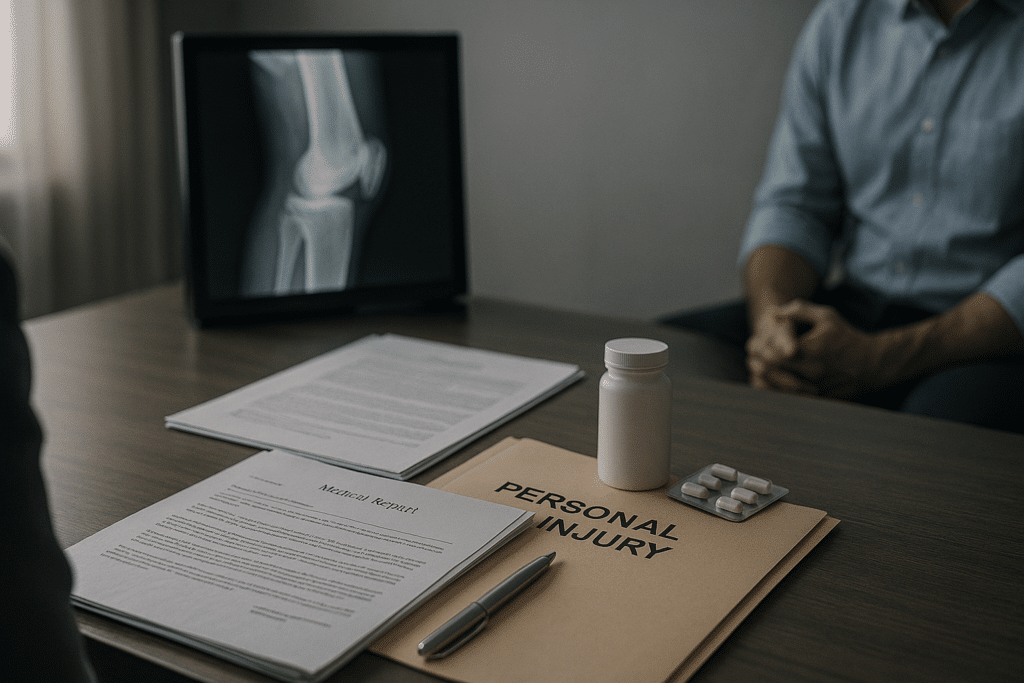
A practical application of these criteria can be seen in cases involving bone fractures. A simple fracture that heals with a cast might not qualify as serious bodily injury. However, the jurisprudence suggests a different outcome when surgery is required. As illustrated in ECLI:NL:HR:2022:571, a fracture that necessitates operative intervention of a certain severity is generally regarded as serious bodily injury. In this context, the invasiveness of the medical treatment serves as a proxy for the severity of the injury itself. If a victim requires surgery, plates, or screws to repair a broken jaw or limb, the court is highly likely to accept the qualification of serious injury, distinguishing it from a “simple” break that heals naturally.
Furthermore, the loss of function plays a significant role in this assessment. Injuries that result in the loss of a sense, such as hearing or sight, or result in permanent disfigurement or paralysis, are standardly accepted as serious. Recent case law, such as ECLI:NL:HR:2025:1493, confirms that the permanent loss of the use of a sensory organ constitutes serious bodily injury. In such cases, the permanence of the damage weighs heavily in the court’s assessment, aligning with the clause in Article 82 Sr regarding illness with no prospect of complete recovery.
Psychological Injury in Criminal Law
The definition of serious bodily injury is not limited to physical harm; it also extends to mental health. However, the threshold for proving “psychisch letsel strafrecht” (psychological injury in criminal law) is significantly higher and more rigidly defined than for physical injuries. Article 82, paragraph 4 Sr specifically mentions a “disturbance of the intellectual faculties that has lasted longer than four weeks.” This statutory requirement creates a strict temporal and qualitative barrier for the prosecution.
The Supreme Court has adopted a restrictive interpretation regarding psychological injury. As seen in the landmark ruling ECLI:NL:HR:2013:BX9407, purely subjective feelings of distress, anxiety, or emotional pain, no matter how intense, do not automatically qualify as serious bodily injury. The law requires an objective, clinical determination of a disturbance in mental faculties. This generally implies a recognized psychiatric disorder, such as Post-Traumatic Stress Disorder (PTSD), that significantly impairs the victim’s functioning.
Crucially, the “four-week” criterion is a hard legal limit. A disturbance that resolves within a few weeks, or a temporary acute stress reaction, will not suffice for a conviction under Article 302 Sr regarding psychological injury. The prosecution must demonstrate that the mental impact was not only severe but also enduring. This distinction safeguards defendants from being convicted of severe assault based solely on the victim’s emotional reaction, requiring instead a demonstrable, lingering medical condition.
The Crucial Role of Medical Evidence
Given the complexity of defining serious injury, the role of medical evidence in these proceedings cannot be overstated. Judges are legal experts, not medical professionals, and therefore they rely heavily on expert reports to form their convictions. Under Article 338 of the Dutch Code of Criminal Procedure (Sv), a judge may only convict if they are convinced of the defendant’s guilt through lawful means of evidence. In cases of severe assault, medical reports are the primary vehicle for establishing the objective reality of the injury.
A “Geneeskundige Verklaring” (medical statement) or a forensic report typically outlines the nature of the injury, the required treatment, and the prognosis. Without this objective documentation, proving serious bodily injury is exceptionally difficult. The prosecution (Public Prosecution Service) bears the burden of providing this evidence. If the dossier contains only the victim’s statement regarding their pain or suffering without corroborating medical data, the court may find it impossible to legally qualify the injury as “serious.”
This reliance on medical expertise is particularly acute in cases involving psychological injury. As emphasized in strict jurisprudence, the existence of a mental disturbance must be established according to objective standards. This almost invariably requires a report from a qualified psychiatrist or psychologist. A general practitioner’s note mentioning “stress” is rarely sufficient to meet the high bar set by Article 82 Sr. The defense often focuses on the quality and conclusiveness of these reports, knowing that a gap in medical evidence can lead to a downgrade in charges.
Defense Strategies and the Burden of Proof
For the defense, the qualification of the injury is a primary battleground. If a lawyer can successfully argue that the injury does not meet the legal standard for “zwaar lichamelijk letsel,” the charge of severe assault (Article 302 Sr) cannot stand. The defendant might still be convicted of simple assault (Article 300 Sr), but the maximum sentencing exposure is drastically reduced.
A common defense strategy involves challenging the “necessity” of medical intervention or the “permanence” of the injury. For example, regarding a broken nose or jaw, the defense might argue that while the injury was painful, it did not require significant surgery and healed without lasting complications, citing case law where similar injuries were deemed insufficient for Article 302 Sr.
Furthermore, regarding psychological injury, the defense will scrutinize whether the four-week duration has been objectively proven. They may argue that the victim’s symptoms, while regrettable, constitute normal emotional processing of a traumatic event rather than a clinical disturbance of intellectual faculties. In the absence of a thorough expert report confirming a diagnosis and its duration, the defense can effectively argue for acquittal on the primary charge of severe assault due to a lack of legal evidence.
Practical Implications for Victims and Defendants
The distinction between serious and non-serious injury has profound practical implications for all parties involved in the criminal process. For the defendant, it is the difference between a charge that carries a maximum sentence of three or four years (simple assault) versus eight years or more (severe assault), depending on aggravating circumstances. A conviction for causing serious bodily injury also results in a much more severe criminal record, affecting future employment prospects and social standing.
For the victim, the qualification of the injury affects their position in the criminal trial, particularly regarding claims for compensation. Establishing serious bodily injury often validates the severity of their suffering and can substantiate higher claims for pain and suffering (smartengeld). It also underscores the gravity of the offense, which can be an important aspect of recognition and justice for the victim. However, victims must be aware that the burden lies on the prosecution to medically substantiate these injuries; subjective experience alone is insufficient for the strict requirements of criminal law.
Conclusion
The concept of “zwaar lichamelijk letsel” is a dynamic and fact-dependent element of Dutch criminal law. While Article 82 Sr provides the statutory skeleton, the body of the law is fleshed out by the discretionary power of the judiciary and the specific circumstances of each case. The Supreme Court has made it clear that while the definition is open, it is not boundless. It requires a tangible severity—evident in surgical necessity, loss of function, or enduring mental disturbance—to cross the legal threshold.
For legal practitioners, the takeaway is the absolute necessity of rigorous medical substantiation. Whether prosecuting or defending, the outcome often rests on the ability to translate medical facts into the legal criteria established by the Supreme Court. As medical science evolves and societal standards shift, the interpretation of serious injury will likely continue to develop, but the core requirement for objective, demonstrable severity remains the cornerstone of this legal doctrine.
Frequently Asked Questions
What role do medical reports play in proving serious bodily injury?
Medical reports are essential. The judge cannot determine the severity of an injury based solely on layman’s observation or the victim’s testimony. Objective medical data regarding the nature of the injury, the necessity of surgery, and the recovery prognosis are required to legally qualify an injury as “serious” under Article 82 Sr.
Can a defendant argue that the injury was not “serious” to avoid a heavy sentence?
Yes, this is a common and effective defense strategy. If the defense can prove that the injury does not meet the strict legal criteria for “serious bodily injury”—for example, because it healed quickly without complex surgery—the court may acquit the defendant of severe assault (Article 302 Sr) and convict them of the lesser charge of simple assault.
Does psychological trauma count as serious bodily injury?
Yes, but only under strict conditions. According to Article 82 Sr and Supreme Court jurisprudence (such as ECLI:NL:HR:2013:BX9407), psychological injury qualifies only if it involves a disturbance of intellectual faculties lasting longer than four weeks. This must be objectively diagnosed by an expert; temporary stress or emotional distress is insufficient.
Is a broken bone always considered serious bodily injury?
Not always. While many fractures are considered serious, particularly those requiring surgery or resulting in long-term loss of function, a simple fracture that heals without significant medical intervention might not reach the threshold. The court assesses this on a case-by-case basis (ECLI:NL:HR:2022:571).