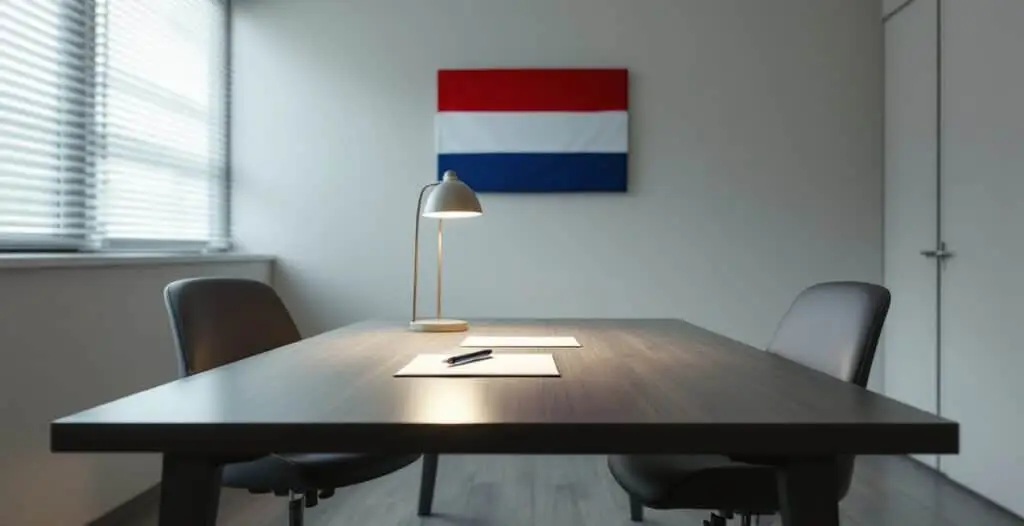
In a Dutch police interview, your rights depend on whether you are questioned as a suspect or as a witness. A suspect is not obliged to answer and must be told so before the interview (Article 29 of the Dutch Code of Criminal Procedure, Sv), and may consult a lawyer beforehand and have the lawyer present. A witness is not obliged to give a statement to the police; the duty to appear and testify applies before the examining magistrate (rechter-commissaris).
So the first thing to establish is in which capacity you are being questioned. If the police do not say, ask; the answer determines what you should do next.
Table of contents
Are you a suspect or a witness?
Under Article 27 Sv you are a suspect if facts or circumstances give rise to a reasonable suspicion that you committed an offence. Under Article 27c Sv you must be told which offence you are suspected of, at the latest before your first interview.
A witness who is summoned must appear before the examining magistrate (Article 213 Sv) and, under oath, tell the whole truth (Article 215 Sv). A statement to the police is different: there is no general duty for a witness to give one. If you are invited as a witness but the questions suggest you are a suspect, stop and ask about your status.
What rights do you have as a suspect?

The right to remain silent
Under Article 29(2) Sv a suspect is not obliged to answer, and the caution must be given before the interview and recorded in the official report. You may answer some questions and not others. Your choice to stay silent is a strategic decision best made with your lawyer, because it can influence how the investigation develops.
Before questioning, your identity is established: you are asked for your name, place and date of birth and address, and your identity document is examined (Article 27a Sv). This is separate from questions about the offence.
The right to a lawyer
Every suspect has the right to be assisted by a lawyer (Article 28 Sv). An arrested suspect may consult a lawyer before the first interview, in principle for up to 30 minutes, which can be extended by up to another 30 minutes (Article 28c Sv). At your request, your lawyer may attend and take part in the interview, both if you were arrested and if you were invited to come in for questioning (Article 28d Sv).
If you are arrested for an offence for which pre-trial detention is allowed and you want a lawyer, the police notify the Legal Aid Board (Raad voor Rechtsbijstand), which assigns a lawyer (Article 28b Sv). Vulnerable suspects and suspects arrested for offences carrying 12 years or more can only waive the pre-interview consultation after a lawyer has explained the consequences (Article 28c(2) Sv).
What happens during the interview?

Usually two officers conduct the interview: one asks the questions, the other records them. The interview often starts with open questions and moves on to specific details and evidence. Under Article 29(1) Sv officers may not do anything aimed at obtaining a statement that is not given freely.
Listen to each question, ask for clarification if it is unclear, and answer only what you know. “I don’t know” or “I don’t remember” is a legitimate answer when it is true. Your lawyer can ask for the interview to be interrupted for consultation.
How do you check your statement?

Under Article 29a Sv your statement is recorded in the official report (proces-verbaal) as much as possible in your own words and in question-and-answer form. The report also records when the interview started, was interrupted and ended, and who was present.
You, and your lawyer if present, may comment on how the interview is recorded. Comments that are not adopted are noted in the report. You only sign if you agree with how your statement is recorded; this document is often the basis for the rest of the case.
What happens after the interview?
After the interview the police may release you, hold you longer for investigation, or the public prosecutor may decide on further steps. A suspect held in police custody must be brought before the examining magistrate within three days and eighteen hours after arrest (Article 59a Sv).
The Public Prosecution Service (Openbaar Ministerie) then decides whether to prosecute, settle the case or drop it. Keep a record of all documents you receive and discuss each step with your lawyer.
What should you check as a suspect?
- Ask which offence you are suspected of before answering questions.
- Ask for a lawyer before the first interview and decide with your lawyer whether to answer.
- Ask for your lawyer to attend the interview (Article 28d Sv).
- Read the official report of your statement carefully and comment on errors before signing.
- Keep copies of all documents you receive from the police and the Public Prosecution Service.
What should you check as a witness?
- Ask whether you are being heard as a witness or as a suspect.
- Remember that you are not obliged to give a statement to the police.
- Stop and ask for a lawyer if the questions start to focus on your own role.
- If summoned by the examining magistrate, appear: that is an obligation (Article 213 Sv).
- Read and check the report of your statement before signing.
What can we do for you with a police interview?
Our criminal lawyers assist suspects and witnesses before, during and after police questioning.
- We prepare you for the interview and advise whether to answer or remain silent.
- We attend the police interview and ask for interruptions where needed.
- We review the official report of your statement with you.
- We request the case documents and assess the evidence.
- We assist you before the examining magistrate and in further proceedings.
Summary
- Find out first whether you are questioned as a suspect or as a witness.
- A suspect is not obliged to answer (Article 29 Sv) and may consult a lawyer before and during the interview (Articles 28c and 28d Sv).
- A witness has no duty to give a statement to the police, but must appear before the examining magistrate when summoned.
- Your statement is recorded in your own words as far as possible; comment on errors before you sign (Article 29a Sv).
Frequently asked questions
Will I be told why I am being questioned?
Yes. Under Article 27c Sv a suspect must be told which offence he is suspected of, at the latest before the first interview.
Do I have to answer every question?
No. A suspect is not obliged to answer (Article 29 Sv), and the police must tell you this before the interview starts. You may answer some questions and not others.
Can I have a lawyer before and during the interview?
Yes. An arrested suspect may consult a lawyer before the first interview (Article 28c Sv), and at your request a lawyer may attend and take part in the interview (Article 28d Sv), also if you were invited to come in.
Do I have to sign my statement?
Only if you agree with how it is recorded. You and your lawyer may comment on the report, and comments that are not adopted are noted in it (Article 29a Sv).