
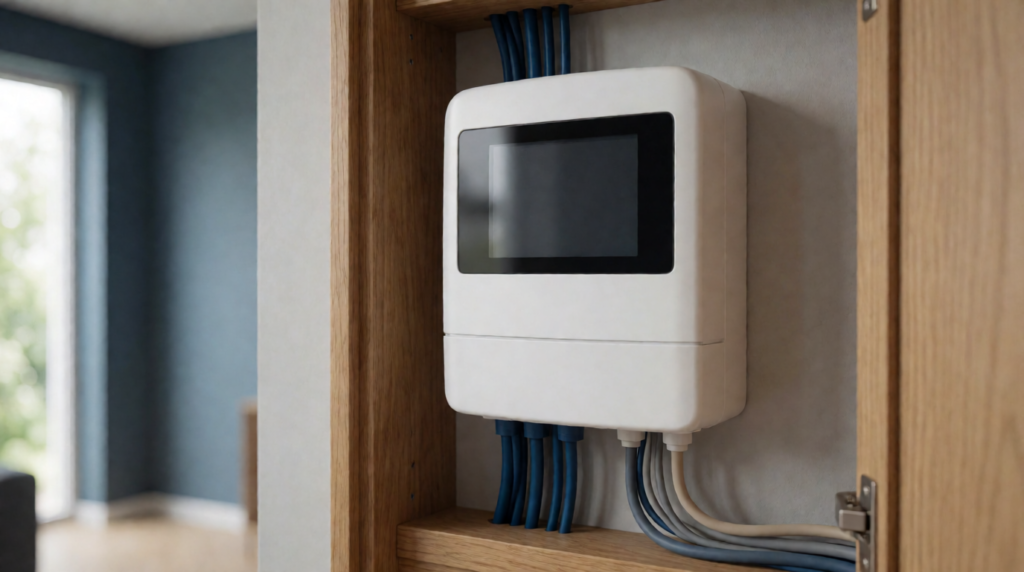
The smart meter is the remotely readable metering device the grid operator installs at small consumers. It allows shorter measurement intervals and is the precondition for dynamic contracts and for insight into one’s own consumption.
Table of contents
Legal basis
The Energy Act, in force since 1 January 2026, obliges the grid operator to provide and manage the metering device, implementing Directive (EU) 2019/944, which requires final customers to have access to their consumption data and, on request, to a dynamic contract. The customer is not obliged to accept the smart meter: they may refuse the offer, leaving a conventional meter in place, or have the meter switched off administratively so that no data are read remotely. The GDPR applies in full to the processing of metering data: these are personal data and may be used only for the purposes for which they were collected, with a statutory limit on reading frequency. By default the grid operator may only take the readings needed for billing, and more detailed data only with consent.
How it works in practice
For households with solar panels and for anyone considering a dynamic contract, the smart meter is in practice essential, particularly with net metering ending on 1 January 2027. Refusal remains possible but may attract a higher metering tariff and limits the choice of contracts. Business connections are subject to different rules and allow a metering company of the customer’s choosing.
Where it goes wrong
Customers believe installation is compulsory and do not know that refusal or administrative switch-off is possible. A second problem is incorrect registration of feed-in, which produces a wrong bill. Third, detailed consumption data are shared with third parties without clear consent.
Related terms
The meter connects to the grid operator, the net metering scheme and data subject rights under the GDPR.
Is your bill wrong? Our energy lawyers assess the metering data and the contract.




