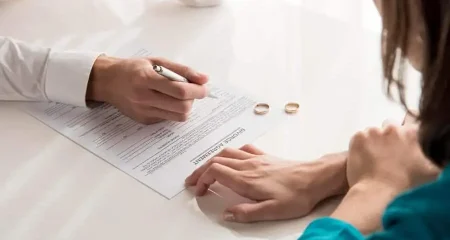
In the Netherlands, a divorce is granted on a single ground: the marriage has irretrievably broken down. The real work lies in the arrangements for children, maintenance, property and pensions, and mediation is often the quickest way to agree on them, unless there is violence or a serious imbalance of power between you.

How is a divorce granted in the Netherlands?
The court grants the divorce if the marriage has irretrievably broken down (duurzame ontwrichting) under Article 1:151 of the Dutch Civil Code (Burgerlijk Wetboek, BW). The court rarely questions this ground; disputes are almost always about the consequences.
You can file a joint request (gemeenschappelijk verzoek) together with your spouse, or one of you can file a unilateral request (eenzijdig verzoek). In both cases, a lawyer must file the request with the district court. With a joint request, one lawyer can act for both of you. The text of the relevant provisions is available on wetten.overheid.nl.
The divorce only takes effect once the decision has been registered in the civil registry (Basisregistratie Personen). Under Article 1:163 BW, this must happen within six months after the decision has become final. If the registration is not made in time, the decision lapses and the marriage continues.
What do you need to arrange?
Apart from the divorce itself, you need arrangements on the children, maintenance, the division of property and pensions. Each is decided on its own criteria.
Children and the parenting plan
If you have minor children, you must submit a parenting plan (ouderschapsplan) with the divorce request. It covers where the children live, how care and upbringing are shared, how you exchange information and how the costs are divided. Joint parental authority normally continues after the divorce.
Maintenance
Child maintenance (kinderalimentatie) is based on the needs of the child and the capacity of each parent to pay. Spousal maintenance (partneralimentatie) is limited by law. Under Article 1:157 BW, it runs for half the length of the marriage, with a maximum of five years, subject to exceptions for long marriages and for parents of young children.
Property and pensions
What is divided depends on your matrimonial property regime. Couples who married on or after 1 January 2018 without a prenuptial agreement (huwelijkse voorwaarden) have a limited community of property; earlier marriages usually have a full community. Under the Pension Rights Equalisation (Divorce) Act (Wet verevening pensioenrechten bij scheiding), each spouse is in principle entitled to half of the old-age pension the other accrued during the marriage, unless you agree otherwise. You must report the divorce to the pension fund within two years.
If one of you has a business, the valuation and division can be complex. In that case, involve a lawyer who advises on business interests at an early stage.

What does divorce mediation involve?
In mediation, a neutral mediator helps you and your spouse reach agreement on all the arrangements. The mediator does not decide anything; you decide together.
You start by signing a mediation agreement, which includes confidentiality. You then discuss the issues in a series of sessions: the children, maintenance, the house, savings, debts and pensions. The agreements are recorded in a divorce settlement (echtscheidingsconvenant) and, if you have children, a parenting plan. A lawyer then files a joint request, and the court usually includes the agreements in its decision.
Mediation is voluntary. Either of you can stop at any time, and a court can refer you to a mediator during proceedings, but cannot force you to agree. The mediation agreement usually provides that what is said in the sessions may not be used in later court proceedings.
How does mediation compare with court proceedings?
Mediation gives you more control over the outcome and the pace, and it is usually less costly than contested proceedings. Court proceedings give you a binding decision when agreement is not possible.
In contested proceedings, each spouse has a lawyer and the court decides the points you cannot agree on. That often takes longer and increases the costs, which reduces what there is to divide. It can also harden positions, which matters if you will be raising children together for years to come.
Privacy is less of a difference than people think. In the Netherlands, family cases are heard behind closed doors, and published judgments are anonymised; mediation adds confidentiality between the two of you.

When is mediation not suitable?
Mediation depends on two people who can negotiate on equal terms. If that is not the case, court proceedings with a lawyer on each side offer more protection.
That applies in cases of domestic violence, serious intimidation, addiction or a large imbalance of power. It also applies if one spouse hides income or assets. A divorce settlement concluded on incomplete information can be challenged later. For example, under Article 3:196 BW a division of property can be annulled if a spouse was disadvantaged by more than a quarter of the value of his or her share. That is exactly the kind of dispute you want to avoid by getting the financial picture complete at the start.
How do you choose a mediator?
Look for a mediator with experience in family mediation, preferably registered with the Dutch Mediators Federation (Mediatorsfederatie Nederland, MfN). Also consider the language: discussing complex arrangements in a language you both understand well avoids misunderstandings.
Some mediators are lawyers, others have a background in psychology or social work. Ask how the mediator deals with the legal and financial questions, such as pensions or the valuation of a business. If your income is low, you may qualify for subsidised mediation through the Legal Aid Board (Raad voor Rechtsbijstand).

What should you check as the spouse who earns more?
The spouse with the higher income usually pays maintenance and often holds the larger pension. Check these points:
- Your net disposable income is calculated correctly, because it caps the maintenance you can be ordered to pay.
- The duration of spousal maintenance follows Article 1:157 BW: half the length of the marriage, up to five years, unless an exception applies.
- A business you own is valued with documents both of you accept, before the division is agreed.
- The pension division is reported to the pension fund within two years of the divorce.
What should you check as the spouse who earns less?
The spouse with the lower income depends most on complete financial information. Check these points:
- You have salary slips, bank statements, mortgage and pension overviews and any prenuptial agreement before you negotiate.
- Your need for maintenance is calculated, including the exception for parents of children under 12.
- Your share of the pension accrued during the marriage is included in the settlement.
- As an international couple, you check which country’s courts have jurisdiction and which law applies.
What can we do for you with divorce and mediation?
Our divorce lawyers assist with mediation and contested proceedings, in English and Dutch. Specifically:
- We file a joint divorce request with the district court on the basis of your settlement.
- We review a divorce settlement and parenting plan drafted in mediation before you sign.
- We calculate child and spousal maintenance.
- We check the pension equalisation and the division of the marital property.
- We act for you in contested proceedings when mediation is not suitable.
Summary
- A Dutch divorce is granted on one ground: irretrievable breakdown of the marriage (Article 1:151 BW).
- A lawyer must file the request; the divorce takes effect only after registration within six months.
- You must arrange the children, maintenance, property and pensions; with minor children, a parenting plan is compulsory.
- Mediation lets you agree on these points yourselves, but it is unsuitable where there is violence or a serious imbalance of power.
- A settlement based on incomplete financial information can be challenged later.
Frequently asked questions
Do you need a lawyer for a divorce in the Netherlands?
Yes. A divorce request must be filed with the district court by a lawyer. With a joint request, one lawyer can act for both spouses. If you use a mediator, a lawyer still files the request.
How long does a Dutch divorce take?
A joint request with complete agreements is usually decided within a few months. A contested divorce can take considerably longer. The divorce takes effect once the decision is registered in the civil registry, which must happen within six months after it becomes final (Article 1:163 BW).
Is a mediation agreement legally binding?
The mediation itself is voluntary. The final agreements are recorded in a divorce settlement and parenting plan, which bind you once signed and are usually included in the court decision.
When is mediation not a good idea?
Mediation is usually unsuitable if there is domestic violence, serious intimidation, addiction or a large imbalance of power, or if one spouse hides financial information. In those cases, court proceedings offer more protection.
Are Dutch divorce proceedings public?
No. Family cases are heard behind closed doors, and judgments that are published are anonymised. Mediation sessions are confidential as well.