A power purchase agreement is now the ordinary way for a company to buy renewable electricity in the Netherlands at a known price for ten or fifteen years, and the ordinary way for a wind or solar developer to raise finance. The contract itself is governed by ordinary Dutch contract law; the regulatory framework around it is the Energy Act (Energiewet), in force since 1 January 2026.
What is a PPA, and why do companies enter into one?
A power purchase agreement (PPA) is a long-term bilateral contract for the sale of electricity from a specified installation to a specified buyer at a price agreed in advance. It is not a supply contract: a supply contract prices consumption off the wholesale curve with a margin, whereas a PPA fixes the economics of one power station against the demand of one buyer for a decade or more.
Corporates sign PPAs for three reasons, and which one dominates should drive the structure.
- Price certainty. A fixed or index-linked price for a defined volume removes a line of budget volatility.
- Hedging. A PPA is economically a long-dated hedge; whether it is accounted for as one is a separate question.
- The renewable claim. The buyer wants to say, to an auditor’s satisfaction, that its Dutch operations run on renewable electricity from a new installation its money helped build.
For the developer the logic is simpler: a bankable PPA with a creditworthy offtaker converts merchant price risk into contracted revenue, and that is what a lender advances against.
Which PPA structures can you choose?
The physical or sleeved PPA
Electricity is physically delivered to the buyer’s meters, but not directly. The generator sells to a licensed supplier or trading party, which sleeves the volume into the buyer’s supply contract, balances the position and invoices at the PPA price plus a fee.
Its weakness is the sleeving fee, which is where shape risk is priced and which is frequently indexed or reopened. The PPA and the sleeving arrangement must be back-to-back on volume, curtailment and force majeure, or you sit in the gap.
The private wire or on-site PPA
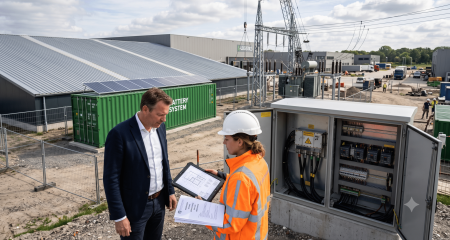
The installation sits on or beside your site, connected by a cable that is not part of the public grid. Because the electricity never enters a transmission or distribution system, network charges and potentially energy tax on that volume fall away, which is the commercial point.
The regulatory treatment is the complication. A cable to a single customer can qualify as a direct line, requiring notification (article 3.9 Energiewet). A network serving several users may instead be a closed distribution system requiring recognition (articles 3.6 and 3.7 Energiewet). Settle the classification before the cable is laid.
The virtual or financial PPA
No electricity moves between the parties. The generator sells its output into the market, the buyer buys from its existing supplier, and the parties settle a contract for difference against a reference price, usually the Dutch day-ahead price. Below the strike price the buyer pays the difference; above it the generator pays. Guarantees of origin transfer separately.
It suits buyers with sites in several countries or many small meters, and is unmistakably a financial instrument.
| Feature | Physical / sleeved | Private wire / on-site | Virtual / financial |
|---|---|---|---|
| Flow between the parties | Through the grid, via a supplier | Direct, over a private cable | None |
| Buyer’s supply contract | Volume sleeved in | Retained for residual demand | Untouched |
| Network charges and energy tax | Payable | Potentially avoided | Payable as before |
| Balancing responsibility | Sleeving party, for a fee | By agreement | Each party’s own supplier |
| Guarantees of origin | With the sleeved volume | Transferred directly | Separate contractual limb |
| Settlement | Delivered volume | Metered volume | Net cash difference |
| Dominant risk | Sleeving fee and shape | Site and classification | Basis risk and accounting |
Which shape fits: pay-as-produced, pay-as-consumed or baseload?
Shape risk is the commercial heart of the negotiation, and it is where inexperienced buyers lose money.
- Pay-as-produced. The buyer takes and pays for whatever the installation generates. The generator carries no volume risk; the buyer carries the profile, and solar output arrives when prices are lowest.
- Pay-as-consumed. The buyer pays only for generation coinciding with its own demand. Its exposure shrinks, the seller’s grows, and the price rises accordingly.
- Baseload. The seller commits to a flat volume in every settlement period, buying in shortfalls and selling surpluses. It resembles a conventional contract, but the seller is running a shaping business and charges for it.
Headline prices across the three shapes are therefore not comparable, and a tender that treats them as if they were will pick the wrong bid. Capture prices have been falling as more solar and wind capacity is added, and a pay-as-produced PPA passes that erosion to the buyer in full.
How do guarantees of origin support your renewable claim?
A corporate’s renewable claim in the Netherlands rests on guarantees of origin (garanties van oorsprong), not on the electrons: electricity on a grid is fungible, and the certificate is the tracking instrument. The Energiewet deals with them in articles 2.57 to 2.61. Article 2.57 concerns the guarantee as proof of renewable generation, article 2.58 places the tasks with the Minister and allows them to be mandated, and article 2.59 governs cancellation.
The register is operated by VertiCer B.V. (formerly CertiQ), the body designated under article 2.58 Energiewet for electricity and gas. It issues, transfers and cancels the guarantees of origin: one guarantee per megawatt-hour of metered renewable generation, held in account holders’ accounts and cancelled when used to substantiate a claim.
- Your PPA must say expressly that guarantees of origin transfer, in what quantity, by when and to which account. A PPA silent on certificates does not deliver the renewable claim.
- Certificates have a limited life, so late transfer destroys value. A guarantee of origin loses its validity once it has been cancelled, and in any event at the latest twelve months after the end date of the production to which it relates. Build in transfer deadlines that sit well inside that period, and a remedy for failure.
- Where the electricity is supplied otherwise than over the grid, the guarantee of origin only serves as proof of supply to an end user connected to the same direct line, or to an end user into whose installation the energy has been fed directly.
- Certificates issued elsewhere in the European Union are in principle recognised here (article 2.60 Energiewet). If your reporting requires Dutch, project-specific or time-matched certificates, say so in the contract.
Which commercial terms decide the deal?
Term, volume and over- or under-delivery
Dutch corporate PPAs commonly run ten to fifteen years, driven by debt tenor rather than the buyer’s planning horizon. Volume is expressed as the whole output of a named installation, as a percentage of it, or as a fixed annual quantity with a tolerance band. The consequences of missing the band must be spelled out.
Under-delivery is usually remedied by the seller buying replacement power at market and bearing the difference, subject to an annual cap. Over-delivery is the mirror image and is often not addressed at all: if you hold a fixed annual quantity and get a strong wind year, you need to know whether you must take the excess.
Price and indexation
Prices are set flat in nominal terms or indexed, usually to consumer price inflation. Indexation looks innocuous over one year and is transformative over fifteen. Where a floor or collar is agreed, be precise about whether it bites on the contract price, the reference price or the settlement amount: the three give different answers.
Balancing responsibility
Every connection in the Dutch system must have a balancing responsible party, dealt with in article 2.42 Energiewet. Imbalance costs are real money and volatile. In a sleeved structure the sleeving party normally carries the responsibility and prices it into the fee; in a direct physical structure the parties must allocate it expressly; in a virtual PPA it stays where it sits. A PPA that does not name that party has left a live cost unallocated.
Curtailment and negative prices
This is now a central risk in the Dutch market and must be allocated expressly.
The first, curtailment, is the reduction of output. It may be ordered by the system operator, follow from congestion management or a flexible transport contract, be caused by the buyer, or be the generator’s own election. Each cause should carry its own consequence: deemed generation, treating curtailed volume as delivered and payable, belongs where you caused it, not where the system operator did.
Negative prices arise when generation exceeds demand, and in the Netherlands they now occur regularly on sunny, windy, low-demand days. The contract must answer three questions: does the generator keep generating; is the PPA price still payable; and who bears the cost of disposing of the power. Since 1 October 2025 the Dutch day-ahead market settles in quarter-hour periods, so drafting built around hourly triggers is already out of date.
Grid connection and grid congestion
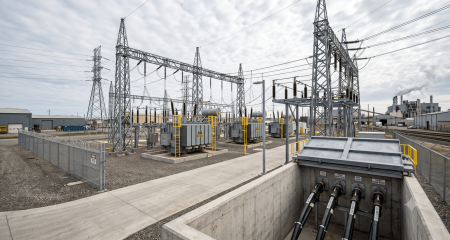
The connection date drives the whole contract. A PPA over an unbuilt project is a promise about a future connection, and the Energiewet’s connection obligations (article 3.38 for electricity) do not guarantee transport capacity. Large parts of the Dutch network are congested, and system operators buy congestion management services (article 3.29 Energiewet) because capacity is scarce.
So: make connection and agreed transport capacity a condition precedent; set a long-stop date with a clean walk-away rather than indefinite suspension; and state what happens if the project runs on a flexible or time-bound transport right, since that changes the profile you receive.
How do you deal with a change in law and SDE++?
A fifteen-year contract outlives regimes. The Energiewet proves the point: the bulk of it entered into force on 1 January 2026, replacing the Elektriciteitswet 1998 and the Gaswet. A change in law clause should distinguish a discriminatory change targeting this generation from a general market-wide change, and say whether the remedy is price adjustment, renegotiation or termination.
Where the project also holds an operating subsidy under SDE++, the interaction needs express treatment. SDE++ pays the difference between a base amount and a correction amount reflecting the average market value of the energy, so subsidy and PPA price are not independent. Subsidy is also withheld in negative price periods, on terms differing by award year: for grants from 2016 to 2022 it is lost where the price is negative for six consecutive hours, for installations from 500 kW and wind turbines from 3 MW; for grants from 2023 onwards it is lost for every negative period, for installations from 200 kW per connection. Since 1 October 2025 that six-hour block for older grants can start on any quarter-hour, and the per-period test for newer grants applies per quarter-hour too, so a PPA obliging the generator to deliver into negative prices can destroy the subsidy faster than it once did.
Which credit support should you ask for?
The offtaker’s credit rating determines whether the project gets financed: a lender underwriting contracted revenue is underwriting the buyer’s ability to pay for fifteen years. Where the contracting entity is a Dutch subsidiary of a foreign group, expect a parent company guarantee from the rated entity, a bank guarantee, or cash collateral sized to a set number of months of contract value. Negotiate the triggers as hard as the amount, and ask the same question in reverse: the seller is usually a thin special purpose vehicle.
What do lenders require from a PPA?
A PPA over a project-financed asset is in substance a financing document. It will be assigned to the lenders by way of security, and they will require a direct agreement with the buyer: notice of any seller default and a cure period before termination, a right for the lenders or a substitute to step in and take a transfer of the PPA, and restrictions on amendment and voluntary termination. Building that into the term sheet is cheaper than reopening an executed PPA at financial close.
Which regulatory questions arise?
Does the arrangement need a supply licence?
Under article 2.17 Energiewet it is prohibited to supply electricity or gas to an end user with a small connection, or to facilitate peer-to-peer trading for one, without a licence. The provision carries exceptions, among them supply to end users connected to a closed system. The obligation is tied to the size of the customer’s connection, not the seller, so supply to a large industrial or commercial connection needs no licence. A small connection, as the Energiewet defines it, is a connection of up to and including 3 x 80 ampère for electricity. If you are a developer selling to tenants on a business park, some of them with small connections, this is not straightforward.
When is a private network a closed distribution system?
Where a generator supplies several users across a network it owns, the arrangement may be a closed distribution system requiring recognition under article 3.7 Energiewet. Recognition depends on criteria including a geographically delimited area, fewer than a thousand connected parties, the absence of household end users save for the limited exception the provision allows, and sufficient safety and reliability. The ACM designates the operator of a recognised system (article 3.6 Energiewet), which then carries the corresponding connection and transport duties.
A single dedicated cable to one user is more likely a direct line. A direct line must meet the technical criteria of article 3.9 Energiewet, and its owner must notify the ACM as soon as possible after the line is taken into use, and again after any significant change to it.
Is energy tax due behind the meter?
Energy tax on electricity is levied under the energy tax chapter of the Wet belastingen op milieugrondslag. The attraction of an on-site PPA is that electricity consumed behind the meter may fall outside the supply that triggers the tax, and outside regulated network charges. Whether it does depends on the metering configuration, the ownership of the installation, and whether the arrangement is supply to a third party or self-consumption.
Article 50 of that Act charges the tax not only on supply through a connection, but also on supply otherwise than through a connection and on consumption of electricity obtained without a supply. The exemption for self-generated renewable electricity follows self-generation, not a purchase: where a third party owns and operates the installation and the occupier buys the output, the exemption does not carry across. Confirm the treatment with the Belastingdienst before the model is priced.
How should termination, default and force majeure be drafted?
Termination events should be tightly defined and, in the main, financial: non-payment after a cure period, insolvency, failure to maintain credit support, prolonged force majeure, and failure to achieve commercial operation by the long-stop date. Avoid loose material adverse change triggers in a contract lenders must rely on.
Termination payments are what will be litigated if anything is. A mark-to-market settlement over the remaining term is standard, but the calculation method, the forward curve used and which party calculates it should be agreed in advance. Congestion, negative prices and curtailment belong in their own clauses, not swept into force majeure where they give the wrong answer.
What should you check as a buyer?
As the offtaker you carry the price, shape and accounting risk for ten to fifteen years, so check:
- Which structure you sign, and whether your finance function accepts its accounting treatment.
- Which shape applies, and whether competing bids have been normalised before you compare them.
- Whether guarantees of origin transfer expressly: what volume, to which account and by when.
- What happens to price and delivery in negative price periods, now settled per quarter-hour since 1 October 2025.
- Whether any supply goes to a small connection (up to 3 x 80 ampère), which requires a licence under article 2.17 Energiewet.
- How the termination payment is calculated, and by whom.
What should you check as a generator?
As the seller you need a contract that lenders will finance and that does not conflict with your subsidy, so check:
- Whether connection and transport capacity are conditions precedent, with a long-stop date and a clean walk-away.
- Who is the balancing responsible party under article 2.42 Energiewet, and who pays imbalance costs.
- Whether every cause of curtailment is allocated, and deemed generation applies only where the buyer caused it.
- Whether the delivery obligation conflicts with the SDE++ rules on negative prices.
- What credit support the buyer gives, and whether the lenders’ direct agreement has been anticipated.
What can we do for you with a power purchase agreement?
Our energy lawyers act for buyers, generators and developers in PPA negotiations:
- We review a term sheet or draft PPA and mark the risk allocation on shape, curtailment and negative prices.
- We draft the guarantee-of-origin clauses, including transfer deadlines within the twelve-month validity period.
- We assess whether your on-site or private network arrangement is a direct line (article 3.9 Energiewet) or a closed distribution system (article 3.7 Energiewet).
- We check whether the supply needs a licence under article 2.17 Energiewet.
- We negotiate credit support, the lenders’ direct agreement and the termination payment.
Summary
- A PPA is a bilateral, long-term contract on the economics of one installation, not a supply contract; choose the physical, private-wire or virtual structure to match how you will use the power.
- Shape risk (pay-as-produced, pay-as-consumed or baseload) drives the headline price more than any other single term, so competing bids must be normalised before they are compared.
- A renewable claim depends on guarantees of origin transferring expressly under the contract, not on the electricity itself.
- Curtailment, negative prices, grid congestion and SDE++ interaction are now standard risks in the Dutch market and need their own clauses, not a general force majeure provision.
In summary
- A PPA is a bilateral, long-term contract on the economics of one installation, not a supply contract; choose the physical, private-wire or virtual structure to match how you will use the power.
- Shape risk (pay-as-produced, pay-as-consumed or baseload) drives the headline price more than any other single term, so competing bids must be normalised before they are compared.
- A renewable claim depends on guarantees of origin transferring expressly under the contract, not on the electricity itself.
- Curtailment, negative prices, grid congestion and SDE++ interaction are now standard risks in the Dutch market and need their own clauses, not a general force majeure provision.
- For a project-financed asset, build the lenders’ direct agreement into the term sheet from the outset rather than negotiating it at financial close.
A negotiation checklist
- Which structure, and does the finance function accept its accounting treatment?
- Which shape, and have competing bids been normalised so they are comparable?
- Are guarantees of origin transferred expressly: what volume, which account, by when?
- Who is the balancing responsible party, and who pays imbalance costs?
- Is every cause of curtailment allocated, and what happens in negative price periods?
- Are connection and transport capacity conditions precedent, with a long-stop date?
- Does the project hold SDE++, and does the delivery obligation conflict with it?
- What credit support is given on each side, and has the direct agreement been anticipated?
- Is any supply going to a small connection, and is the network classification settled?
- How is the termination payment calculated, and by whom?
Frequently asked questions
Which law governs power purchase agreements in the Netherlands?
The contract is governed by ordinary Dutch contract law, because a PPA is a commercial agreement rather than a regulated instrument. The framework around it is the Energy Act (Energiewet), which replaced the Elektriciteitswet 1998 and the Gaswet on 1 January 2026.
Do I need a supply licence to sell power under a PPA?
Not if you sell only to end users with large connections. Article 2.17 Energiewet prohibits supplying electricity to an end user with a small connection (up to 3 x 80 ampère) without a licence. If your project also supplies smaller users, such as tenants on a business park, the licence question must be settled first.
Do guarantees of origin transfer automatically with the electricity?
No. Guarantees of origin are separate instruments, issued by VertiCer per megawatt-hour and held in register accounts, and they transfer only if the contract says so. A PPA silent on certificates delivers power but not the renewable claim.
Who bears the risk of negative electricity prices?
Whoever the contract says, which is why it must say so. Negative prices now occur regularly in the Dutch day-ahead market and SDE++ withholds subsidy in negative price periods. A common allocation is that the seller may stop delivering in those periods without liability, and the buyer pays nothing for them.