If your building in the Netherlands is connected to a district heating network — a warmtenet — the price you pay, the reliability you can insist on and your route when something goes wrong are set by statute, not by contract alone. That statute is the Warmtewet. It is being replaced by the Wet collectieve warmte, which has been passed and published but is not yet in operation. This article sets out the framework that applies today, and what changes, and when.
Where the legislation stands
The Warmtewet of 2014 is still the law in force. Its consolidated text is stated to be in force from 1 January 2026 until further notice. It has been amended several times, most significantly by the 2019 amendment that took landlords and owners’ associations out of the licence regime and reworked metering. Every obligation below is live now.
The Wet collectieve warmte (Wcw) has been enacted but is not yet in operation. The Tweede Kamer adopted it on 3 July 2025 and the Eerste Kamer on 9 December 2025. It was published in the Staatsblad on 22 January 2026, and a commencement decree of 13 February 2026 brought a limited part of it into force on 14 February 2026. The rest commences by royal decree, article by article, and no date has been set for the substantive chapters: the consolidated text still records that those parts have not entered into force. The ACM plans on the new regime starting at the beginning of 2027, but planning is not a commencement date.
The Wcw is law, but its operative provisions are not yet in force. Anyone saying today that heat tariffs are already cost-based, or that your supplier must already be majority publicly owned, is describing a regime that has not started. Until the royal decrees are made the Warmtewet governs, so a transaction or a tariff decision that depends on the new regime should be dated to a commencement decree rather than to an expected year.
What a heat network is, and who the actors are
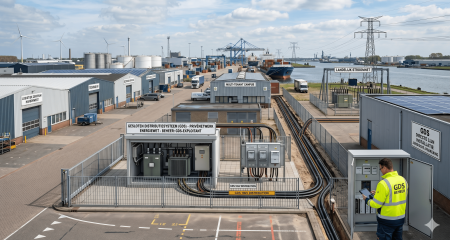
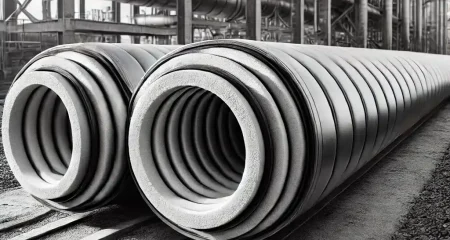
A heat network transports heat, usually hot water, through pipes from a central source to buildings. The source may be a waste incinerator, a gas-fired plant, industrial residual heat, geothermal energy, thermal storage or a large heat pump. The building takes heat through a delivery set (afleverset) rather than its own boiler.
Article 1 of the Warmtewet distinguishes the roles:
- The producer generates the heat.
- The supplier (leverancier) delivers it and contracts with the user. Most of the Act’s duties sit here.
- The network operator (netbeheerder) manages the network. In Dutch district heating supplier and network operator are usually the same group, one reason the sector looks integrated in a way electricity and gas no longer do.
- The user (verbruiker) takes the heat, and is protected or not depending on a threshold.
There is also the in-building pipe system (inpandig leidingstelsel), running from a block’s central connection to each unit. Who operates it decides whether the block’s owner is itself a supplier.
Who is protected: the 100 kW boundary
This is where most commercial disputes start. Under Article 1 a verbruiker takes heat through a connection of no more than 100 kW, or through a central connection serving such users. Everything the Act does — maximum price, compensation, the disputes route, metering — attaches to that definition.
Above 100 kW you are outside it. An office landlord with a large central connection, a hotel, a logistics operator or a production site will often sit above the line. There is then no statutory maximum price and no statutory compensation: tariff, indexation, availability, term and termination are whatever the supply agreement says, and those agreements are typically long, supplier-drafted and indexed on terms that repay reading.
- Capacity is a legal fact, not an engineering detail. Where contracted capacity sits near 100 kW, the figure recorded in the connection agreement decides your statutory position.
- A central connection can protect those behind it. A block on one large connection supplying individual homes brings those homes within the definition of verbruiker. Whether the intermediate party then carries the Warmtewet supplier duties depends on who that party is: article 1a takes a landlord supplying his own tenants, and an owners association supplying its members, out of almost the whole Act.
Tariff regulation: the maximum price
Article 5 requires the ACM to set the maximum price a supplier may charge a protected user. It is a ceiling, not a fixed price, though many suppliers charge at or near it.
How the ACM sets it now
The ceiling rests on the niet-meer-dan-anders principle: a heat user should never pay more than a comparable household heating with gas. The ACM derives it from the average price of a one-year fixed gas contract offered by the largest gas suppliers, measured at the start of the year, and sets it annually.
It is not a single number. Each component is capped separately: a variable charge per gigajoule; a fixed annual charge (vastrecht), differentiated by what the connection supplies (heating and hot water, heating only, hot water only, low-temperature heat, or cooling); a delivery set charge; and a metering charge.
The ACM fixes each of these maxima once a year, ahead of the year they apply to, and publishes them in a tariff decision on its own website; they move with the gas reference in both directions. Never rely on a figure without its year, and never on a figure in a supplier letter without checking it against the decision the ACM actually published for that year.
The direction of travel is away from the gas link. The ACM has said publicly that coupling heat tariffs to gas prices is not a good idea and that it would prefer to look at suppliers’ costs, but that the Warmtewet requires the coupling and the change is for the legislature.
Connection charge, disconnection charge and metering
The one-off connection contribution (aansluitbijdrage) falls under Article 6: where a supplier charges a user a one-off contribution for a connection, the ACM caps it, and that cap is reset in the same annual tariff decision. It is a real cost line in a residential scheme, so check the figure for the year before it is passed on or built into a development budget.
The boundary between that one-off contribution and the recurring vastrecht matters. In its judgment of 23 January 2026 (ECLI:NL:HR:2026:94) the Hoge Raad held that, in the circumstances of that case, the supply agreement gave no basis for a periodic connection charge: the fixed annual charge relates to having and maintaining a connection, not to realising one. The cost of creating a connection cannot, on that reasoning, simply be recovered through a recurring line on the bill.
The disconnection charge (afsluitkosten) falls under Article 4a: a supplier disconnecting a connection may charge no more than an ACM-set tariff, with different maxima for permanent and for temporary disconnection, again set by the ACM for each year.
Metering falls under Article 8. A supplier must make an individual meter available where technically feasible and financially reasonable, and the metering tariff is capped at an annual maximum the ACM sets alongside the other components, with a separate capped rental for the meter. Where individual metering is impossible, heat cost allocators or another fair apportionment applies.
Supply obligation, interruptions and compensation
Article 2 obliges a supplier to ensure reliable supply on reasonable terms and at a reasonable quality of service, to bill at least annually and to treat users properly. Article 3 requires clear pre-contract information on supply quality and safety. Article 4 requires interruptions to be kept to a minimum, with notice of planned work. Article 3c gives a right to terminate, subject to limits where that is not feasible.
Two judgments of the Gerechtshof Arnhem-Leeuwarden of 24 February 2026 mark out the edges of that right. In ECLI:NL:GHARL:2026:1102 the court held that Article 3c does not apply to an agreement concluded before 1 July 2019, because Article 42a Warmtewet gives the earlier position continuing effect for such contracts. In ECLI:NL:GHARL:2026:1103 it held that the financial survival of a small heat network cannot justify an arrangement under which consumers are in practice never able to terminate.
Article 3a is the compensation provision: on a serious interruption the supplier must pay compensation in amounts set in the Warmteregeling, escalating with the outage: €35 for an unplanned interruption of eight to twelve hours, and a further €20 for each subsequent period of four hours. Payment is automatic. The supplier is exempt from compensation for the first interruption in any period of twelve months, provided that interruption lasts less than twenty-four hours.
Compensation runs to protected users only. Anyone above 100 kW should negotiate an availability and service-credit regime rather than accept standard terms.
Complaints, the disputes committee and the ACM
Article 3b requires that users can put disputes arising from a heat supply agreement to an independent disputes committee: in practice a sector committee under the Dutch consumer disputes framework, and the natural first route for a billing dispute or compensation claim by a protected user.
The ACM supervises compliance, sets the maximum tariffs and can enforce against a supplier that exceeds them. It is not a route to individual compensation, since it enforces in the public interest, but a pattern of overcharging brought to its attention can produce a response benefiting everyone on the network. The civil courts remain available: a protected user charged above the maximum does not owe the excess.
The landlord and the owners association
Here the Act does the opposite of what most building owners expect. Article 1a Warmtewet takes the supply of heat by a landlord to his own tenants, and by an owners association to its members, outside the Act almost entirely. What survives is metering and billing: article 8 on individual meters and heat cost allocators, and articles 8a and 8b on cost apportionment and on the information the bill must carry. The ACM maximum price, the compensation scheme for interruptions, the licence regime and the disputes committee under the Warmtewet do not apply to that relationship.
That does not leave the tenant unprotected; it moves the protection into rent law. Heat supplied by the landlord is recovered as a service charge, and the service charge regime has its own rules on what may be passed on, on the itemised annual statement, and on the tenant right to have the settlement tested by the Huurcommissie. The ceiling is therefore not an ACM tariff but the requirement that service charges reflect actual costs, reasonably apportioned. For an owners association the equivalent discipline sits in its own accounts and in the decisions of the members meeting.
The exclusion is narrower than it looks, and the boundary is where the disputes are. It attaches to a combination of roles: the supplier must also be the landlord of the premises it supplies, or the association of which the user is a member. A building owner supplying occupiers who are not his tenants, an energy company operating the block installation under its own supply contract with each resident, or an association supplying beyond its members, falls back inside the Warmtewet in full, maximum price included.
- Establish first in which capacity you supply. Landlord to tenant, or association to member, engages article 1a; anything else does not.
- Where article 1a applies, meet articles 8, 8a and 8b on metering and billing, and test the charge against the service charge rules rather than against the ACM tariff.
- Where it does not apply, the whole Warmtewet does, and buying heat above 100 kW while selling below it leaves you carrying the gap between an unregulated purchase price and a regulated sale price. That risk belongs in your purchase agreement.
New-build, connection duties and municipal heat plans
There is no general statutory duty to connect a new building to a heat network. The gas connection duty for new-build was removed in 2018, leaving heat networks a principal alternative without making them compulsory.
What changed is the municipal toolkit. The Wet gemeentelijke instrumenten warmtetransitie was adopted by the Eerste Kamer on 10 December 2024 and published in the Staatsblad on 17 December 2024, with a partial commencement decree the same day. It gives municipalities a heat programme setting out which districts move to which alternative and when, and lets them give effect to it through the environmental plan (omgevingsplan).
For a developer the question is rarely “must I connect?” but “what does the environmental plan require here, and what has the municipality designated?” Where an area is designated for collective heat, the route to gas or all-electric may be closed through the plan rather than by a heat-specific duty.
What the Wet collectieve warmte changes
The Wcw is not an amendment but a new statute on a different premise. Where the Warmtewet treats district heating as a private market needing consumer protection, the Wcw treats it as public infrastructure steered by municipalities and delivered under public control.
- Public majority ownership. A heat company must be more than half owned by public bodies such as municipalities or provinces — the most consequential change for the commercial operators who own most of the Dutch network estate.
- Designation for a heat area. Municipalities divide their territory into heat areas (warmtekavels) and designate one heat company per area to carry responsibility for the network there.
- Cost-based tariffs, phased. The ACM’s roadmap sets out three phases. In the first, at the start of the regime, tariffs remain linked to the gas price, with that link corrected on a number of points. In the second, envisaged from 2028 at the earliest, maxima for large collective heat systems — those with more than 1,500 consumers — would be based on the efficient costs of the heat area, with a cost-based reference tariff for smaller systems; that phase takes effect only once the House of Representatives has agreed to it. A third phase, in which the ACM would set tariffs for large systems on the allowed revenue of the individual network, is not expected before 2034. The ACM consulted through 2026 on the regulatory accounting rules and the standardised asset value methodology the method depends on.
- Transition of existing networks. Existing operators are not expropriated. Under the transitional rules an existing heat company is designated for its existing system for a term of at least 14 and at most 30 years, the exact term depending on how long the oldest connection agreements have been running. Separately, for a period after the Act enters into force a municipality may still designate a company without a public majority holding for a new heat area where no public candidate is available; that window was set at seven years in the bill and raised to ten years by amendment during the passage through the House of Representatives, and a further extension was rejected. The precise terms should be checked against the transitional provisions of the Act itself before any sale or restructuring is planned around them.
- Small collective systems. A separate set of rules covers small collective heat systems, with specific provisions for landlords, owners’ associations and heat transport operators, recognising that the Warmtewet fitted them badly.
| Issue | Warmtewet (in force now) | Wet collectieve warmte (once commenced) |
|---|---|---|
| Ownership of the heat company | No ownership requirement; largely private | Public majority stake required, with transitional provisions |
| Who decides where a network goes | Commercial decision, with municipal planning influence | Municipality designates a heat company per heat area |
| Basis of the maximum price | Gas reference (niet-meer-dan-anders), set annually by the ACM | Phased move to cost-based regulation; partly gas-linked at the start |
| Protected category | Users up to 100 kW | Retained, with separate rules for small collective systems |
| Landlords and owners’ associations | Outside the Act under article 1a, except metering and billing (articles 8, 8a and 8b) | Dedicated regime for small collective systems and building owners |
| Supplier authorisation | Licence under Article 9 above the statutory size threshold | Designation for a heat area becomes the central mechanism |
If you own or operate a heat network today
- Map your networks against the heat area logic. Which municipality will designate the area your network sits in? Engagement now beats a submission afterwards.
- Model the ownership requirement. A public shareholder, a joint venture, a sale with a retained operating role, or reliance on the transition period each carry a different tax, financing and contractual profile, and each takes time. Test financing covenants and shareholder agreements for change-of-control and regulatory-change triggers.
- Engage with the ACM’s methodology work. The accounting rules and asset valuation being settled now determine the asset base your future tariffs are calculated from.
Permits and the Omgevingswet
Building a heat network is physical work in the public realm and sits within the Omgevingswet framework. A project generally needs the environmental plan to permit the works, an environmental permit for the construction activities, and agreements with the municipality and other utility owners for laying pipes in public land. Deep geothermal brings mining-law consents as well.
Under the Warmtewet a supplier above a stated number of users or annual volume must hold a licence under Article 9. The minister grants it under Article 10 on organisational, financial and technical capability, and may revoke it under Article 11. Landlords and owners’ associations sit outside it.
How to check whether you are being charged correctly
- Establish your capacity. Above 100 kW this becomes a contract review; at or below it, the statutory ceilings apply.
- Unbundle the invoice into the variable charge per GJ, the fixed annual charge, the delivery set and metering. A single blended figure is itself a warning sign.
- Compare each component to the ACM maximum for that year. Ceilings change annually. Check the fixed charge matches what the connection actually supplies: a heating-only connection should not be billed at the combined heating-and-hot-water rate.
- Check the consumption figure against meter readings; without an individual meter, check the apportionment method matches your contract or service charge statement.
- Check one-off charges separately. Connection and disconnection charges have their own annual maxima under Articles 6 and 4a, and compensation for outages under Article 3a should have been paid automatically.
- Then escalate: in writing to the supplier; the disputes committee under Article 3b; the ACM where overcharging looks systemic; the civil courts for recovery.
Is the Wet collectieve warmte already in force?
No. It was adopted by the Tweede Kamer on 3 July 2025 and the Eerste Kamer on 9 December 2025, and published in the Staatsblad on 22 January 2026, but it commences by royal decree and no date has been set for its substantive chapters. The ACM plans on the new regime starting at the beginning of 2027. Until those decrees are made the Warmtewet governs supply, tariffs and consumer protection, and advice based on the new regime is forward-looking rather than current law.
Am I protected by the maximum price if my connection is over 100 kW?
No. The Warmtewet’s protections attach to users taking heat through a connection of no more than 100 kW, or a central connection serving such users. Above that there is no statutory price ceiling and no statutory compensation for interruptions, so your position rests entirely on the supply agreement. Tariff mechanism, indexation, availability and termination therefore deserve close negotiation.
My tenants are on the building’s central heat connection. Am I a heat supplier?
You are supplying heat, but article 1a Warmtewet takes supply by a landlord to his own tenants, and by an owners association to its members, outside almost the whole Act. What still applies is metering and billing, under articles 8, 8a and 8b. The ACM maximum price, the compensation scheme and the licence regime do not. Your ceiling is the rent-law rule that service charges must reflect actual costs, reasonably apportioned, and the tenant can have that tested by the Huurcommissie.
Will heat tariffs stop being linked to gas prices?
Eventually, but not immediately. The Warmtewet requires the ACM to link the maximum price to gas prices, and the ACM has said it would prefer a cost-based approach. Under the Wcw the change is phased: tariffs stay partly gas-linked at the start of the new regime, with cost-based maxima for larger systems following, on a methodology the ACM has been consulting on through 2026.
What happens to my company’s heat network under the public ownership rule?
Heat companies will need to be more than half owned by public bodies, but existing operators are not expropriated: transitional provisions allow them to continue for a period. Model the options now — a public shareholder, a joint venture, a sale with a retained operating role — and check financing and shareholder documents for change-of-control and regulatory-change triggers before designation decisions are taken.
Can I be forced to connect a new building to a heat network?
Not by a heat-specific statutory duty. The gas connection obligation for new-build was removed in 2018, but municipalities now have instruments under the Wet gemeentelijke instrumenten warmtetransitie and the Omgevingswet to designate areas for collective heat and give effect to that through the environmental plan. The real question is what the environmental plan and municipal heat programme require at that location.
Law & More advises heat suppliers, network operators, developers, landlords and connected businesses in Eindhoven and Amsterdam on heat supply agreements, tariff disputes and the transition to the Wcw.
How Law & More can help you with this is explained on our energy lawyer page.