
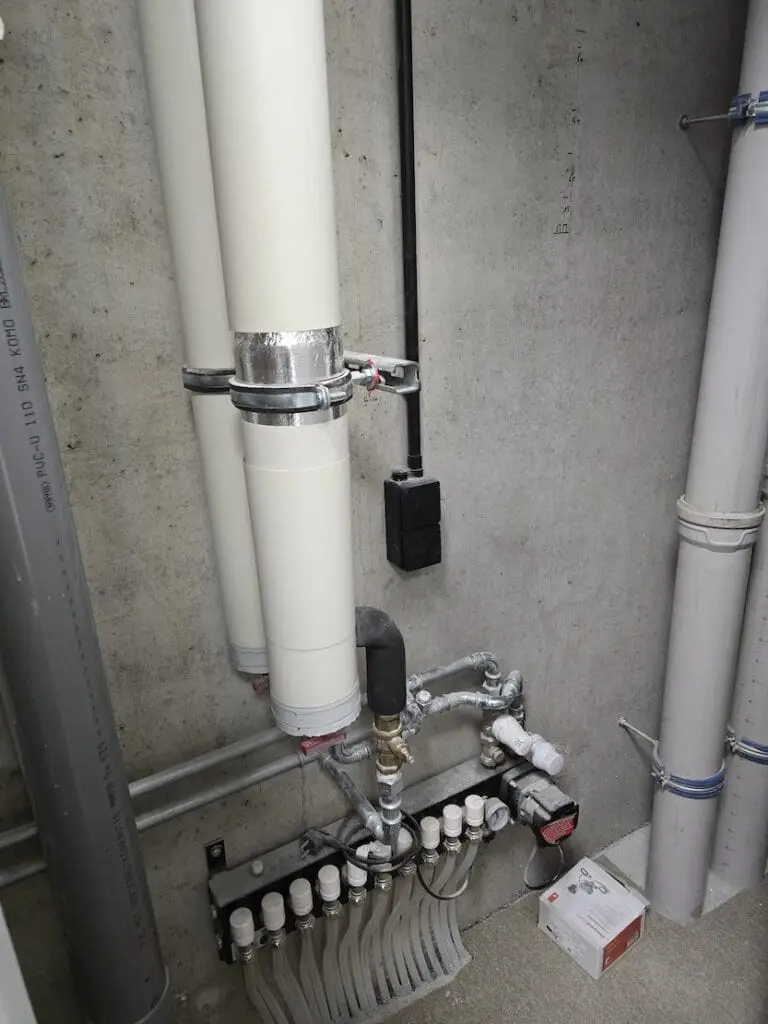
The main disadvantage of a district heating network (warmtenet) is that you cannot choose your supplier: each Dutch network has one supplier, so you cannot switch, compare offers or negotiate your rate. The law compensates for that: under the Heat Act (Warmtewet) the Authority for Consumers and Markets (ACM) sets maximum tariffs every year for users with a connection of up to 100 kW.
The exception is heat supplied by your landlord or owners’ association, which falls largely outside the Heat Act. Below we explain where the pinch points lie, what the Collective Heat Act (Wet collectieve warmte, Wcw) will change, and which routes are open when a supplier oversteps the mark.
Table of contents
Why does a heat network leave so little room for choice?
The network, the production installation and the supply are usually in the hands of one company. You remain its customer for as long as your home is connected.
On the electricity and gas market you can switch supplier; on a heat network that mechanism does not exist. Connection is arranged per building or district, not per household. The legislature accepted that concentration, because a network is only viable when a whole district is connected, and added duties in return: reliable supply under Article 2 of the Heat Act, compensation for serious outages under Article 3a, and access to an independent disputes committee under Article 3b. The question is therefore not whether the supplier has a strong position, but whether it stays within these limits.
Who sets what you pay?
The ACM sets the maximum price for heat each year under Article 5 of the Heat Act, plus separate caps for the delivery set (afleverset), metering and the one-off connection contribution (Article 6). These caps protect every user with a connection of up to 100 kW, which covers almost every household.
The maximum still rests on the gas reference, known as not-more-than-otherwise (niet meer dan anders): under Article 5(2) it is based on what a consumer would pay for the same amount of heat using gas. Because no competitor can undercut it, suppliers usually charge at or near the ceiling, and welcome discounts do not exist. That is not unlawful in itself. The real check on your bill is whether every tariff component stays within the ACM maximum for that year; anything above it can be reclaimed.
Our article on district heating and the Warmtewet explains the full tariff structure and the compensation rules.
What changes under the Collective Heat Act?
The Wcw will replace the Heat Act, move tariffs towards a cost-based method and make public control of heat companies the rule. It has been published, but its main chapters are not yet in force.
The Wcw was adopted by the Senate (Eerste Kamer) in December 2025 and published as Stb. 2026, 10 on 22 January 2026. A commencement decree (Stb. 2026, 31) brought only a limited part into force on 14 February 2026. The main chapters commence by royal decree, and no date has been set. Until then the Heat Act and the gas reference remain the applicable law.
Once the Wcw applies, the maximum tariff will be released from the gas price in stages and move towards the actual, efficient costs of the heat company. Municipalities will designate heat areas, and heat companies will in principle need a public majority interest. For users, the method changes, but protection through a regulated maximum remains.
Are tenants and owners in the same position?
No. A tenant whose landlord supplies the heat falls outside most of the Heat Act and relies on rent law; an owner can in principle disconnect, although that is rarely simple.
Under Article 1a of the Heat Act, heat that a landlord supplies to its own tenants, or an owners’ association (vereniging van eigenaars, VvE) to its members, is excluded from the maximum price, the outage compensation and the disputes committee. Only the metering and billing rules of Articles 8, 8a and 8b apply. The landlord charges the heat as a service charge (servicekosten), and a tenant who disputes the annual statement can ask the Rent Tribunal (Huurcommissie) to assess it. A tenant with a direct contract with the heat company has the full protection of the Heat Act.
An owner can terminate the supply agreement under Article 3c of the Heat Act, but only for contracts concluded on or after 1 July 2019, and not if ending the supply is technically impossible or would cause considerable lasting harm to another user. Switching to a heat pump or another system also requires technical work and often extra insulation. In an apartment building the installation is usually common property, so the general meeting of the VvE decides, within the deed of division (splitsingsakte).
What can you do about outages and poor service?
After a serious outage the supplier must pay fixed compensation under Article 3a of the Heat Act, without you having to prove loss. Disconnection must be prevented in particular between 1 October and 1 April (Article 4).
No compensation is due for an outage shorter than 24 hours if there was no earlier outage in the same network or delivery set in the preceding 12 months, or for an extreme situation that cannot be attributed to the supplier. Record when each outage started and ended, and report it in writing; without that record a claim is hard to prove. Real loss beyond the fixed amount can be claimed under Article 6:74 of the Dutch Civil Code (BW). Our article on your rights under the Heat Act sets out these rules in more detail.
When is a sustainability claim misleading?
A supplier may call its heat sustainable, but a claim it cannot substantiate can be a misleading commercial practice under Article 6:193c BW. That is a legal test, not a matter of opinion.
Heat from biomass is often presented as renewable, while burning wood releases carbon dioxide and its sourcing is contested; geothermal and industrial residual heat are in a different position. Under Articles 6:193b and 6:193c BW, the statement, its substantiation and its effect on the decision of the average consumer must be examined together. A difference of opinion about biomass alone is not enough. Consumer protection in this field is enforced by the ACM.
What should you do when you disagree with your supplier?
Complain in writing to the supplier first, then go to the independent disputes committee under Article 3b of the Heat Act. Report structural problems to the ACM; the civil court remains open for larger or collective claims.
- Send a written complaint naming the disputed invoice item or outage as precisely as possible, with the periods and amounts.
- If that does not resolve it, submit the dispute to the disputes committee named in the supplier’s terms. Article 3b requires that procedure to be quick, transparent, simple and inexpensive.
- Report structural problems with tariffs or compliance to the ACM. The ACM can impose an order subject to a penalty or a fine, but it does not decide individual repayment claims.
When a substantial sum is at stake, or the same charge was levied on a whole district, residents or a VvE can bring a joint claim before the civil court. Build your file early: the supply contract, the general terms, the annual statements and the correspondence. Claims for repayment are subject to limitation periods, so do not wait.
An example to illustrate: a household in a new-build district finds a one-off connection charge on its annual statement years after the home was connected. It asks the supplier in writing on which contract clause and which ACM maximum under Article 6 the charge is based. If the answer is not convincing, it takes the dispute to the disputes committee, ideally together with neighbours who received the same charge.
What should you check as a tenant?
First establish who supplies your heat, because that decides your route.
- Do you have a contract with the heat company, or is heat charged by your landlord as a service charge?
- If your landlord charges it, did you receive an itemised annual statement of service charges?
- Is the heat charge based on an individual meter or heat cost allocators, as Articles 8 and 8a require?
- If you dispute the statement, take it to the Rent Tribunal; if you have a direct contract, use the disputes committee.
What should you check as an owner?
Look at both the bill and your exit options before you act.
- Does every tariff component stay within the ACM maximum for that year?
- Was your contract concluded on or after 1 July 2019, so that Article 3c gives you a right to terminate?
- What do the supply contract and network conditions say about disconnection costs?
- In an apartment building: does the deed of division make this a decision for the VvE general meeting?
- Have you recorded every outage and asked for the compensation under Article 3a?
What can we do for you with a heat supply dispute?
Our energy law practice acts for consumers, owners’ associations and tenants’ organisations in disputes with heat suppliers.
- We check your annual statements against the ACM maximum tariffs and calculate what can be reclaimed.
- We review your supply contract, general terms and termination options under Article 3c.
- We conduct the correspondence with the supplier and claim outage compensation.
- We prepare your case for the disputes committee, the Rent Tribunal or the court.
- We coordinate a joint claim for a VvE or a group of residents.
Summary
- On a heat network you cannot switch supplier; protection comes from regulation, not competition.
- The ACM sets yearly maximum tariffs for heat, the delivery set and the connection for users of up to 100 kW.
- Heat from a landlord or VvE falls largely outside the Heat Act; tenants use the Rent Tribunal.
- The Wcw was published as Stb. 2026, 10, but its main chapters are not yet in force and have no commencement date.
- Complain in writing first, then use the disputes committee; the civil court is open for larger or collective claims.
Frequently asked questions
Can I switch to another heat supplier?
No. Each heat network has one supplier. You can only leave by terminating the supply agreement, which Article 3c of the Heat Act allows for contracts concluded on or after 1 July 2019 unless ending the supply is technically impossible, and by installing an alternative heating system.
Can my heat supplier charge whatever it wants?
No. For users with a connection of up to 100 kW, the supplier may not charge more than the maximum tariffs the ACM sets each year under Article 5 of the Heat Act. Heat supplied by a landlord is assessed under the service charge rules instead.
Is the Collective Heat Act already in force?
Only a limited part, since 14 February 2026. The main chapters commence by royal decree and no date has been set, so the Heat Act still applies.




