
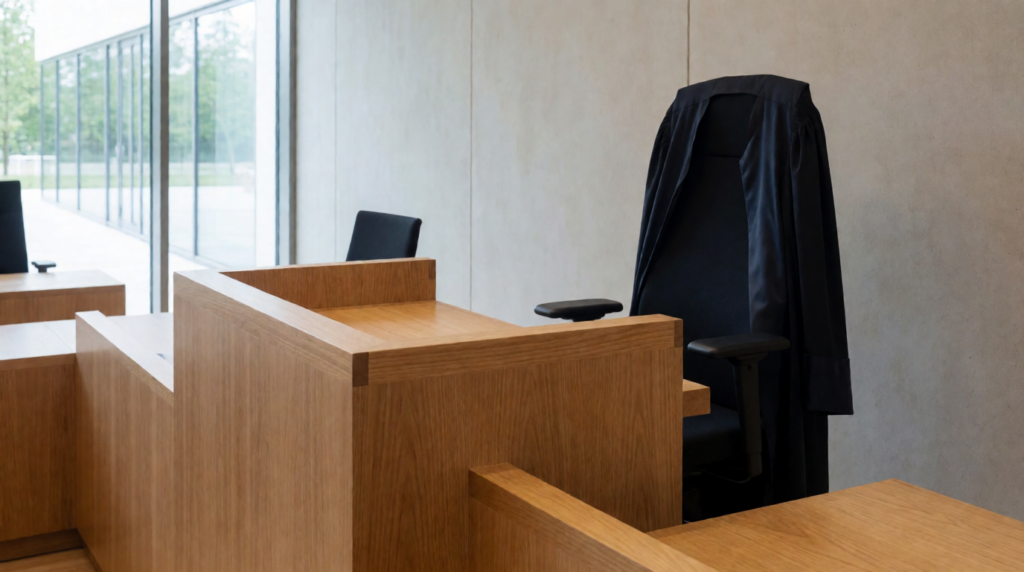
The public prosecutor (officier van justitie) is a member of the Dutch Public Prosecution Service (Openbaar Ministerie, OM) who prosecutes criminal offences before the district court. He directs the police investigation (Article 148 of the Code of Criminal Procedure, Sv), decides whether a suspect is prosecuted and demands a sentence at trial. On appeal, the same role is performed by an advocaat-generaal.
Table of contents
Does the prosecutor have to prosecute?
No. The Netherlands applies the expediency principle: the prosecutor may decide not to prosecute on grounds of public interest (Article 167(2) Sv). This is called a sepot. He can also impose a penal order himself for minor offences and for serious offences carrying up to six years in prison (Article 257a Sv). Only the more serious cases, and cases in which the suspect objects to a penal order, reach a judge.
What does the prosecutor do during the investigation?
He decides on coercive measures such as police custody, searches and orders to produce data. More intrusive measures, such as remand in custody, require a decision by the examining magistrate (rechter-commissaris), who is an independent judge.
What if the prosecutor does not prosecute?
If you reported an offence and the prosecutor drops the case, you can file a complaint with the court of appeal (Article 12 Sv). The court can order prosecution. A suspect who receives a summons can object to it within eight days (Article 262 Sv).
Related terms
See also dismissal of a case, penal order, reporting a crime, summons and police custody.
Our criminal defence lawyers assist suspects at every stage, from the first police interview to the Supreme Court. Want to know what this means for your situation? Book a free introductory meeting.




