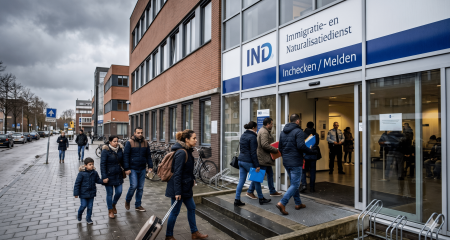
An employer who wants to bring staff from outside the EU to the Netherlands usually needs a residence permit for the employee, and the fastest route, the highly skilled migrant scheme, is only open to employers recognised as a sponsor by the Immigration and Naturalisation Service (Immigratie- en Naturalisatiedienst, IND). An entrepreneur who wants to move here to run his own business follows a different route: the self-employed permit, the start-up permit or, for US and Japanese nationals, a treaty-based route.
The first decision for an employer is therefore whether to become a recognised sponsor. Below you will find each route, what recognition involves, realistic timelines and costs, and the obligations that continue after the permit has been granted.
Recognition is what opens the highly skilled migrant route. That route is faster than the alternatives, requires no labour market test and allows the employer to apply on the basis of its own declaration. Recognition also brings obligations that continue for as long as the sponsorship lasts: a duty to inform the IND of relevant changes, a duty to keep records and a duty of care towards the employee. These are enforced with fines and, ultimately, withdrawal of recognition. The salary thresholds for the route are set every year, with a lower threshold for employees under 30 and for recent graduates.
Without recognition, other routes remain. The EU Blue Card requires a higher education qualification and has its own salary threshold. The intra-corporate transferee permit is for managers, specialists and trainees transferred from a group company outside the EU. The single permit for residence and work (gecombineerde vergunning voor verblijf en arbeid, GVVA) requires the employer to show that no suitable candidate is available in the Netherlands or the European Economic Area (EEA), a test that is applied strictly and takes time.
An entrepreneur who relocates rather than employs is assessed differently again. The self-employed route works with a points system, US and Japanese nationals are assessed under lighter treaty conditions, and the start-up permit gives a founder one year to develop an innovative business with a recognised facilitator.
Tax matters, such as the 30% facility for expats and international tax structuring, fall outside this article; for those we refer you to a specialised tax adviser.
Business immigration for employers: sponsorship and work permits
An employer bringing foreign staff to the Netherlands faces different legal questions from an individual applying for a residence permit. The employer is the sponsor, submits the application and remains responsible for compliance after the permit has been granted.
Employers must consider sponsor obligations, which permit fits the job and the employee, and the practical steps needed to have the employee working here legally and on time. This section sets out the framework from the employer’s perspective.
What is a recognised sponsor?
A recognised sponsor (erkend referent) is an organisation that the IND has recognised as trustworthy. Recognition gives access to a faster and more predictable procedure, but comes with ongoing obligations.
For the highly skilled migrant scheme, recognition is required. For other routes, such as the intra-corporate transferee permit and the single permit, an employer without recognition can also apply, but recognised sponsors are processed faster.
To be recognised, the organisation must be registered in the Trade Register of the Chamber of Commerce (Kamer van Koophandel, KVK), must be financially sound and continuous, and must be reliable. The IND fee for recognition in 2026 is €5,080, or €2,539 for small businesses with no more than 50 persons.
Recognition is not a one-off application. Treat it as a compliance function within your organisation, with someone clearly responsible for notifications and records.
What does the highly skilled migrant permit require?
The employee must earn at least a fixed gross monthly salary, which the IND sets every year, and the employer must be a recognised sponsor. The salary must also be in line with the market.
The highly skilled migrant scheme (kennismigrantenregeling) is the most commonly used route for knowledge workers. According to the IND, the gross monthly salary requirements (excluding holiday allowance) for 2026 are:
- employees aged 30 or older: €5,942;
- employees younger than 30: €4,357;
- the reduced criterion for recent graduates, for example after the orientation year for graduates (zoekjaar hoogopgeleiden), within three years of graduating: €3,122.
There is no labour market test. The employer declares that the conditions are met, and the IND relies largely on that declaration. The IND fee for a first application in 2026 is €423.
In practice, the IND often decides on applications from recognised sponsors within a few weeks. The employee can then collect a residence document and, if needed, an entry visa (machtiging tot voorlopig verblijf, MVV).
When is the single permit (GVVA) the right route?
For jobs that do not meet the highly skilled migrant salary criteria, the single permit is usually the route. It combines the work permit and the residence permit in one application, which is assessed by the IND together with the Employee Insurance Agency (UWV).
The main hurdle is the labour market test. The employer must first register the vacancy with UWV and actively search for candidates in the Netherlands and the EU or EEA. Only if no suitable candidate is available can a permit be granted. The salary must also be normal for the sector, in line with the applicable collective labour agreement.
Because of the labour market test and the combined assessment, this route takes considerably longer than the highly skilled migrant route. Plan months rather than weeks.
How do intra-company transfers work?
Multinational groups that transfer staff from a group company outside the EU to a Dutch entity can use the intra-corporate transferee permit (ICT permit). The employee must have worked for the group outside the EU, EEA or Switzerland for at least three months.
The permit is for managers, specialists and trainees. According to the IND, the maximum duration is three years for managers and specialists and one year for trainees, including any time spent in other EU Member States under an ICT permit. The salary must be in line with the market; for managers and specialists, the IND refers to the highly skilled migrant salary criterion.
The route is designed for structured internal mobility, not for open recruitment. A sponsor without recognition can apply, but recognised sponsors are processed faster.
What is the EU Blue Card?
The EU Blue Card is a European residence permit for highly qualified employees. It requires a higher education qualification of at least three years, or in some cases comparable professional experience, and an employment contract of at least six months.
According to the IND, the salary requirement for the EU Blue Card in 2026 is €5,942 gross per month, or €4,754 for recent graduates within three years of graduating. The Blue Card can be attractive for employees who may later want to move to another EU Member State, because it offers more intra-EU mobility than a national permit.
What does it cost, and how long does it take?
Processing times differ per route. Recognised sponsors under the highly skilled migrant scheme can generally expect a decision within a few weeks; routes with a labour market test take longer because of the additional assessment.
In most business immigration routes, the employer pays the IND fees. In 2026 the fee for a first application for a highly skilled migrant, EU Blue Card, ICT permit or single permit is €423, plus €5,080 or €2,539 for sponsor recognition if you do not yet have it.
Also budget for the internal time needed to prepare the supporting documents, such as the employment contract, proof of qualifications, a job description and company registration details. Documents from abroad sometimes need to be legalised or apostilled and translated.
What are common pitfalls for employers?
Most problems arise from timing and incorrect assumptions about the salary criterion. These are the pitfalls we see most often:
- submitting a highly skilled migrant application before recognition as a sponsor has been confirmed;
- underestimating the salary threshold that applies to the employee’s age category, or forgetting that the threshold rises when a younger employee turns 30 and changes employer;
- including allowances or holiday pay in the salary, when the IND does not count them;
- failing to notify the IND in time when an employee changes role, salary or leaves;
- assuming the highly skilled migrant route applies when the role and salary do not meet the criteria, which leads to delay or rejection;
- letting an employee start work before the permit has been granted, which can lead to high fines under the Foreign Nationals Employment Act (Wet arbeid vreemdelingen, Wav).
What obligations continue after the permit?
As a recognised sponsor you have a duty to inform, a duty to keep records and a duty of care. The IND checks compliance and can impose fines or suspend or withdraw recognition.
- Duty to inform: you must notify the IND of relevant changes, mostly within four weeks, for example when the employment ends or the salary falls below the threshold.
- Duty to keep records: you must keep the relevant documents, such as the employment contract and payslips, until five years after you are no longer the employee’s sponsor.
- Duty of care: you must recruit and select foreign employees carefully and inform them about the conditions for admission and residence.
How can Law & More help employers?
Employers considering hiring foreign staff, applying for recognition as a sponsor or managing existing sponsor obligations benefit from legal advice before they apply, not after a rejection or fine.
If your organisation needs support with sponsor obligations, permit applications or a compliance check of your current sponsorship, our immigration lawyers can help you choose the right route for your situation.
What are the Dutch business immigration rules for entrepreneurs?
An entrepreneur from outside the EU who wants to run a business in the Netherlands needs a residence permit for that purpose. The main routes are the self-employed permit, the start-up permit and the treaty-based routes for US and Japanese nationals.
Unlike an employer’s application, these routes assess the entrepreneur personally: the business plan, the financing, the entrepreneur’s experience and, for the self-employed permit, the benefit to the Netherlands.
Which routes are available to business professionals?
The Netherlands has several immigration routes for different situations. Which one fits depends on whether you will be employed or self-employed, your nationality and the stage of your business.
- Employed: the highly skilled migrant permit, the EU Blue Card, the ICT permit or the single permit, as described above.
- Self-employed with an established business model: the self-employed permit.
- Founder of an innovative start-up: the start-up permit, with a recognised facilitator.
- US or Japanese national: the treaty-based self-employed route, with lighter conditions.
Which documents and conditions apply to entrepreneurs?
For the self-employed and start-up routes you generally need a business plan, proof of financing, evidence of your professional background and registration with the Chamber of Commerce. What exactly is required depends on the route.
In general, entrepreneurs must be able to show:
- Financial basis: sufficient financial resources for the business and, for the start-up permit, to support yourself during the first year.
- Business viability: a business plan with a market analysis, organisation and financial projections.
- Professional background: diplomas and relevant experience, for example as an entrepreneur.
- Health insurance: once you live in the Netherlands, you are generally obliged to take out Dutch health insurance.
Documents from abroad must usually be translated into Dutch, English, French or German and, depending on the country, legalised or provided with an apostille. Check the current requirements with the IND before you apply.
Which authorities are involved?
Several authorities play a role. The IND decides on the residence permit, the Netherlands Enterprise Agency (Rijksdienst voor Ondernemend Nederland, RVO) advises the IND on the business plan in the self-employed and start-up routes, the Chamber of Commerce registers the business and the municipality registers you as a resident.
You will also deal with the Tax and Customs Administration (Belastingdienst). The immigration route you choose affects your options for permanent residence later, so plan with the long term in mind.
Which permits are available to entrepreneurs?
The start-up permit is for founders of an innovative business, the self-employed permit for entrepreneurs with an established business model, and the treaty-based routes for US and Japanese nationals. Each has its own conditions.
How does the start-up permit work?
The start-up permit gives a founder from outside the EU up to one year to develop an innovative product or service in the Netherlands, with the support of a recognised facilitator. After that year, you can switch to the self-employed permit if you meet its conditions.
The main conditions are:
- Facilitator: you work with an experienced facilitator recognised by the RVO, who supports you in developing the business.
- Innovation: the product or service is new for the Netherlands.
- Plan: you have a step-by-step plan to turn the idea into a viable business.
- Resources: you have sufficient financial resources to live in the Netherlands during the year.
- Registration: you and the facilitator are registered with the Chamber of Commerce.
The permit cannot be extended beyond one year. The transition to the self-employed permit is easier if your facilitator completes a declaration that you have made sufficient progress.
How does the self-employed permit work?
For the self-employed permit, the IND, advised by the RVO, assesses whether your business serves an essential Dutch interest. For most nationalities this is done with a points system.
Under the points system, you need at least 90 out of 300 points, with points in each of three categories:
- personal experience, such as diplomas, previous success as an entrepreneur and income;
- the business plan, such as market analysis, organisation and financing;
- the added value for the Netherlands, such as innovation, job creation and investment.
You must also show that your business will generate sufficient income for you to live on. The RVO looks critically at whether the financial projections are realistic. The route is therefore suitable for experienced entrepreneurs with a well-substantiated plan.
Are there special arrangements for US and Japanese nationals?
Yes. Under the Dutch-American Friendship Treaty (DAFT), US nationals can obtain a residence permit as self-employed persons on easier conditions, without the points system. Japanese nationals can rely on a comparable treaty.
Under DAFT, the main requirement is a minimum investment of €4,500 in the business, held in a Dutch business bank account, together with registration with the Chamber of Commerce. The business must be real and active; the IND can check whether the conditions continue to be met when the permit is extended.
The table below compares the main routes for entrepreneurs.
| Route | Duration | Main requirements | Suitable for | Next step |
|---|---|---|---|---|
| Start-up permit | Up to 1 year, not extendable | Innovative product or service, recognised facilitator, plan, sufficient resources | Founders of an innovative start-up | Self-employed permit, if the conditions are met |
| Self-employed permit | Fixed term, renewable | Points system (at least 90 of 300 points), sufficient income, KVK registration | Experienced entrepreneurs | Extension; later permanent residence if the conditions are met |
| Treaty route (DAFT / Japan) | Fixed term, renewable | US or Japanese nationality, investment in the business (DAFT: at least €4,500), KVK registration | US and Japanese entrepreneurs | Extension if the business remains active |
What does the application process look like, step by step?
The process consists of preparation, submission to the IND, assessment and, after approval, registration and ongoing compliance. Good preparation prevents most delays.

Step 1: preparation and documents
Choose the right route first and then collect the documents that route requires. For entrepreneurs this usually means a business plan and proof of financing; for employees, the employment contract and proof of qualifications.
Documents often required are:
- a business plan with strategy, financial projections and, for the start-up permit, the innovative aspect;
- diplomas and evidence of professional experience;
- bank statements, proof of investment or other evidence of financial resources;
- a valid passport;
- for employees: the signed employment contract.
Documents must be in Dutch, English, French or German, or be translated by a sworn translator, and foreign civil status documents often need legalisation or an apostille.
Step 2: submission and assessment
The application is submitted to the IND, by the employer as sponsor or, for self-employed routes, by the entrepreneur. The IND checks whether the conditions are met and, for business routes, asks the RVO for advice.
The IND can ask for additional information. Respond completely and on time, because an incomplete file delays the decision or leads to a rejection. If you need an entry visa (MVV), the IND usually assesses the MVV and the residence permit in one procedure.
Against a rejection, you can lodge an objection within four weeks. Check the deadline in the decision, because it differs for some decisions.
Step 3: after approval
After approval, you collect your residence document, register with the municipality where you live and, if you have not done so yet, register the business with the Chamber of Commerce. You also register with the Tax and Customs Administration.
Your permit remains subject to conditions. If you are self-employed, your business must continue to meet the requirements of your route; the IND checks this in particular when you apply for an extension. Employees must continue to meet the salary criterion, and the sponsor must report relevant changes.
The table below summarises the main steps.
| Step | Key actions |
|---|---|
| Choose the route | Employment or self-employment; check salary criterion, nationality and business stage |
| Preparation | Business plan or employment contract, qualifications, financial proof, passport |
| Translation and legalisation | Documents in Dutch, English, French or German; apostille or legalisation where needed |
| Submission | Application to the IND by the sponsor or the entrepreneur |
| Assessment | IND assessment, RVO advice for business routes, requests for additional information |
| After approval | Collect residence document, register with municipality, KVK and tax authorities |
| Ongoing compliance | Continue to meet the conditions; sponsor reports changes; extension on time |
What should you consider when relocating a business?
Beyond the residence permit, a successful relocation requires financial preparation, knowledge of Dutch employment and company law and some understanding of Dutch business culture. Plan these in parallel with the permit application.
Financial and operational preparation
Make sure the business can operate from day one. That requires a business bank account, a realistic budget for the start-up period and clarity about the legal form.
Points to consider:
- Legal form: a sole proprietorship (eenmanszaak) or a private limited company (besloten vennootschap, BV). The choice affects liability, costs and, for some permits, how the IND assesses your income.
- Banking: opening a Dutch business account can take time, because banks must carry out customer due diligence. Start early.
- Capital: sufficient reserves for the first period, when income may still be limited.
- Tax: discuss the tax consequences of your relocation and business structure with a specialised tax adviser.
Research the Dutch market as well: local competition, sector-specific rules and any licences you need for your activities.
Cultural and professional integration
Dutch business culture is known for direct communication, consultation and relatively flat hierarchies. Understanding these habits makes it easier to build relationships with customers, partners and employees.
Useful steps are:
- learning basic Dutch, which helps in daily life and with local clients, even though English is widely spoken in business;
- joining local business associations and networks, such as the regional expat centres and chambers of commerce;
- taking part in the local start-up and innovation ecosystem.
Legal and regulatory compliance
Once the business is running, several areas of Dutch law become relevant immediately. Plan for them in advance rather than dealing with them when problems arise.
The main areas are:
- company registration: correct and up-to-date registration with the Chamber of Commerce, including the register of ultimate beneficial owners (UBO register) for legal entities;
- employment law: if you hire staff, Dutch employment law applies, with strong protection against dismissal and mandatory continued payment of wages during illness;
- intellectual property: protect trademarks, designs and know-how in time;
- immigration compliance: if you hire non-EU staff, the sponsor obligations described above apply.
Legal advice at the start helps you anticipate problems and choose a structure that fits both your business and your residence permit.
In summary
- Employers who want to use the highly skilled migrant scheme must first be recognised as a sponsor by the IND (fee in 2026: €5,080, or €2,539 for small businesses).
- In 2026 the highly skilled migrant salary criterion is €5,942 gross per month (30 or older), €4,357 (under 30) and €3,122 (recent graduates).
- The single permit (GVVA) requires a labour market test by UWV and takes considerably longer; the ICT permit is for intra-group transfers.
- Entrepreneurs can use the start-up permit (one year, with a facilitator), the self-employed permit (points system) or, as US or Japanese nationals, a treaty route.
- After the permit is granted, sponsors must notify changes, mostly within four weeks, and keep records for five years.
Frequently asked questions
What are the key immigration pathways for business professionals in the Netherlands?
Employees can come as highly skilled migrants, with an EU Blue Card, with an intra-corporate transferee permit or with a single permit. Entrepreneurs can use the start-up permit, the self-employed permit or, for US and Japanese nationals, a treaty-based route. Which route fits depends on the job, salary, nationality and business stage.
What eligibility criteria must be met for business immigration to the Netherlands?
For employees, the main criteria are the salary threshold and, for the highly skilled migrant scheme, an employer recognised as a sponsor. For entrepreneurs, the IND looks at the business plan, financing, experience and, for the self-employed permit, the benefit to the Netherlands under a points system. Once resident, you generally need Dutch health insurance.
How can I prepare for the Netherlands business immigration application process?
Choose the right route first. Then collect the required documents, such as a business plan, proof of financing, diplomas or the employment contract. Documents must be in Dutch, English, French or German or be translated, and foreign documents may need legalisation or an apostille.
What are the post-approval requirements for maintaining residency in the Netherlands?
You must continue to meet the conditions of your permit. Employees must keep meeting the salary criterion, and the sponsor must report relevant changes to the IND, mostly within four weeks. Self-employed persons must keep the business active and viable; the IND checks this when you apply for an extension. You also register with the municipality, the Chamber of Commerce and the tax authorities.